
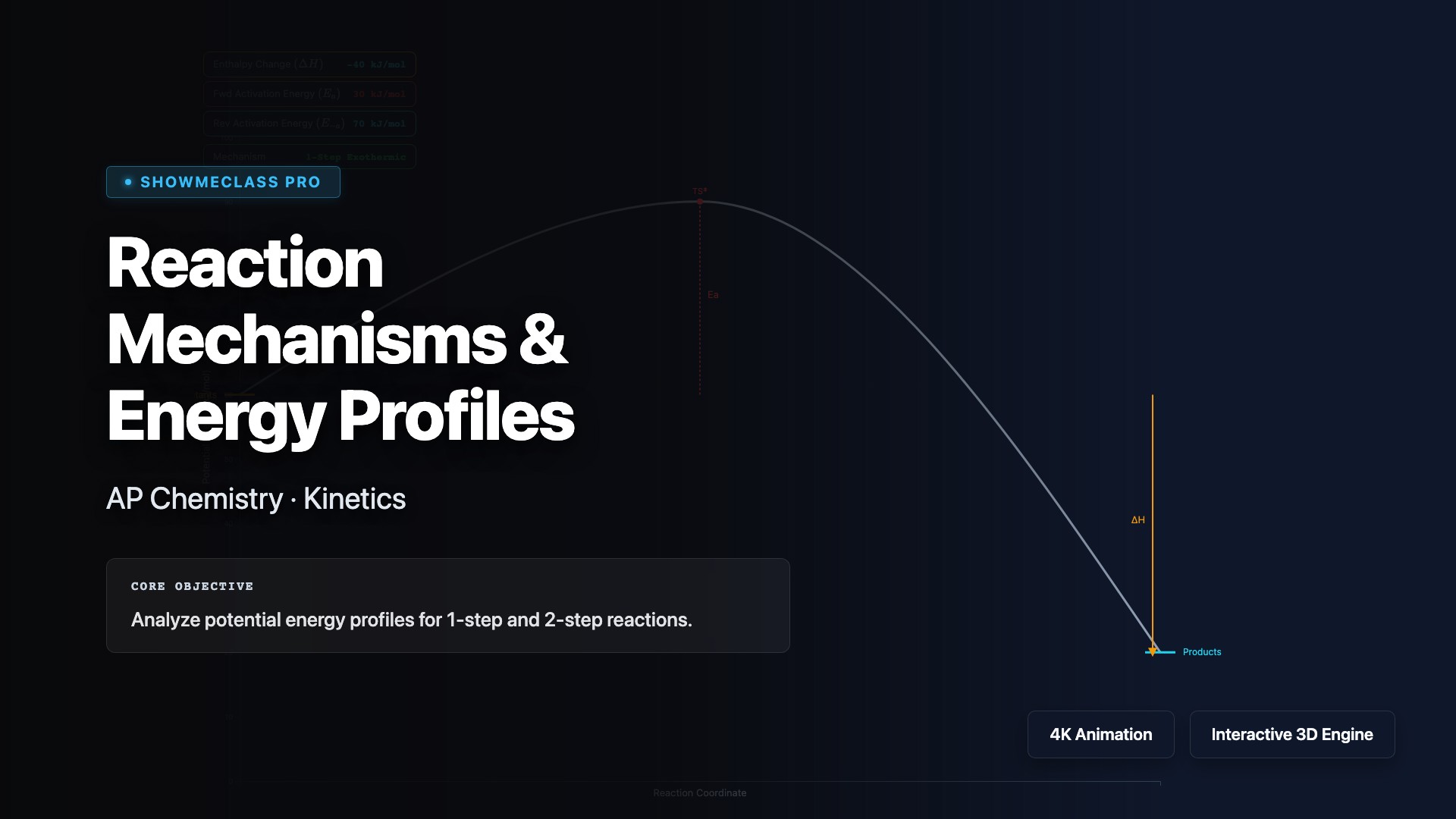
Reaction Mechanisms & Energy Profiles
Explore multi-step reaction mechanisms where elementary steps combine to give the overall reaction. Identify intermediates (produced then consumed), catalysts (consumed then regenerated), and the rate-determining step (slowest step with highest activation energy). Visualize energy profiles showing multiple transition states and understand how the mechanism must match the experimentally determined rate law.
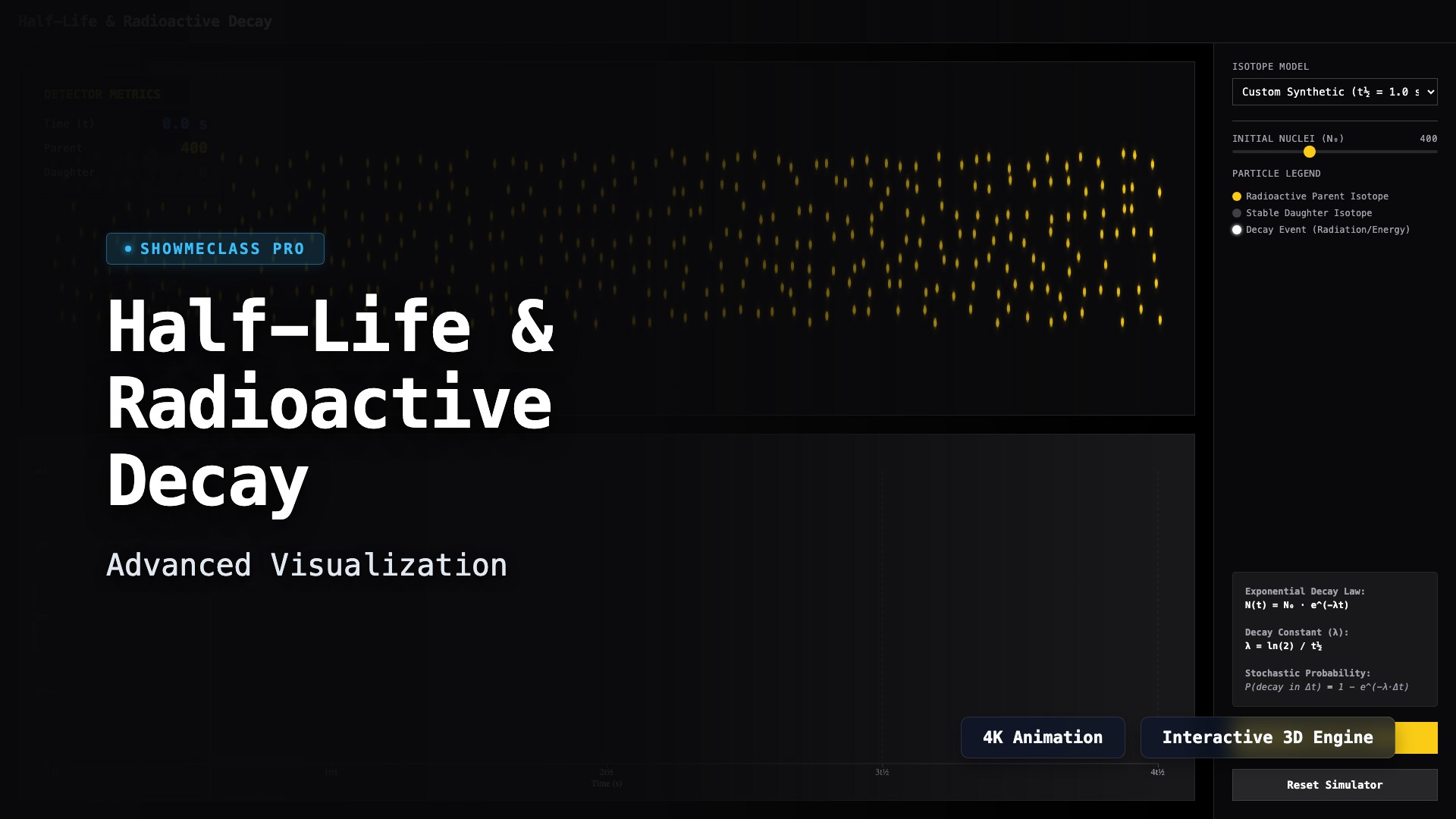
Half-Life & Radioactive Decay
Visualize stochastic exponential decay mapped against N(t) mathematical algorithms. Track Parent and Daughter isotope accumulation across customized half-lives in a real-time flashing particle engine.
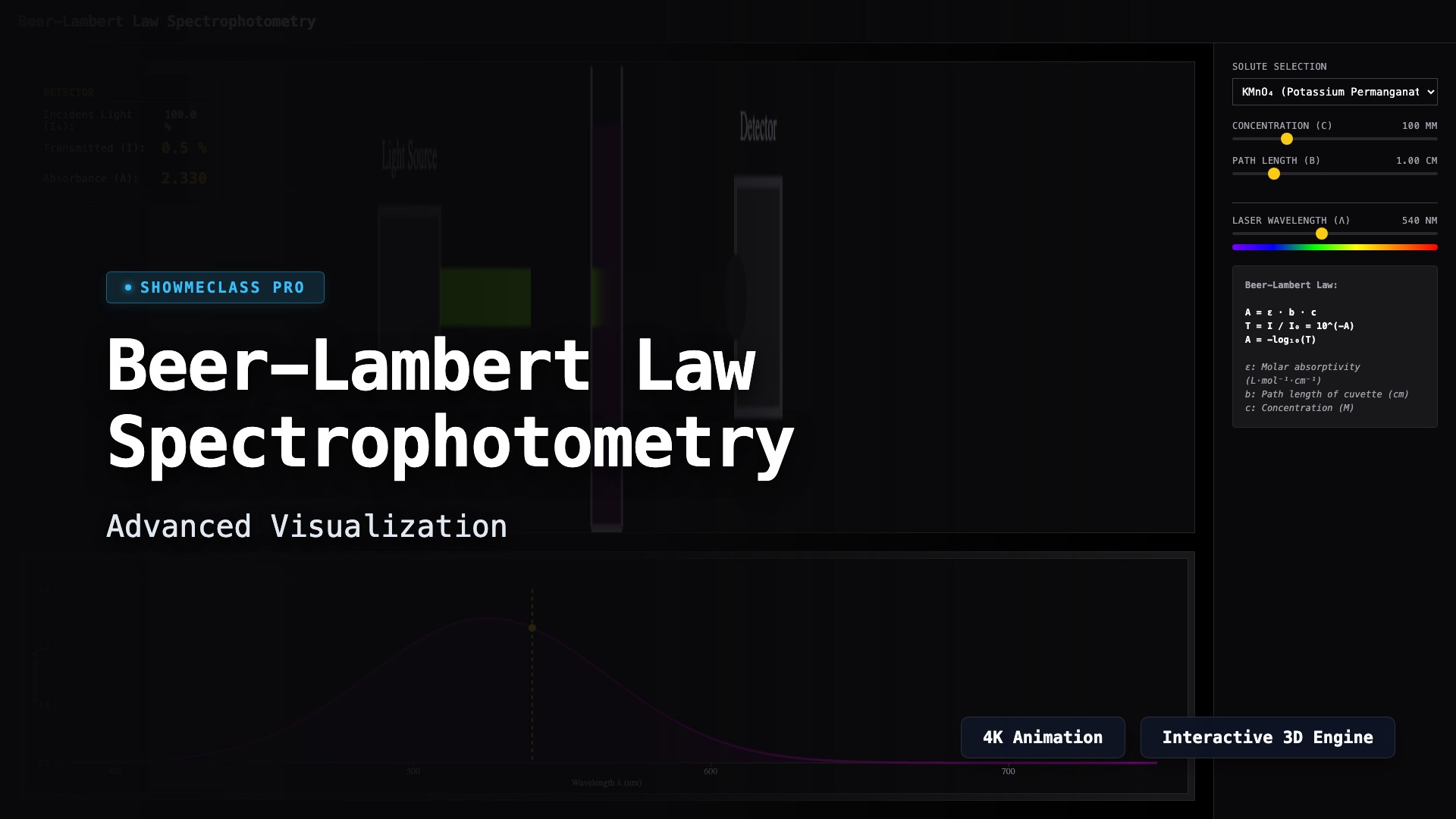
Beer-Lambert Law Spectrophotometry
Visualize the principles of spectrophotometry. Adjust wavelength, concentration, and cuvette path length to observe how light absorption changes dynamically according to the Beer-Lambert Law.
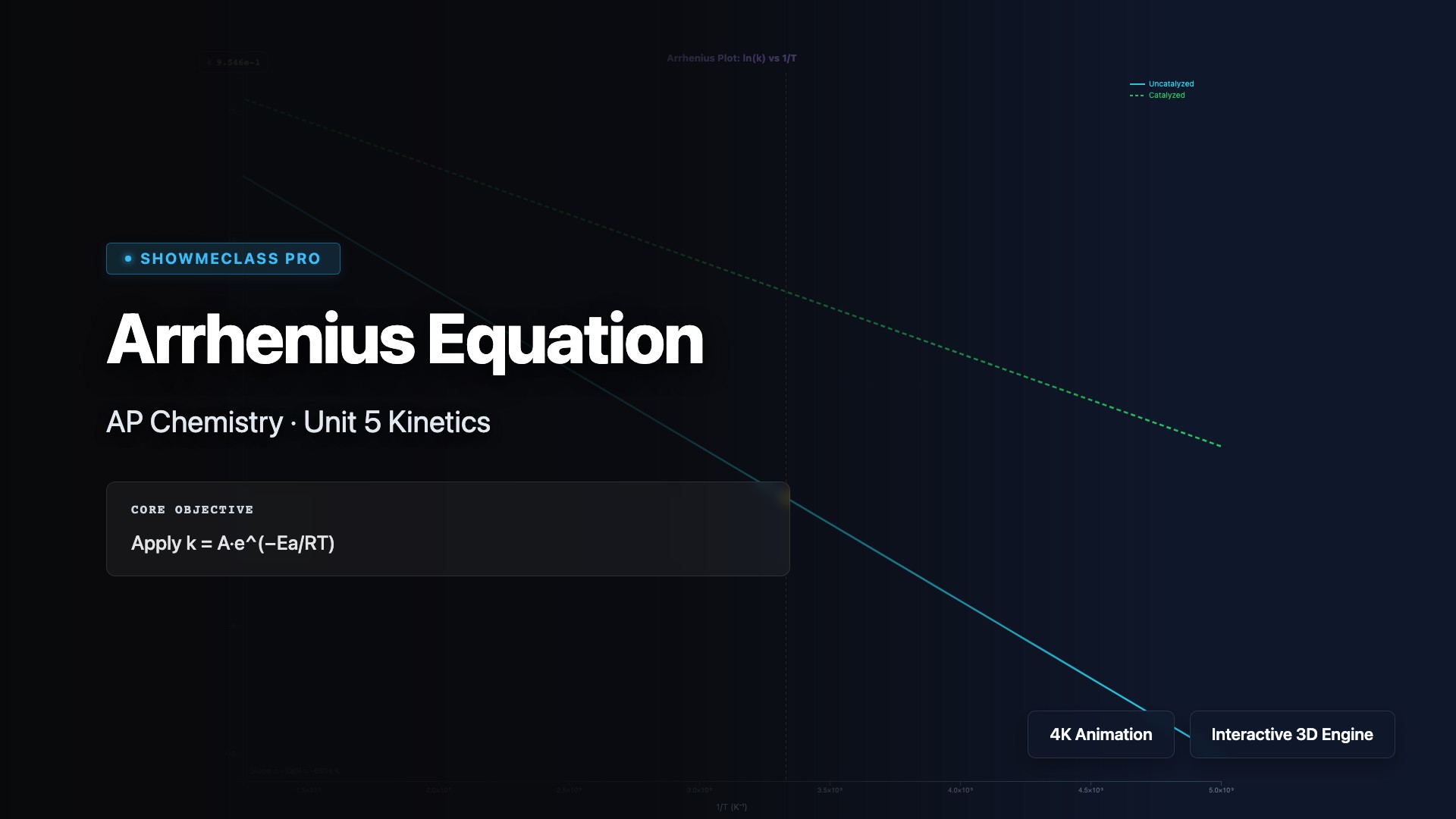
Arrhenius Equation (Rate vs Temperature)
Visualize the Arrhenius equation k = Ae^(−Ea/RT) with adjustable Ea and temperature. Compare catalyzed vs uncatalyzed reactions on a ln(k) vs 1/T plot.
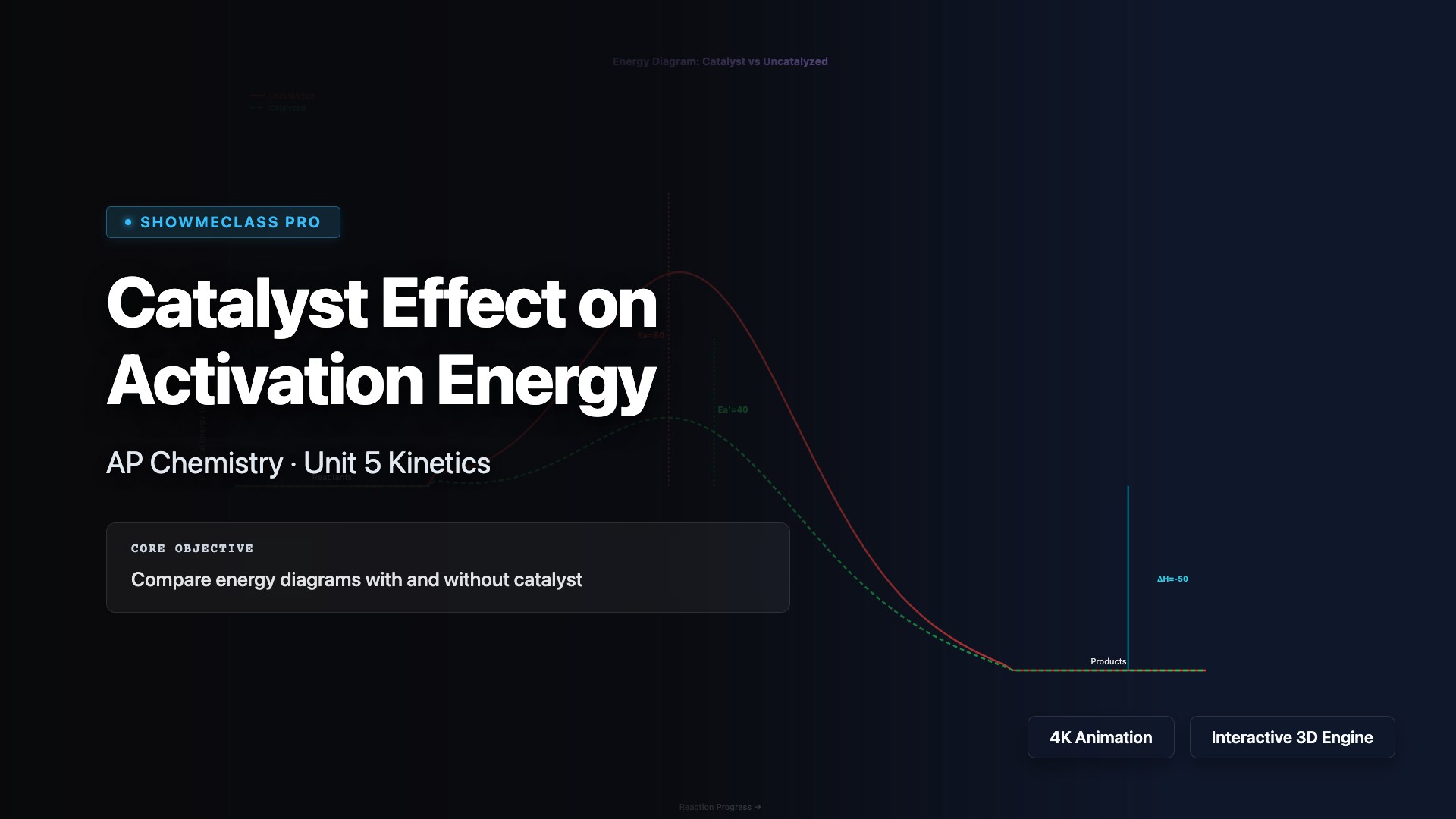
Catalyst Effect on Activation Energy
Interactive energy diagram comparing catalyzed vs uncatalyzed reaction pathways. Adjust activation energy, catalyzed Ea, and ΔH with real-time visualization. Calculates approximate speedup factor using Arrhenius equation. Covers homogeneous, heterogeneous, and enzyme catalysts.
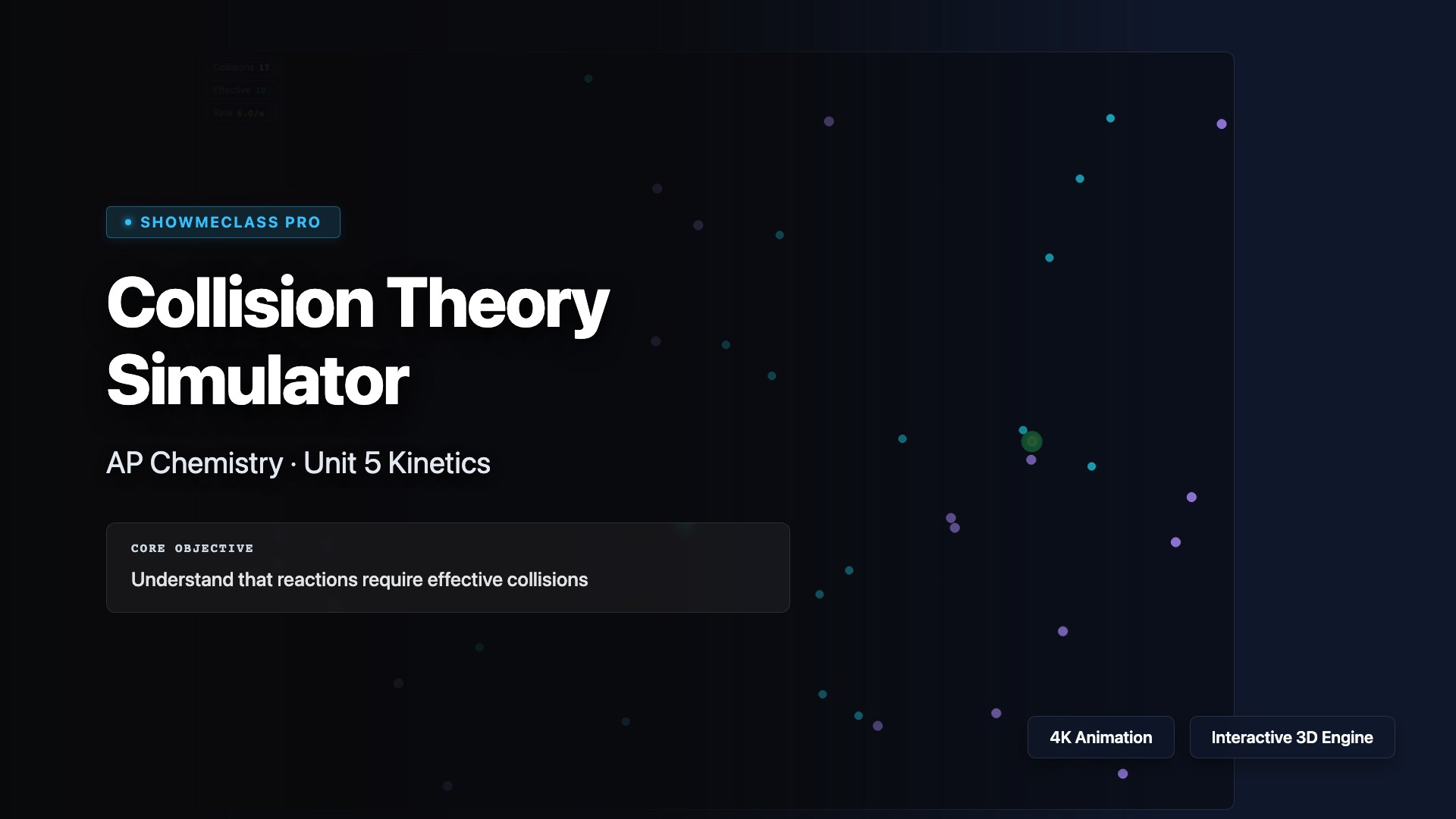
Collision Theory Particle Simulator
Animated particle simulation demonstrating collision theory. Particles of two types collide with visual feedback: green flashes for effective collisions (sufficient energy + correct orientation) and red flashes for ineffective ones. Adjustable temperature, particle count, and activation energy threshold.