
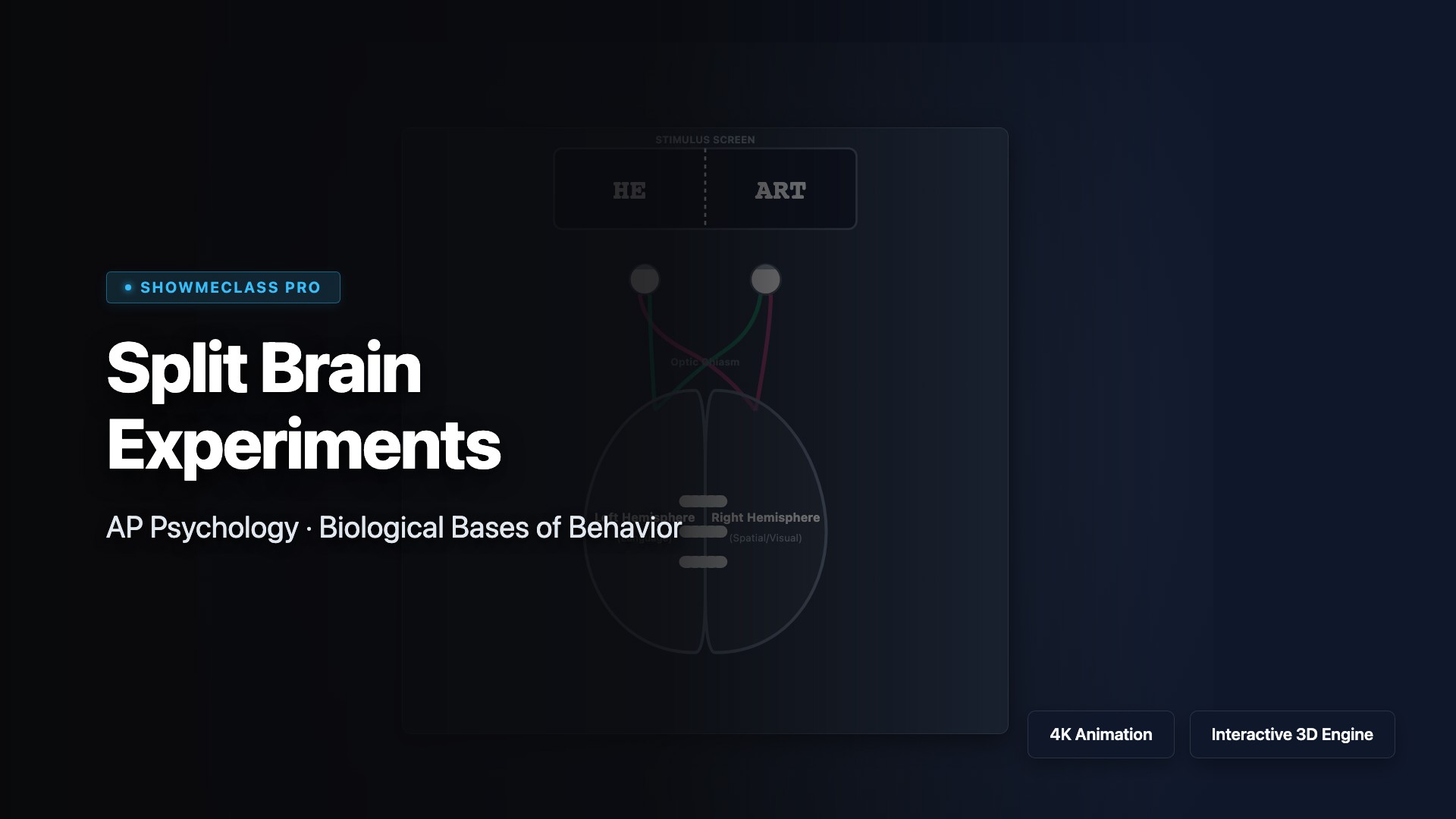
Split Brain Experiments
Examine patients with a severed Corpus Callosum. Flash stimuli to isolated visual fields and discover why the Left Hemisphere can speak 'ART' while the Right Hemisphere points to 'HE'.

Piaget's Cognitive Stages
Test children's cognitive development across Jean Piaget's 4 stages. Conduct interactive tests for Object Permanence, Egocentrism, Conservation, and Hypothetico-Deductive Reasoning.
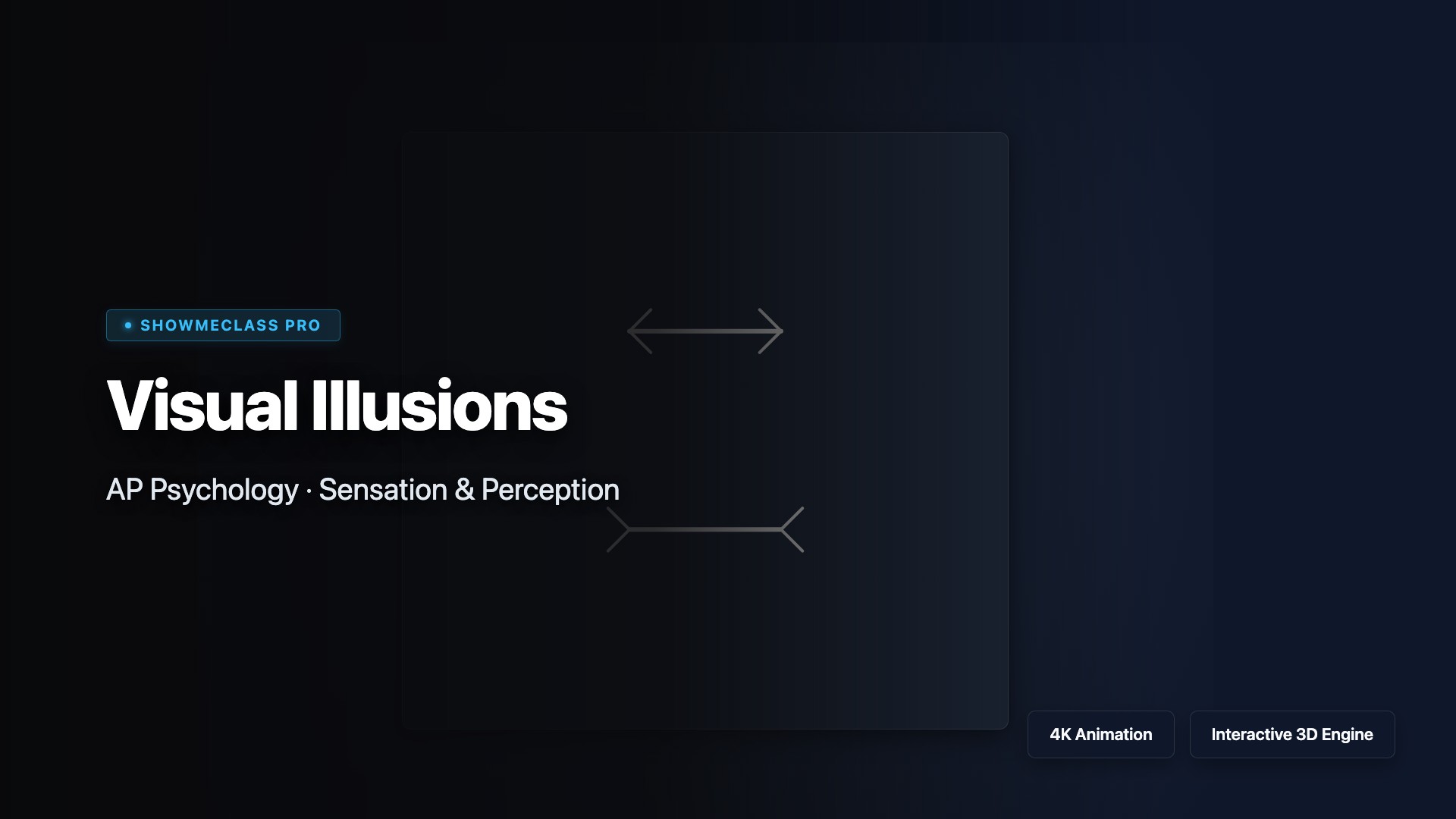
Visual Illusions Simulator
Explore Gestalt principles and Top-Down processing heuristics. Manipulate the parameters of classic optical illusions (Müller-Lyer, Ponzo, Ebbinghaus) to see how the brain constructs 3D reality from 2D retina images.
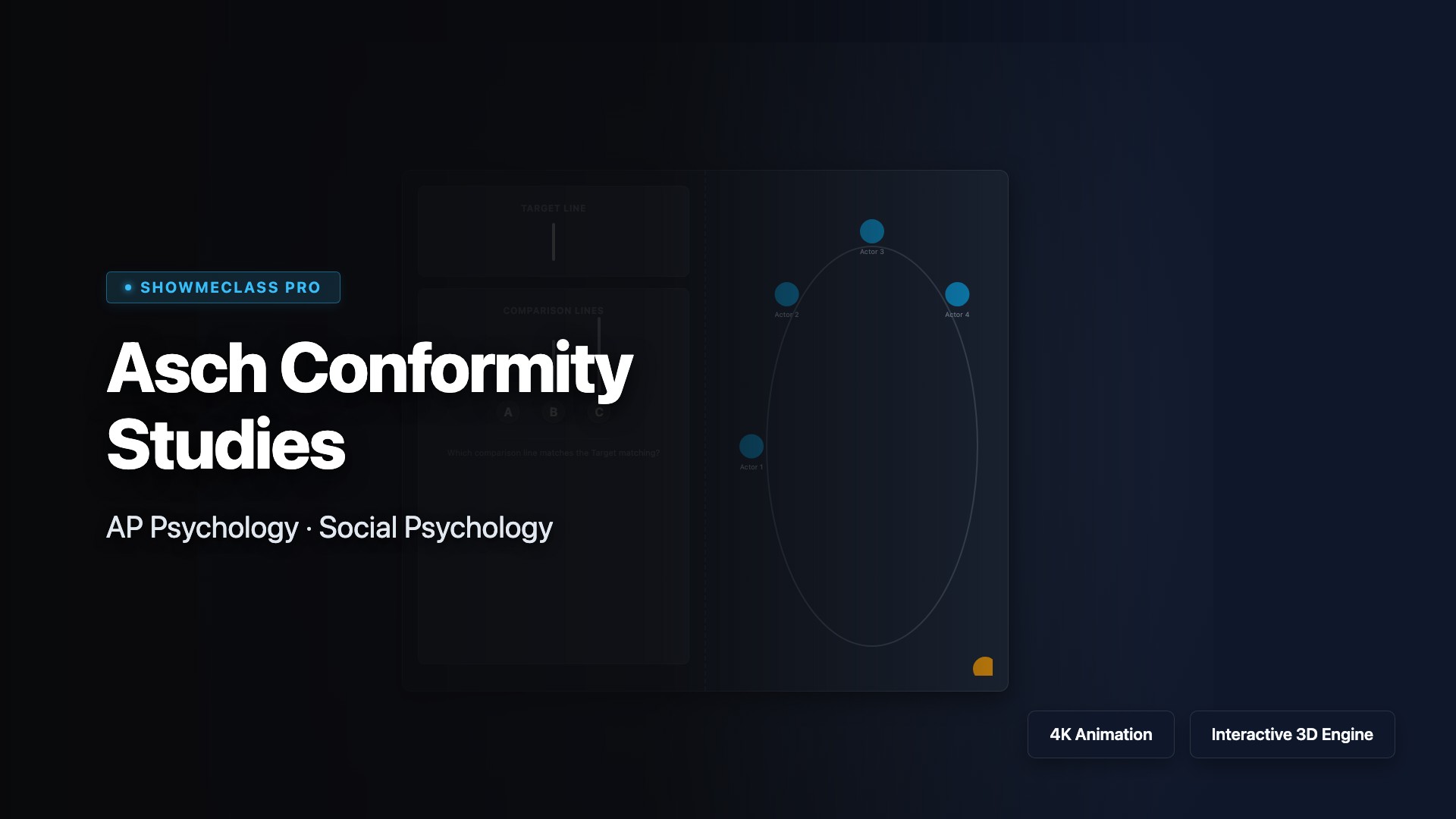
Conformity Studies (Asch)
Simulate Solomon Asch's classic line experiment. Experience normative social influence as confederates give unanimous wrong answers, and see how a single dissenter shatters conformity.
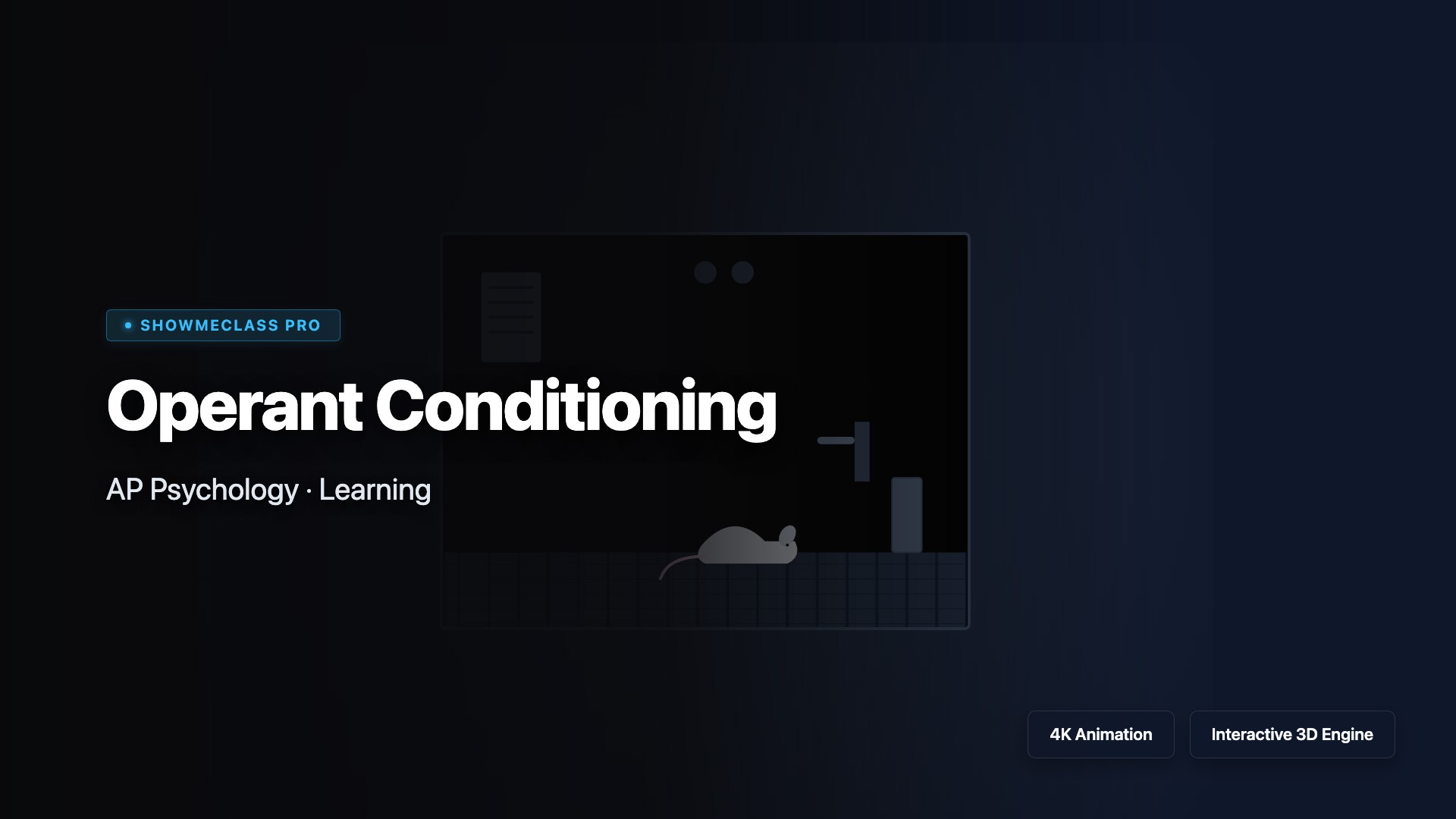
Operant Conditioning
Master B.F. Skinner's Quadrant. Operate a simulated Skinner Box to see how Positive/Negative Reinforcement and Punishment shape the likelihood of future behaviors.

Kohlberg's Moral Development
Navigate the Heinz Dilemma. Choose whether to steal the life-saving drug, and explicitly select your reasoning to reveal your position on Kohlberg's 3-level Moral Pyramid.
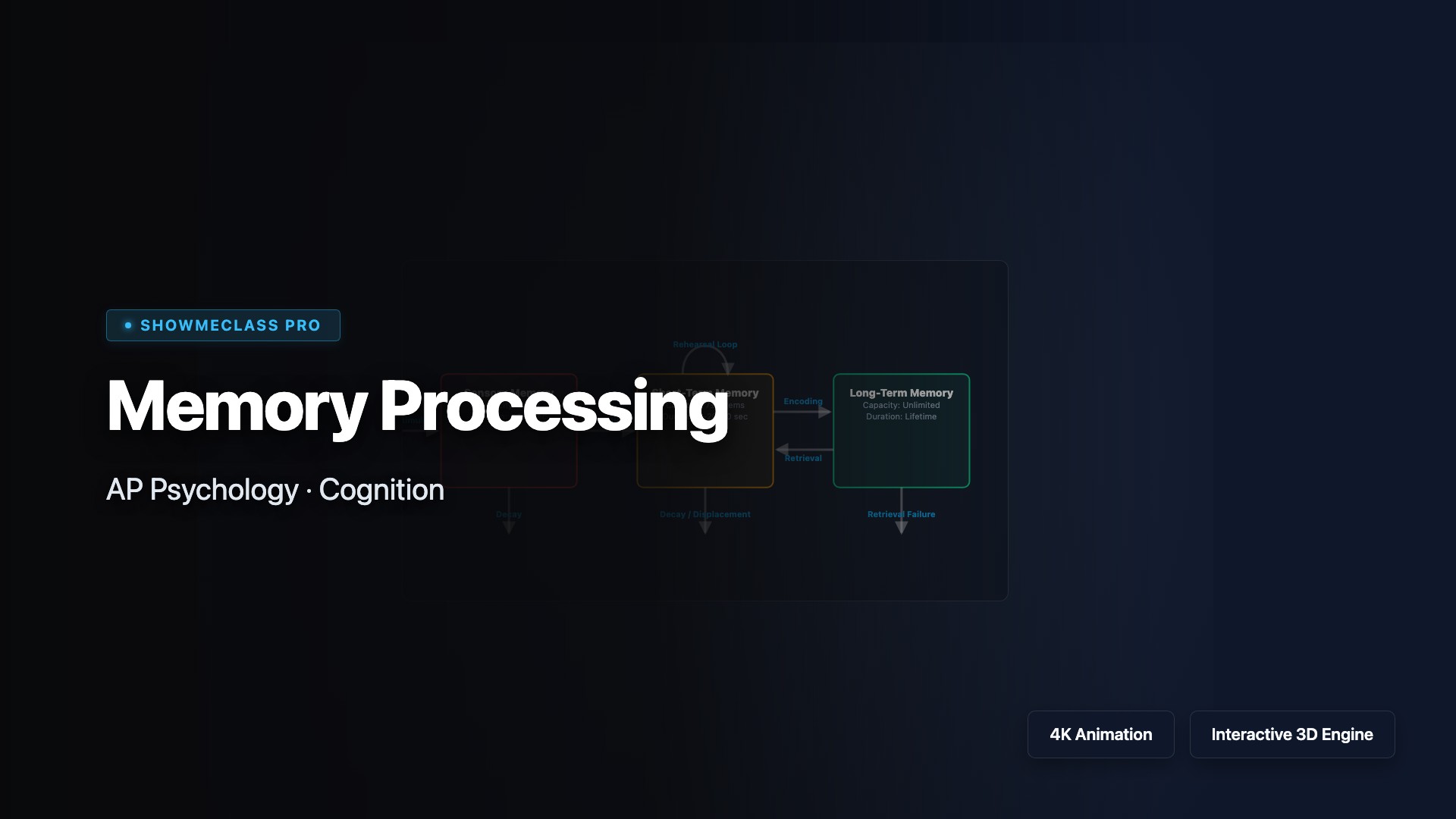
Memory Processing Models
Visualize the Atkinson-Shiffrin Multi-Store Model. Trace information flow from Sensory Input to Working Memory, and apply Rehearsal to encode it permanently into Long-Term Memory.
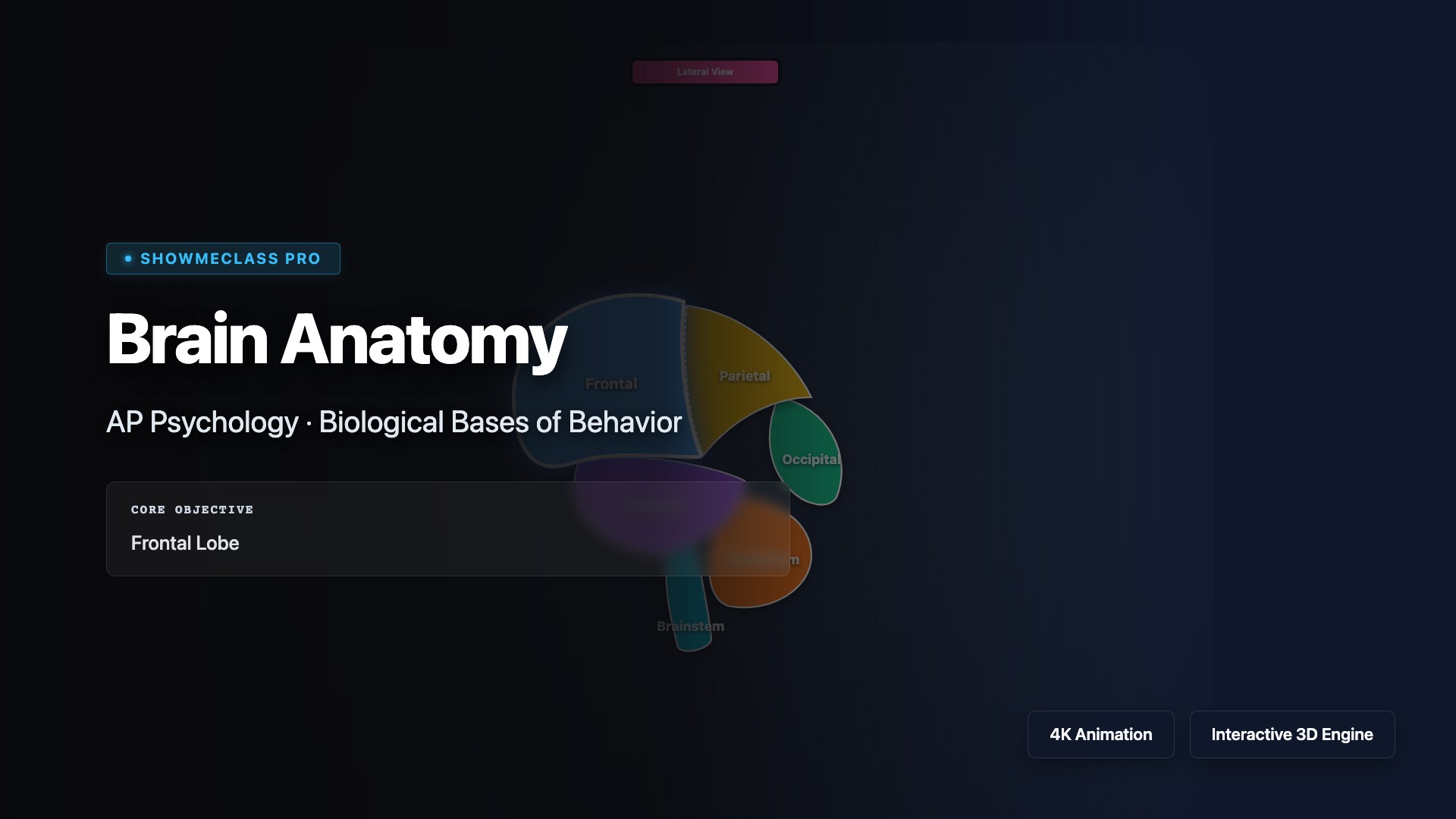
Brain Hemispheres & Lobes
Explore the Cerebral Cortex. Interactive neuroanatomy highlighting the Frontal, Parietal, Occipital, and Temporal lobes, along with the Cerebellum and Brainstem.
Sleep Stages EEG
Analyze brain wave patterns across the sleep cycle. Differentiate between Alpha/Beta (Awake), Theta (N1), Spindles (N2), Delta (N3), and Paradoxical Sawtooth waves (REM).
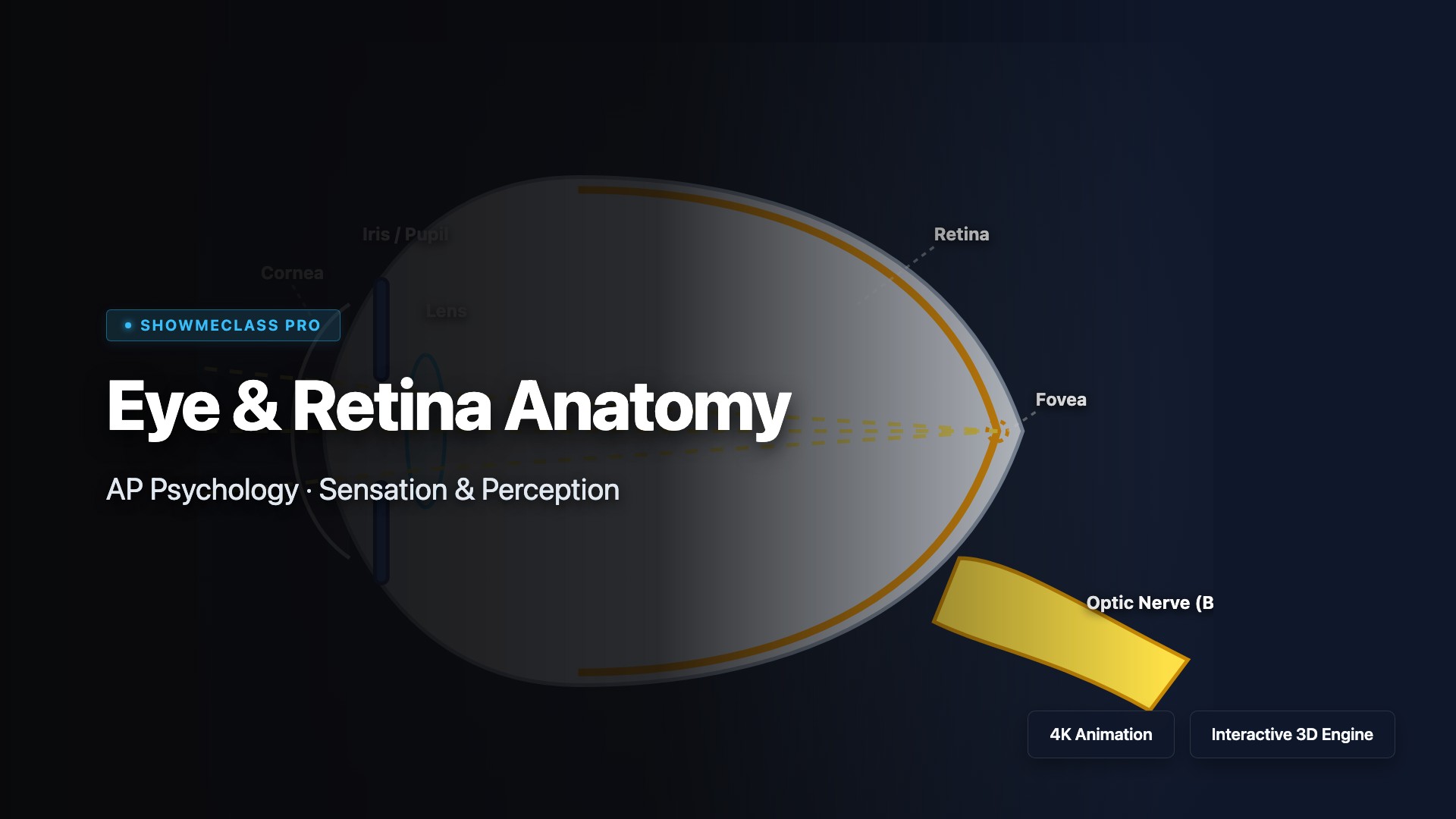
Eye & Retina Anatomy
Trace visual processing from Cornea to Optic Nerve. Zoom into the Retina to understand the counter-intuitive flow from Photoreceptors (Rods/Cones) to Bipolar and Ganglion cells.
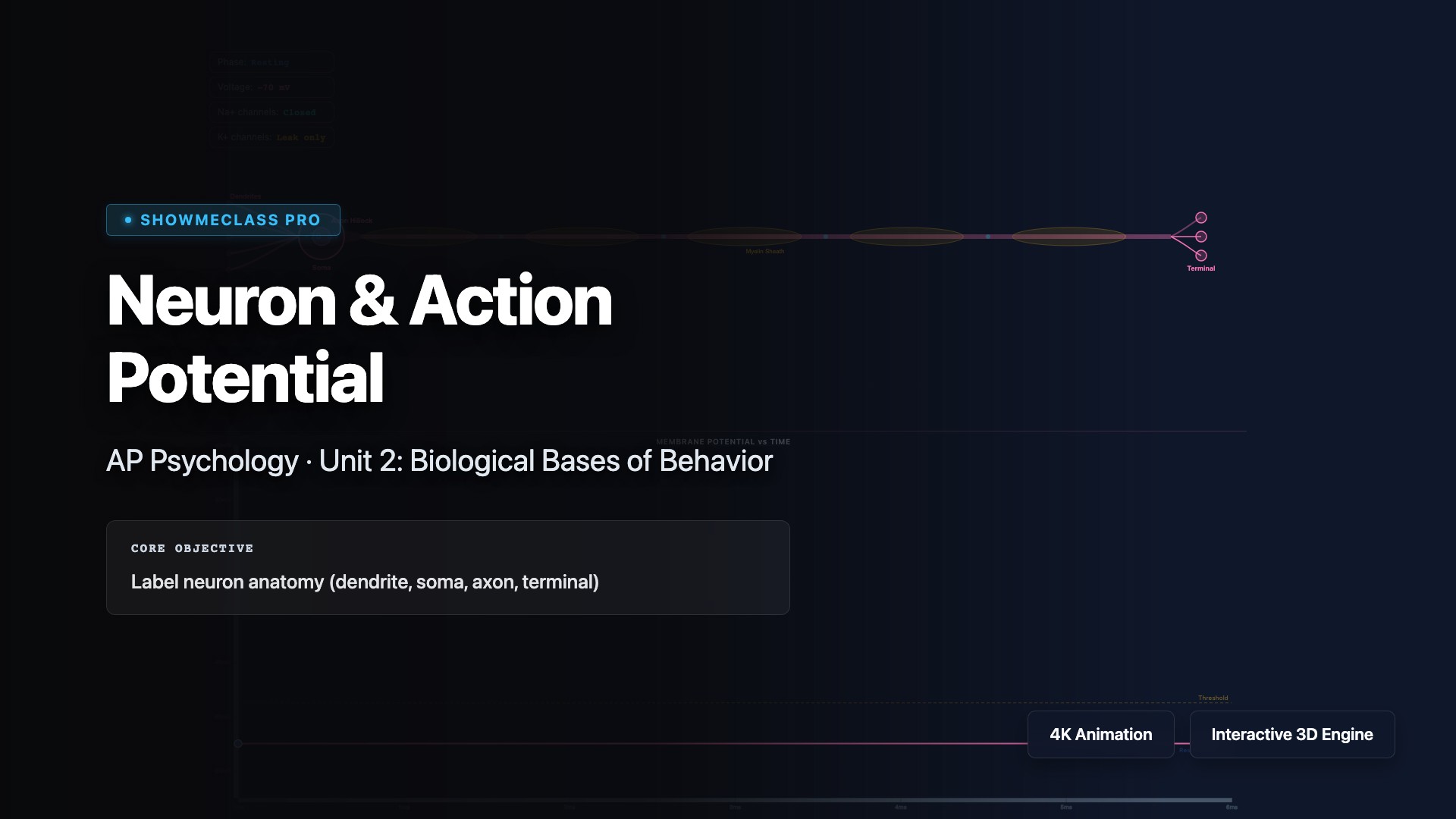
Neuron & Action Potential
Visualize how neurons transmit electrical signals through action potentials. Explore the resting potential, depolarization, repolarization cycle, and the all-or-none principle as sodium and potassium ions flow across the axon membrane.

Memory & Encoding
Explore the three stages of memory: encoding, storage, and retrieval. Visualize different encoding strategies including semantic, acoustic, and visual processing, and understand how depth of processing affects long-term memory retention.

Maslow's Hierarchy of Needs
Explore Maslow's five-tier pyramid of human needs from physiological basics to self-actualization. Visualize how lower-level needs must be satisfied before higher-level psychological and self-fulfillment needs can be pursued.
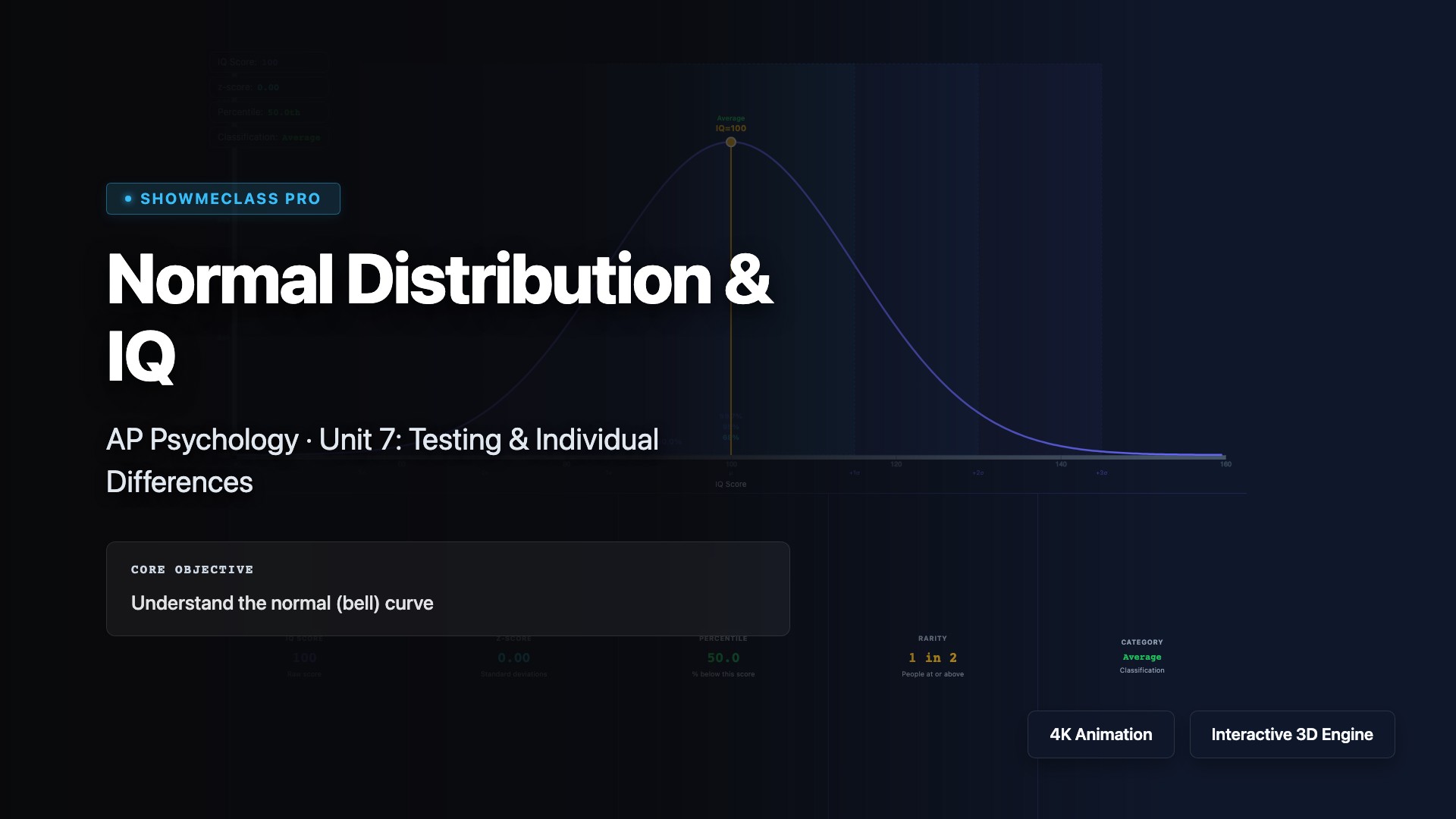
Normal Distribution & IQ
Visualize how IQ scores follow a normal distribution with mean 100 and standard deviation 15. Explore z-scores, percentiles, and the 68-95-99.7 rule to understand how intelligence test scores are distributed across populations.
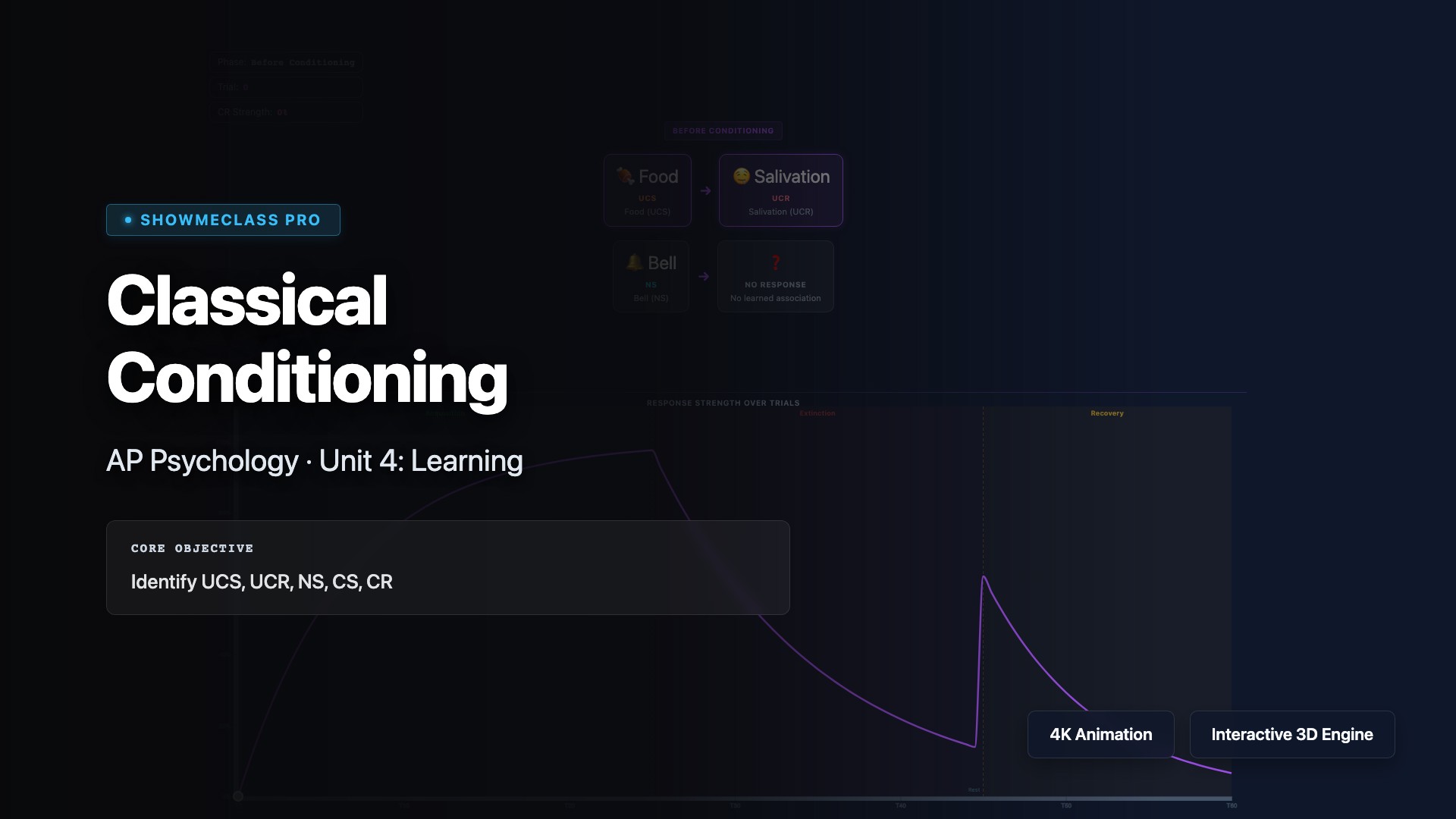
Classical Conditioning
Explore Pavlov's classical conditioning process where neutral stimuli become conditioned stimuli through repeated pairing with unconditioned stimuli. Visualize acquisition, extinction, spontaneous recovery, and stimulus generalization in learning paradigms.
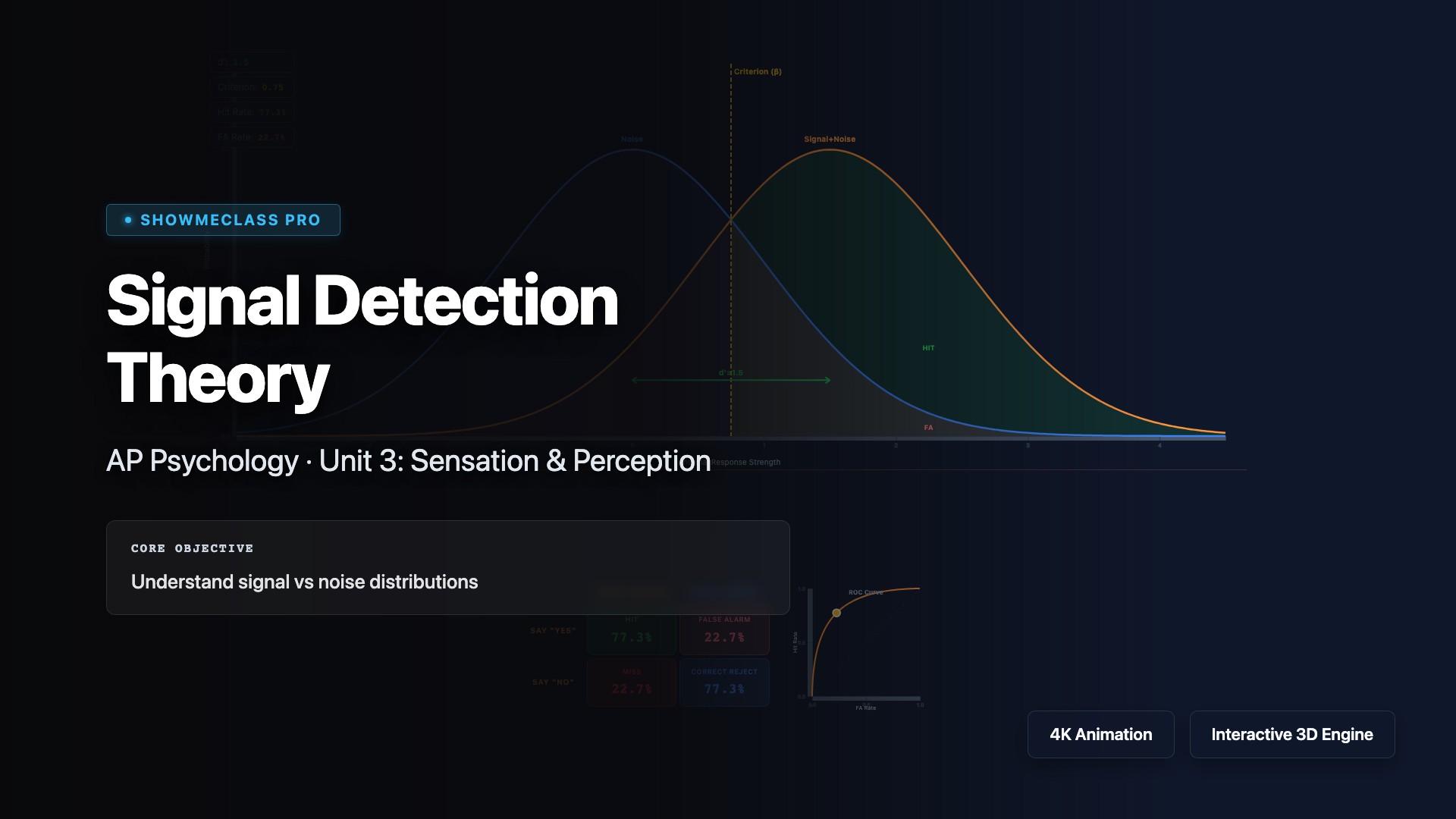
Signal Detection Theory
Explore signal detection theory's framework for measuring perceptual sensitivity (d') and response bias. Visualize the four outcomes—hits, misses, false alarms, and correct rejections—and understand how expectation and motivation affect detection thresholds.
Retinal Disparity & Binocular Cues
Simulate how the left and right eyes receive slightly different 2D images, allowing the brain to compute 3D depth and convergence angles.

Erikson's Psychosocial Stages
Interactive 8-stage staircase visualization of Erikson's psychosocial development theory. Click each stage to explore the crisis pair, age range, virtue gained, and real-world implications from infancy through late adulthood.
Freud's Psychosexual Stages
Five-column visualization of Freud's psychosexual stages (Oral, Anal, Phallic, Latency, Genital) with erogenous zones, developmental focus areas, and fixation outcomes that shape adult personality traits.
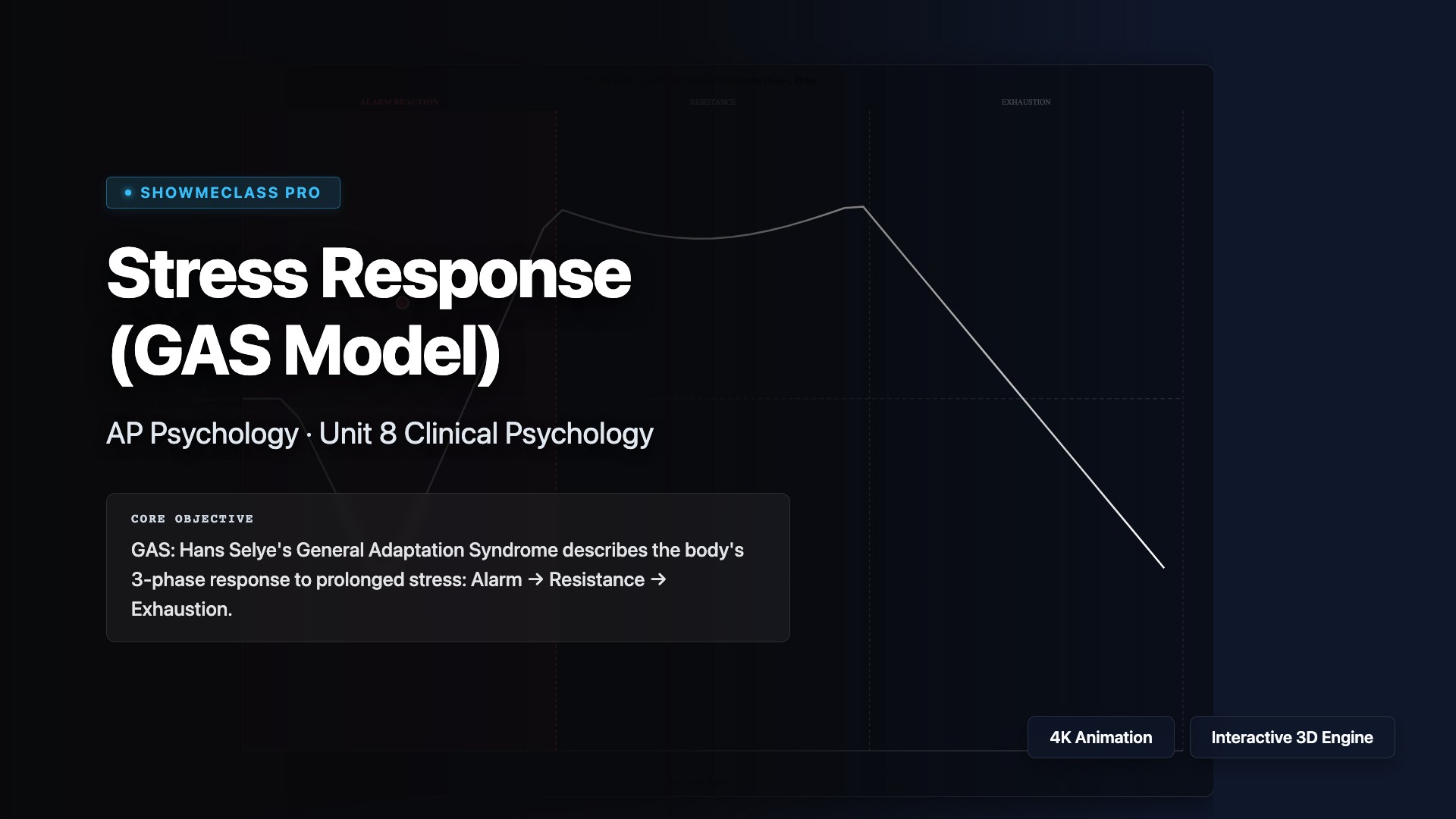
Stress Response (GAS Model)
Hans Selye's General Adaptation Syndrome curve showing the 3-phase stress response: Alarm (fight-or-flight), Resistance (coping), and Exhaustion (collapse). Includes physiological indicators and HPA axis connections.
Neurotransmitter Function Map
Radial network map of 7 major neurotransmitters (DA, 5-HT, ACh, GABA, Glutamate, NE, Endorphins) with functions, excess/deficit disorders, and associated drugs for each chemical messenger.
Weber's Law & Sensation Thresholds
Interactive Weber's Law calculator (ΔI/I = k) across 4 sensory modalities. Adjustable stimulus intensity demonstrates how the Just Noticeable Difference scales proportionally with original stimulus size.
Baddeley's Working Memory Model
Interactive 4-component working memory model: Central Executive (attention director), Phonological Loop (verbal), Visuospatial Sketchpad (visual), and Episodic Buffer (integration with LTM).

Attachment Theory (Ainsworth)
Ainsworth's Strange Situation experiment with 4 attachment types (Secure, Avoidant, Anxious-Ambivalent, Disorganized). Pie chart prevalence, step-by-step procedure reactions, and adult outcome predictions.
Cognitive Bias Explorer
Interactive explorer of 7 major cognitive biases: Confirmation, Availability, Anchoring, Hindsight, Fundamental Attribution Error, Dunning-Kruger, and Framing Effect with definitions, examples, and debiasing strategies.

Psychological Disorders Classifier
DSM-5 classification tree with 6 major disorder categories (Anxiety, Depressive, Schizophrenia, Bipolar, OCD, Personality). Each category shows prevalence, key features, neurotransmitter links, specific disorders, and treatments.