
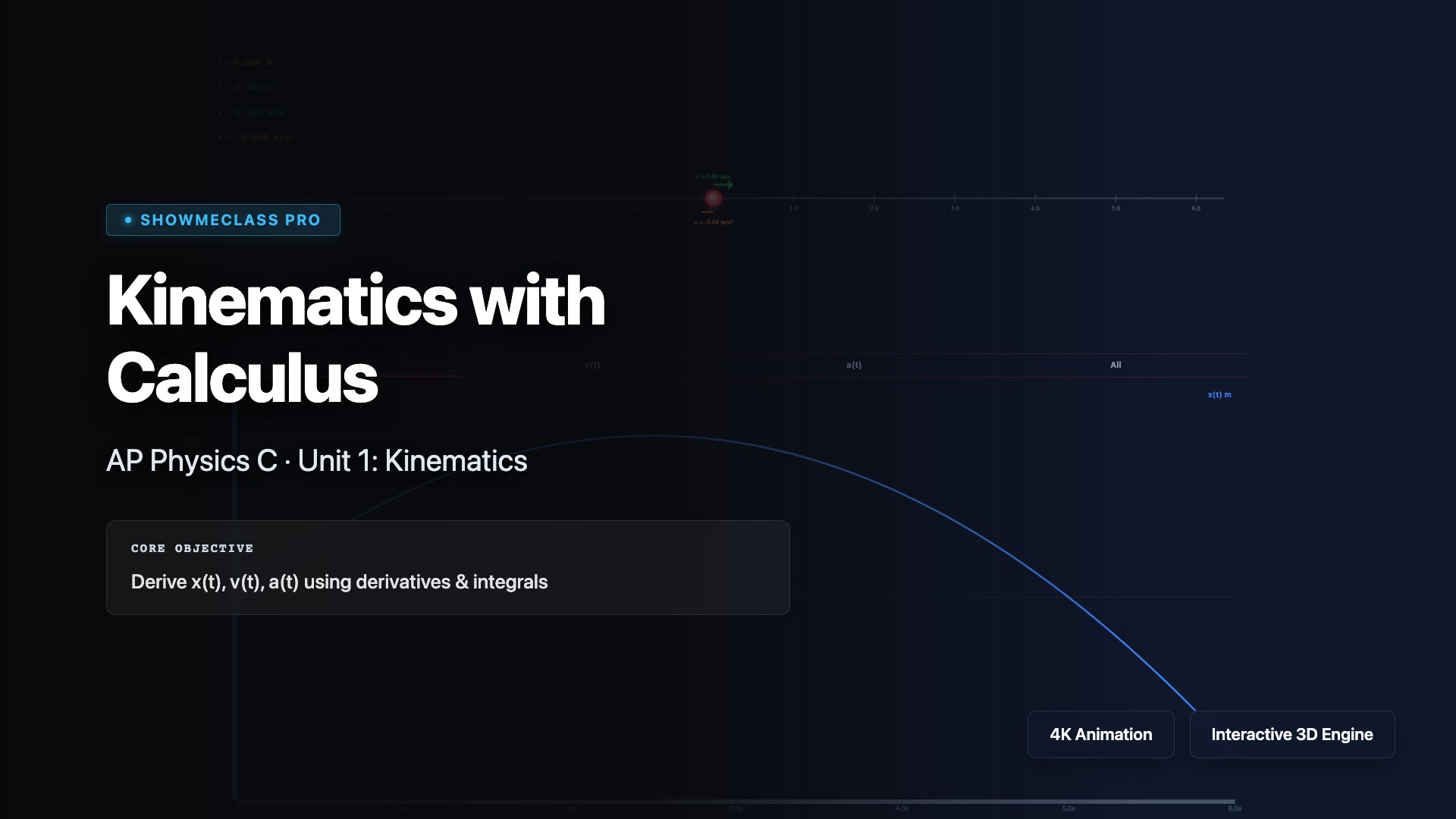
Kinematics with Calculus
Apply calculus to motion analysis using $v = \frac{dx}{dt}$ and $a = \frac{dv}{dt}$, and integrate acceleration to find velocity and position functions. Visualize how derivatives and integrals connect position, velocity, and acceleration graphs in real-time.
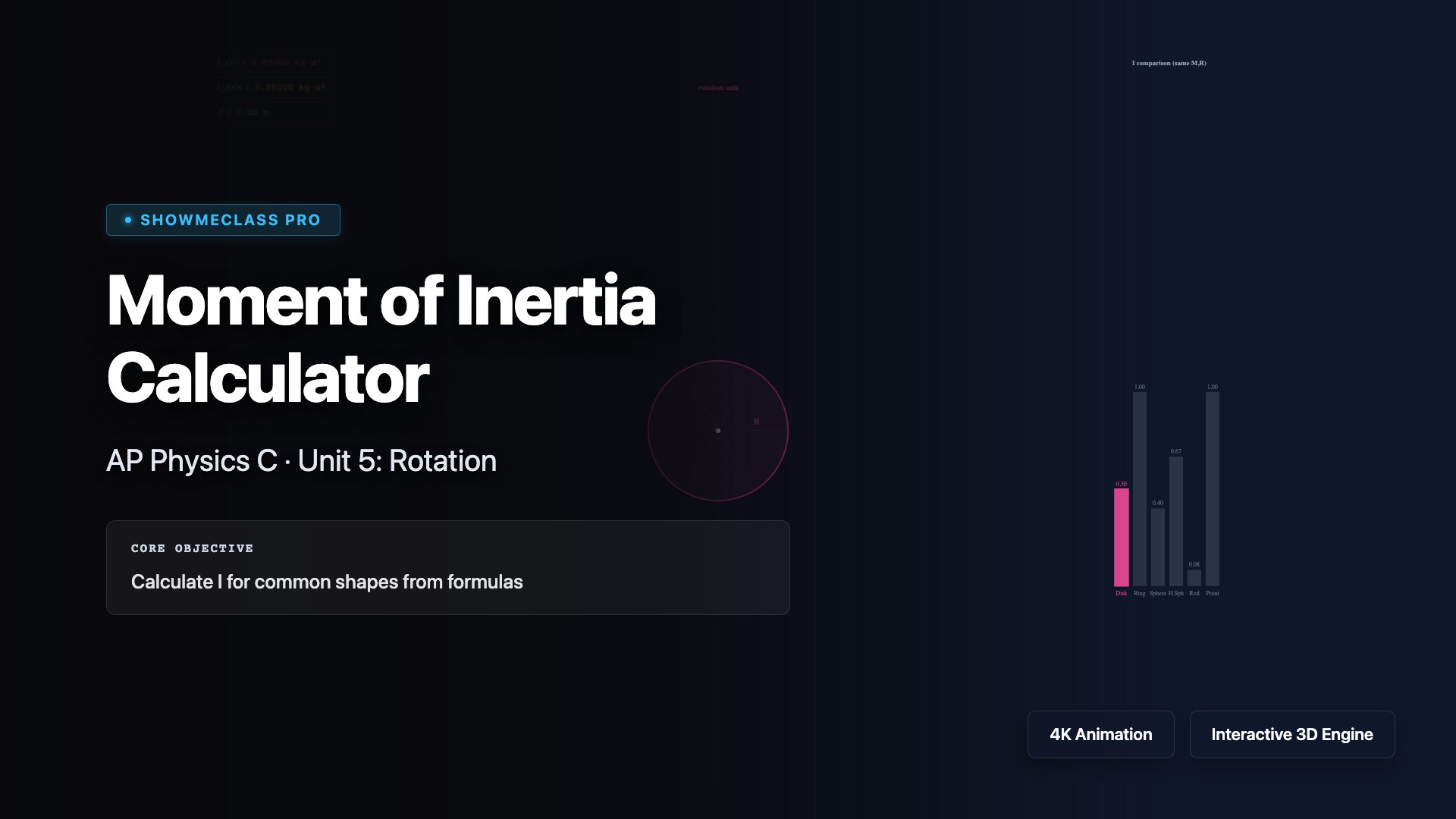
Moment of Inertia Calculator
Calculate moment of inertia $I = \int r^2 dm$ for various geometric shapes and apply the parallel axis theorem $I = I_{cm} + Md^2$. Visualize how mass distribution affects rotational inertia and compare common shapes like disks, spheres, and rods.
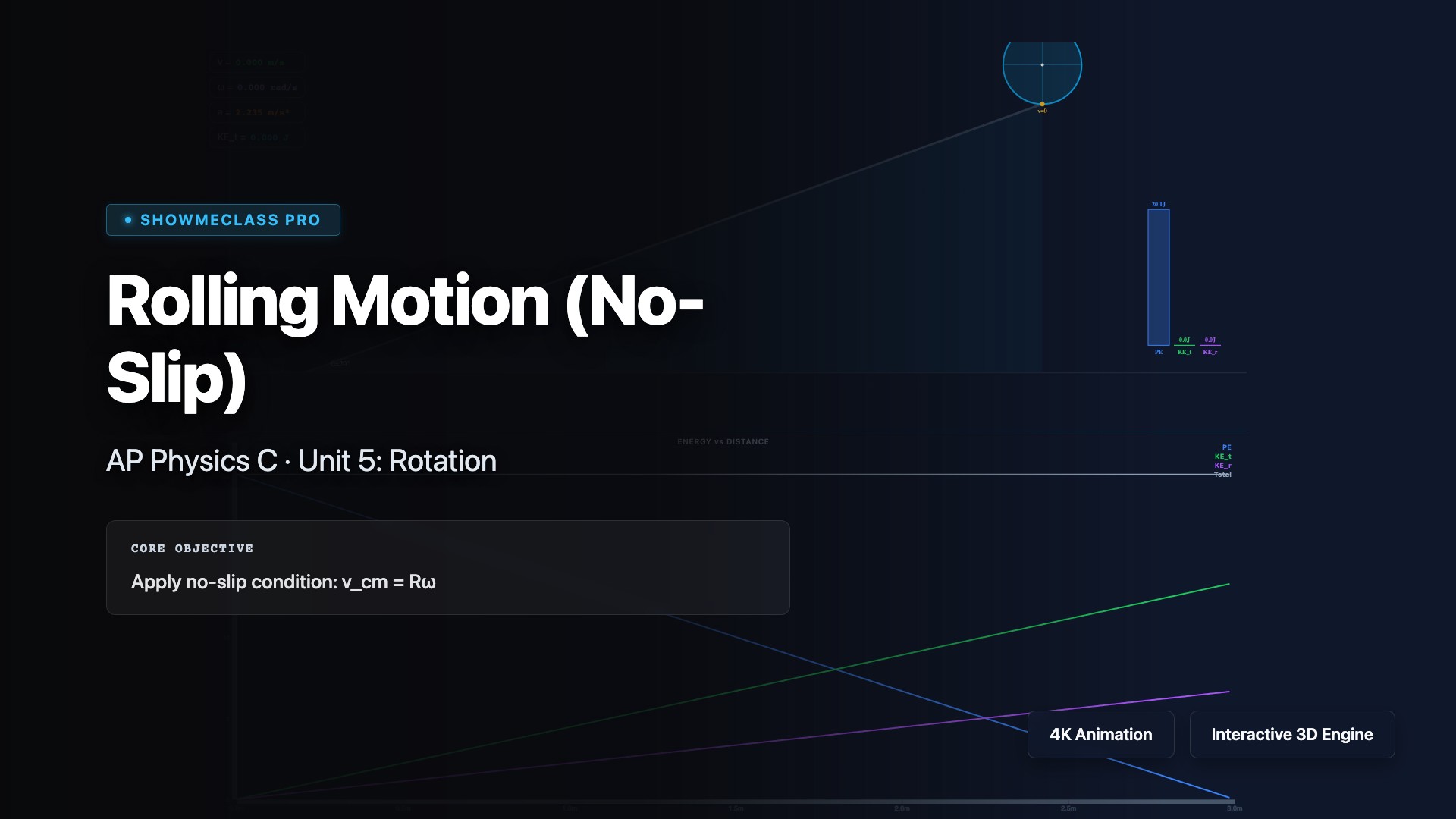
Rolling Motion (No-Slip)
Analyze rolling motion with the no-slip condition $v_{cm} = R\omega$ and explore energy partitioning between translational and rotational kinetic energy. Visualize objects rolling down inclines and see how moment of inertia affects acceleration.
Center of Mass & Momentum in 2D
Calculate the center of mass for multi-particle systems using $\vec{r}_{cm} = \frac{\sum m_i\vec{r}_i}{\sum m_i}$ and analyze 2D collision dynamics. Visualize how momentum conservation applies independently to x and y components in elastic and inelastic collisions.
Work-Energy with Variable Forces
Calculate work done by variable forces using the integral $W = \int \vec{F} \cdot d\vec{r}$ and apply the work-energy theorem. Visualize force-displacement graphs and compute work as the area under the curve for springs, gravity, and custom force functions.
Gravitational Orbits
Simulate planetary orbits using Newton's law of gravitation $F = \frac{Gm_1m_2}{r^2}$ and explore Kepler's laws of planetary motion. Visualize elliptical trajectories, orbital velocity changes, and the relationship between orbital period and semi-major axis.
Damped & Driven Oscillations
Model damped harmonic motion with exponential decay $x(t) = Ae^{-\gamma t}\cos(\omega t)$ and explore driven oscillations at resonance. Visualize how damping coefficients affect amplitude decay and how driving frequencies near natural frequency produce maximum energy transfer.
Angular Momentum & Conservation
Explore the vector nature of angular momentum $\vec{L} = I\vec{\omega}$ and its conservation in isolated systems. Visualize how torque changes angular momentum over time, and analyze collisions involving rotating objects where total angular momentum remains constant.
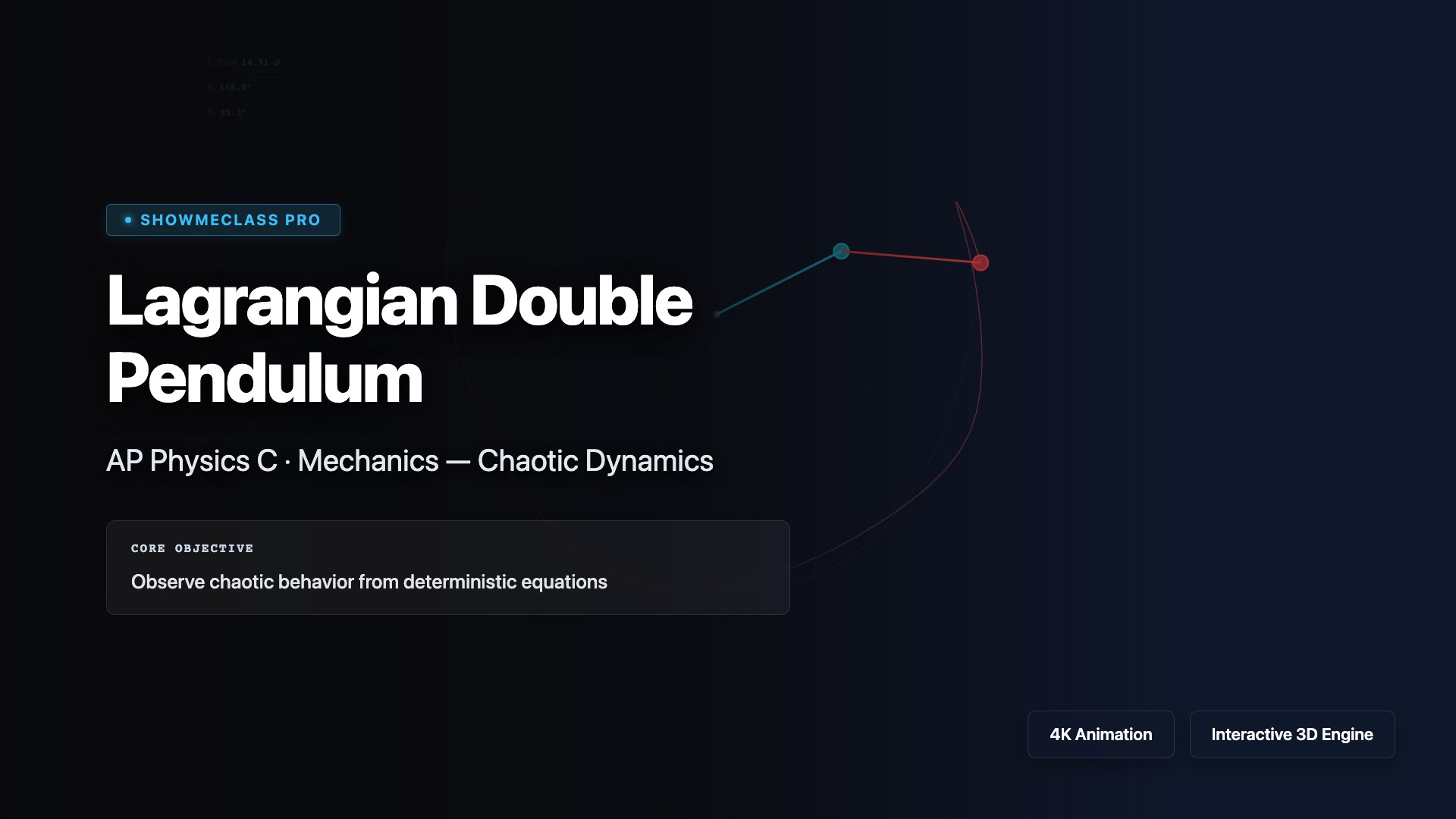
Lagrangian Double Pendulum
Simulate chaotic double pendulum motion using RK4 numerical integration of Lagrangian equations. Observe butterfly effect with adjustable initial angles, masses, and lengths.
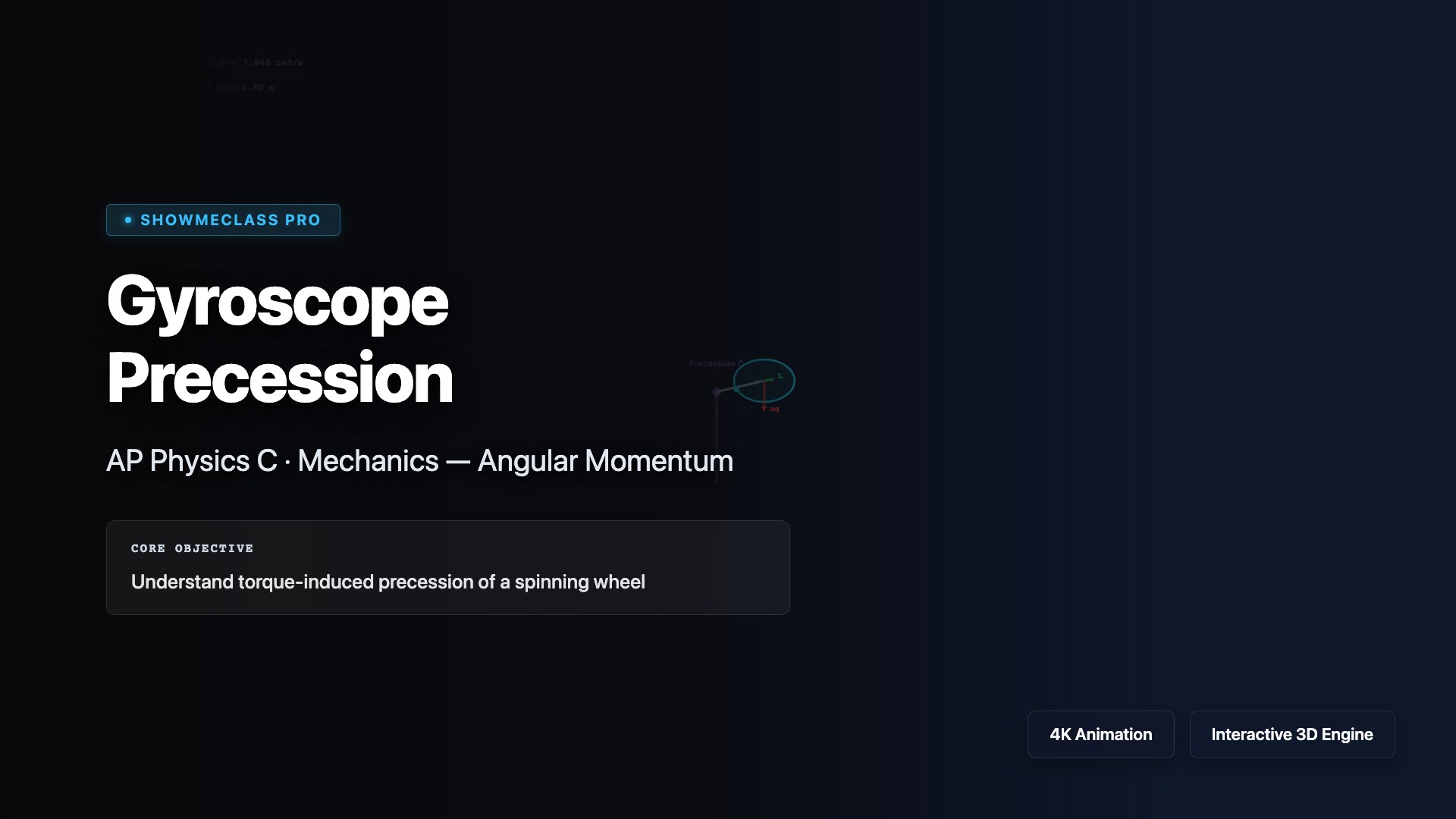
Gyroscope Precession
Visualize gyroscopic precession with adjustable spin speed, mass, arm length, and disk radius. See how Ω_prec = τ/(Iω) relates torque to angular momentum direction.
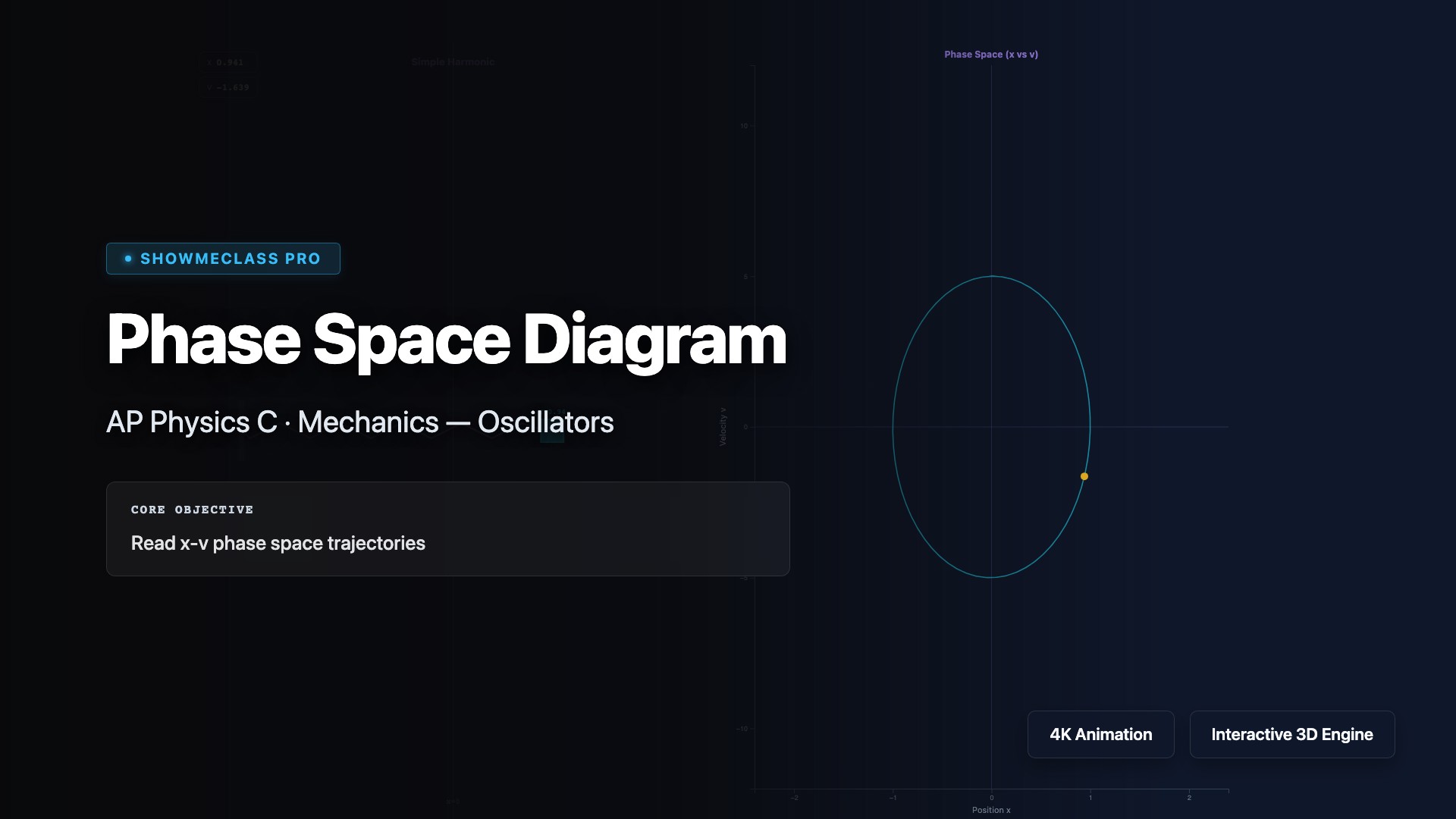
Phase Space Diagram (Oscillator)
Explore x-v phase space for SHM, underdamped, overdamped, and forced oscillators. Watch trajectories form ellipses, spirals, or limit cycles in real time.
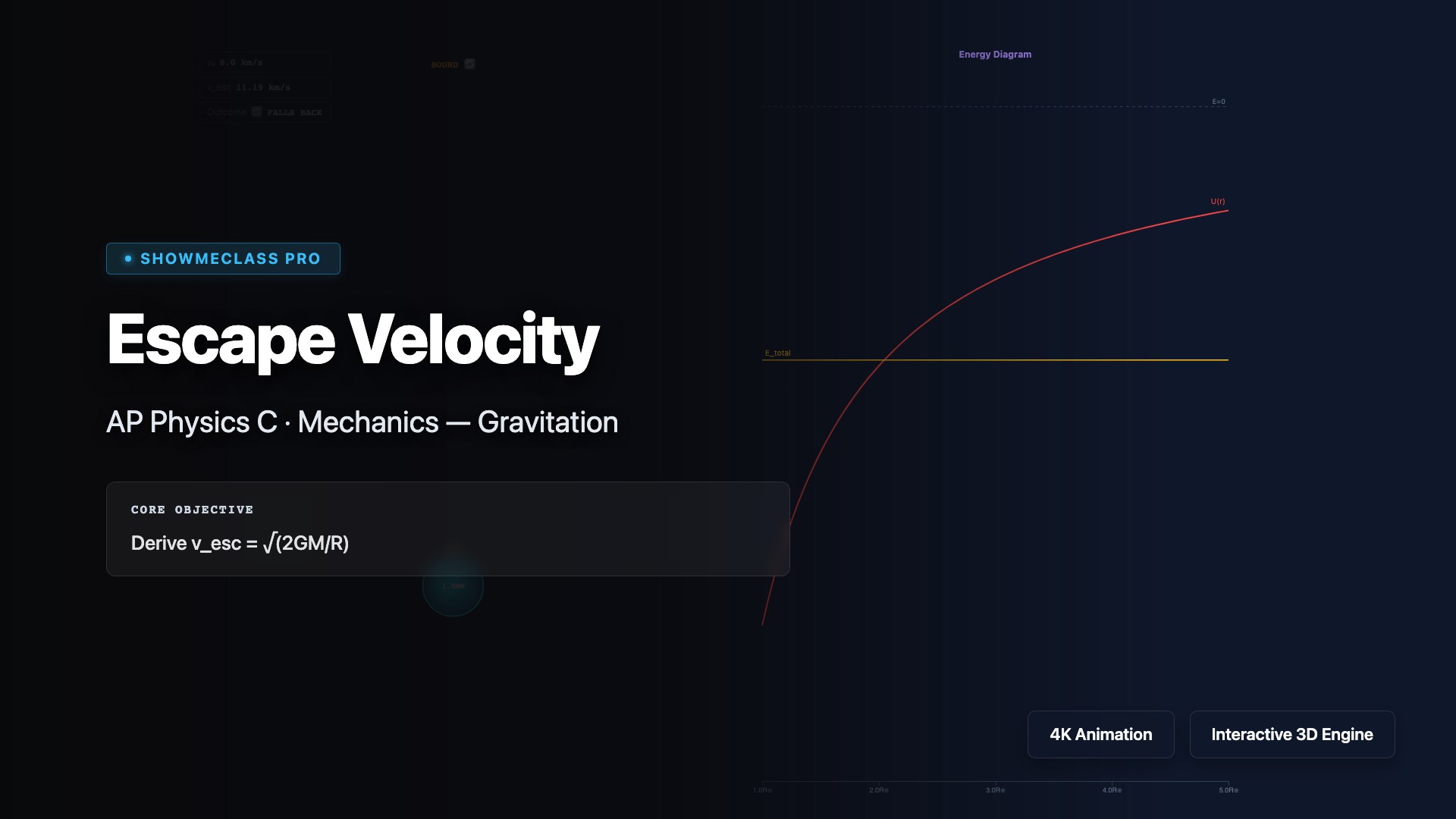
Escape Velocity & Gravitational Binding
Launch a projectile and see whether it escapes or falls back. Energy diagram shows U(r) vs total energy. Compare escape velocities of Earth, Mars, Jupiter, and Moon.
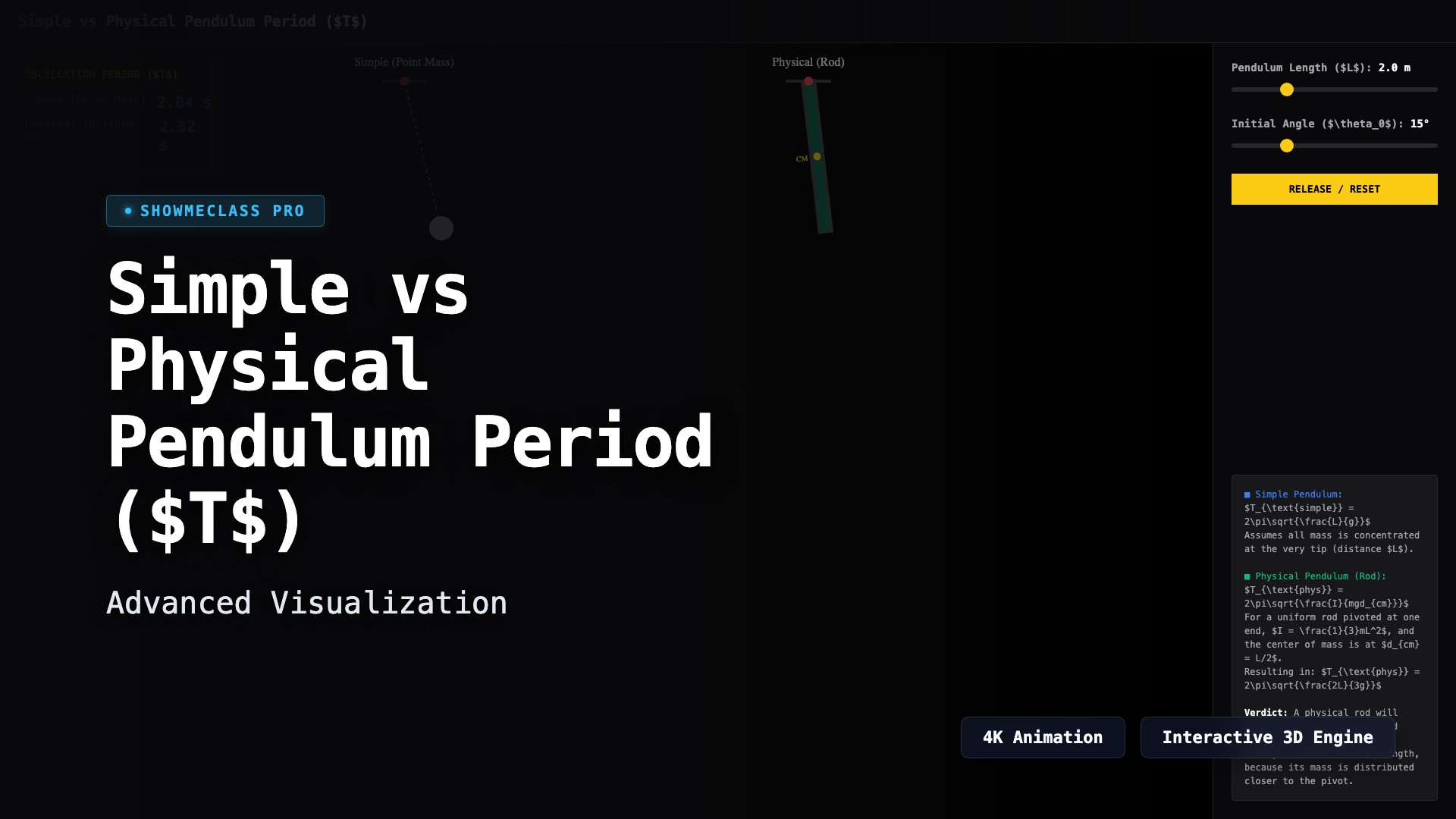
Simple vs Physical Pendulum Period
Simulate and compare the oscillation period of a point mass on a string (simple pendulum) versus a rigid uniform rod (physical pendulum) to visualize how mass distribution speeds up the rotational cycle.
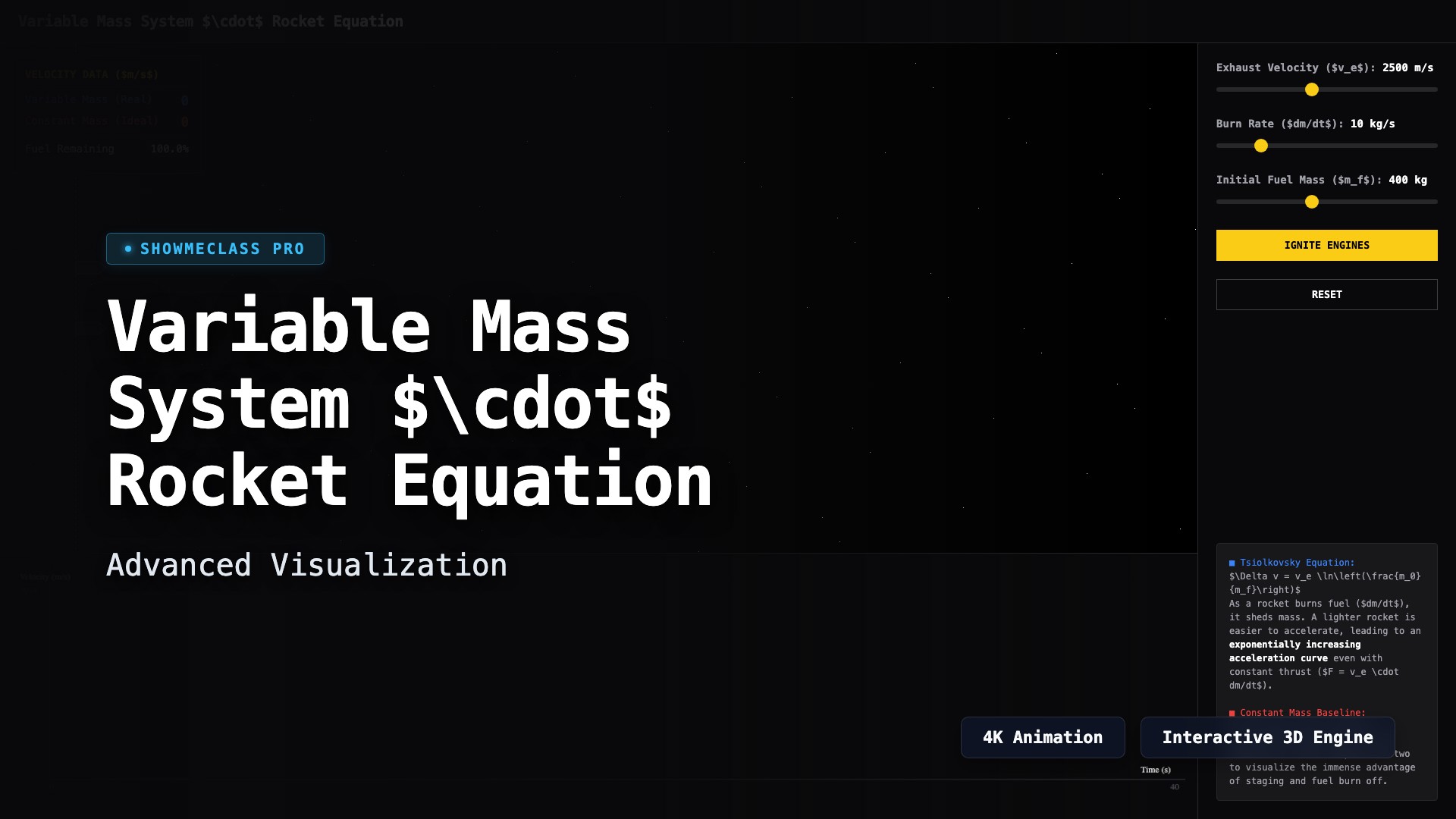
Variable Mass System (Rocket Equation)
Explore the Tsiolkovsky Rocket Equation. Model continuous thrust as mass exponentially decreases due to fuel burn, comparing standard linear kinematic acceleration against variable-mass exponential acceleration.
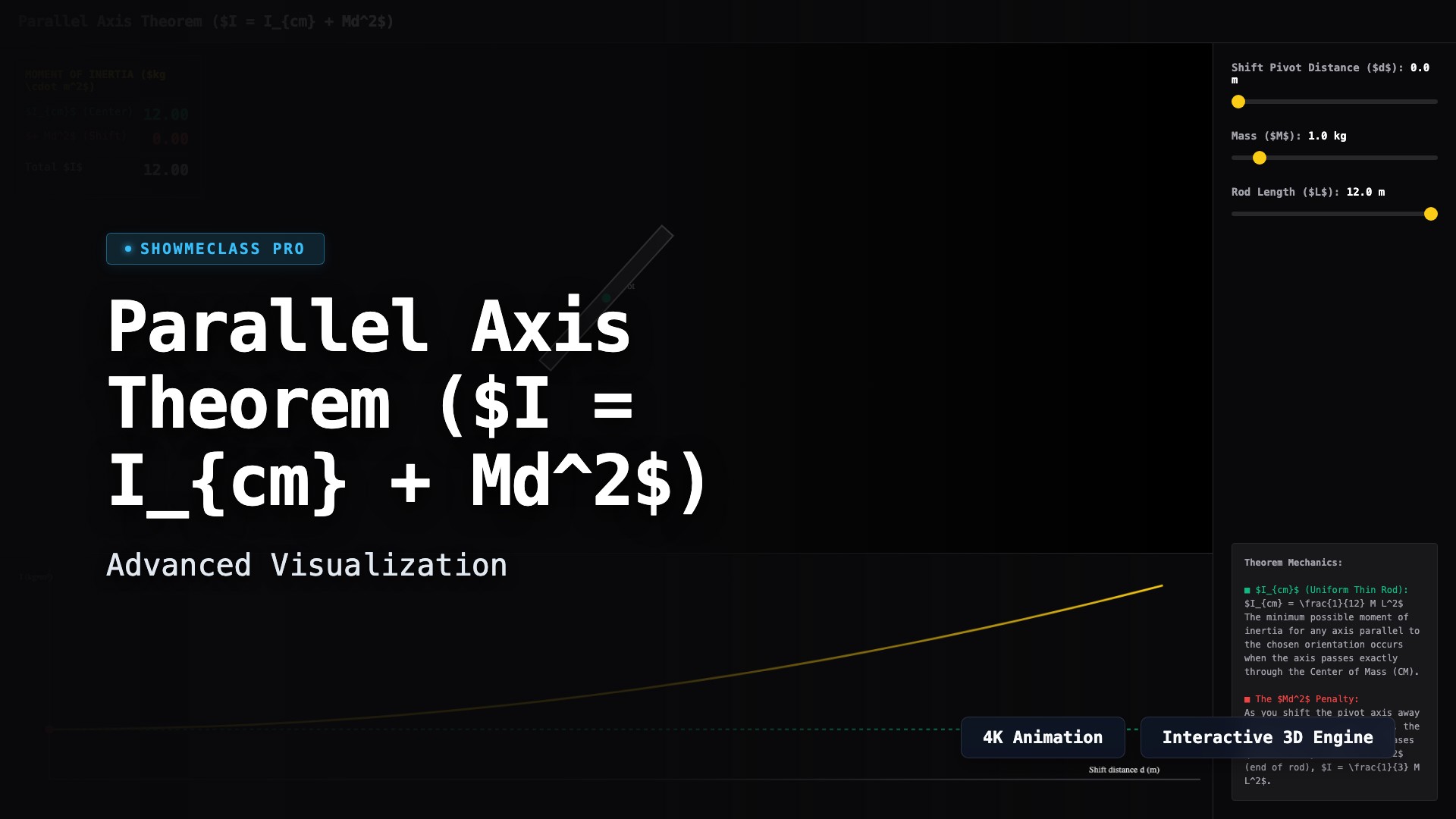
Parallel Axis Theorem Visualizer
Visualize how the moment of inertia scales quadratically as the rotation axis shifts away from the center of mass. Interactively drag the pivot point along a rigid rod and plot the Md² penalty.
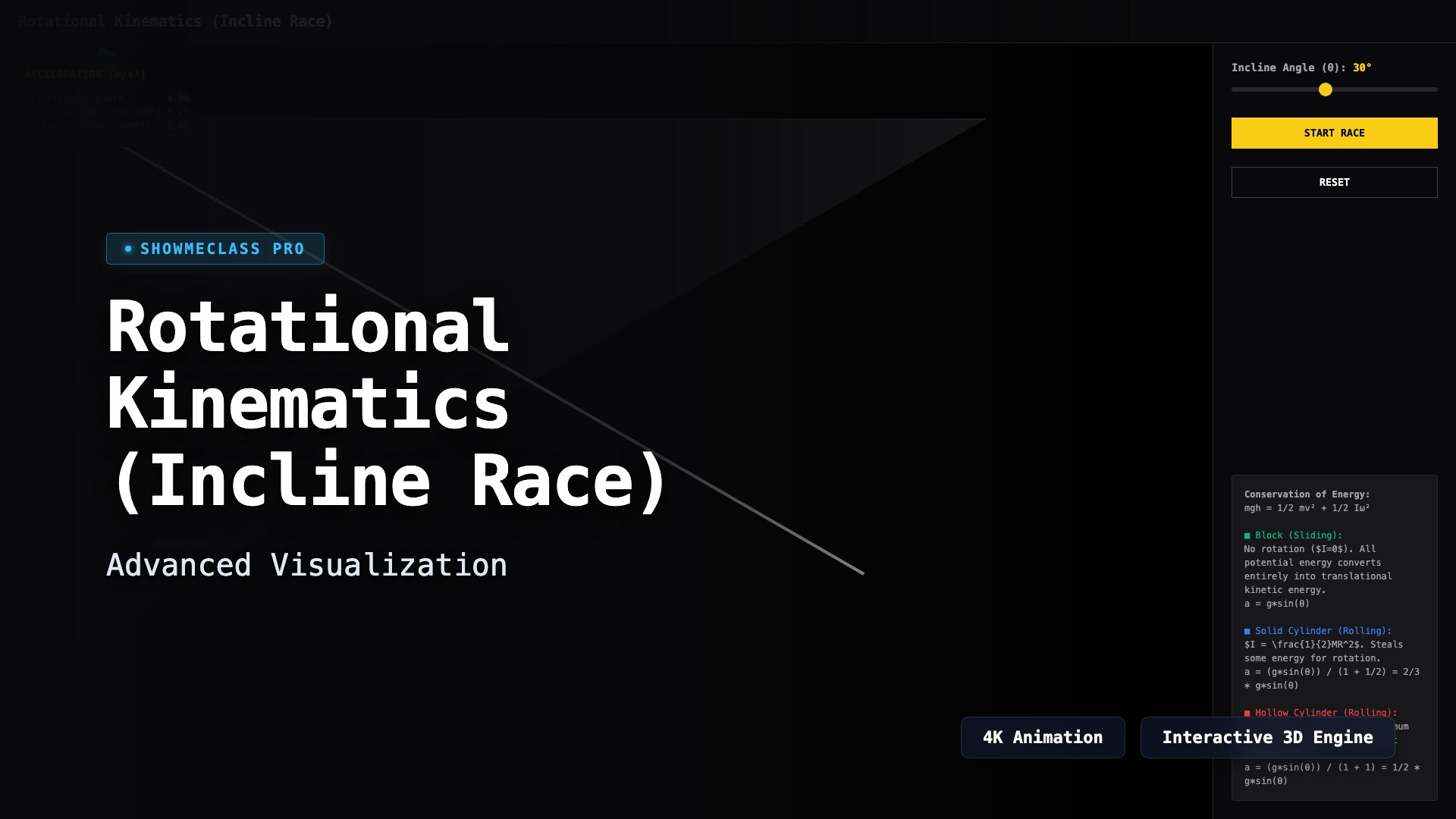
Rolling vs Sliding Friction (Incline Race)
Compare the translational acceleration of a solid cylinder, a hollow cylinder, and a frictionless sliding block down an incline. Visualize how rotational inertia steals kinetic energy from linear motion.
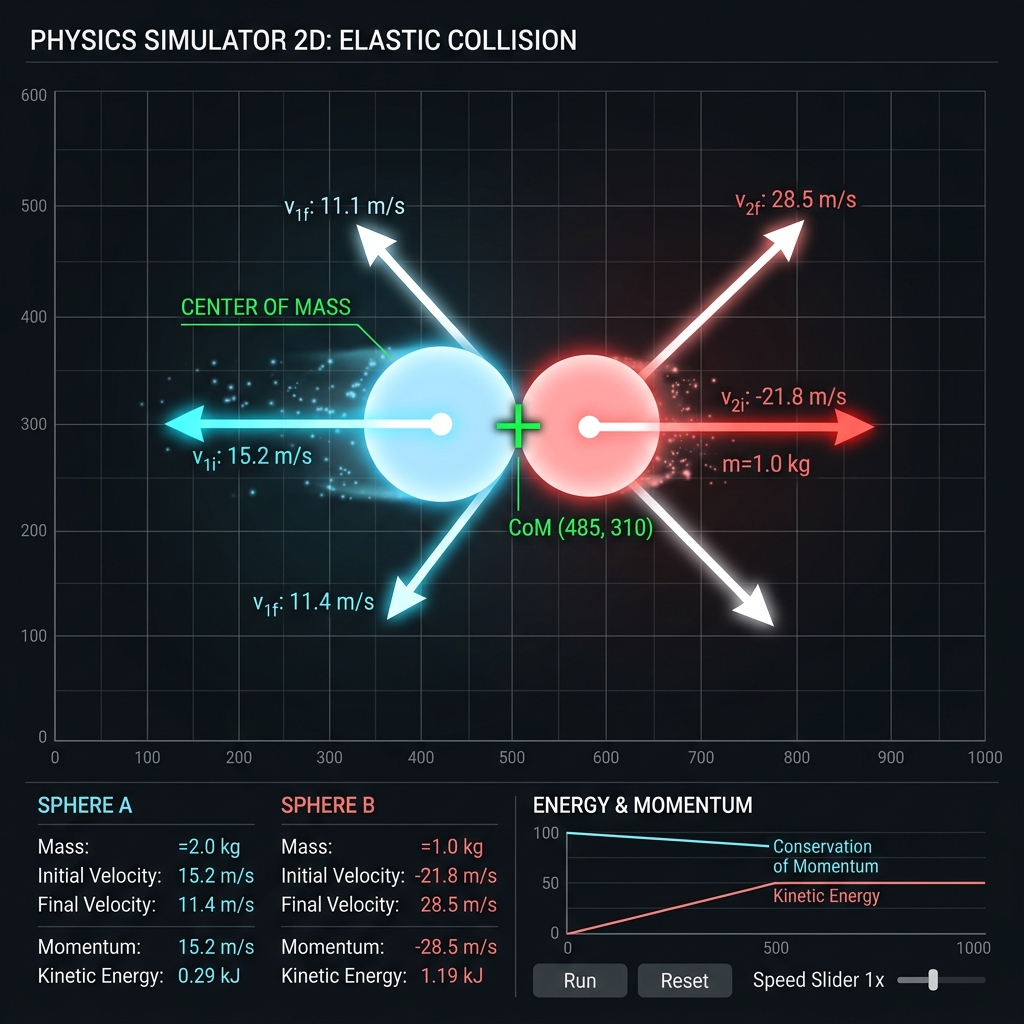
2D Center of Mass Collision Simulator
Simulate 2D elastic collisions from both the Laboratory and Center of Mass reference frames. Visualize how the total momentum in the COM frame always remains exactly zero, creating perfectly symmetric scattering trajectories.
Ballistic Pendulum Conservation
Analyze the classic dual-phase conservation problem. Shoot a bullet into a block to visualize the entirely inelastic momentum transfer and instantaneous loss of kinetic energy, followed by the pendulum swing where mechanical energy is perfectly conserved.
Coriolis Effect Visualizer
A split-screen comparison revealing the true nature of 'fictitious' forces. Watch a projectile travel in a perfectly straight line from an Inertial space perspective, while simultaneously generating a sweeping curved path on a Rotating earth frame.
Terminal Velocity & Drag Force
Examine the differential equations of falling objects experiencing linear and quadratic air resistance. Compare velocity-time graphs and asymptotes.