
Universal Gravitation & Orbits
Interactive 3D space simulator for Newton's Law of Universal Gravitation. Launch satellites, observe elliptical orbits, and track kinetic and potential energy live.
Buoyancy & Archimedes Principle
Drop objects of different densities into fluid of adjustable density. Observe buoyant force, weight, and net force to predict whether objects sink, float, or remain neutrally buoyant — all in 3D.
Doppler Effect 2D
Simulate sound wave propagation from a moving source. Calculate perceived frequencies for front and rear observers, and explore the Mach Cone (sonic boom) during supersonic flight.
Rotational Kinematics & Angular Momentum
Interactive 3D rotational mechanics simulator. Drop point masses onto a spinning disk to observe angular momentum conservation and kinetic energy dissipation.
Circular Motion & Centripetal Force
Visualize uniform circular motion with adjustable radius and speed. See how centripetal acceleration and net force always point toward the center, and explore the role of tension, gravity, and normal force.
Impulse & Momentum
Explore the impulse-momentum theorem stating that impulse (J = FΔt) equals change in momentum (Δp = mΔv). Visualize how force applied over time changes an object's momentum, and understand why extending collision time (airbags, crumple zones, landing on soft surfaces) reduces peak force by spreading impulse over longer duration. Apply J = Δp to analyze collisions, rocket propulsion, and sports scenarios where controlling force duration matters.
Binary Star System (Barycenter Orbits)
Interactive 3D simulation of a binary star system. Understand center of mass (barycenter), orbital periods, and universal gravitation.
Velocity
Analyze velocity-time graphs to understand motion characteristics. Learn that the slope of a v-t graph gives acceleration, and the area under the curve represents displacement. Practice interpreting constant velocity (horizontal line), constant acceleration (straight slope), and changing acceleration (curved line). Understand how positive/negative slopes indicate speeding up/slowing down, and how the graph connects to position-time and acceleration-time representations of motion.
Rolling Motion & Moment of Inertia Race
Simulate a Solid Sphere, Solid Cylinder, Hoop, and Sliding Box racing down an inclined plane. Visualize exactly how rotational inertia affects linear acceleration and energy conversion.
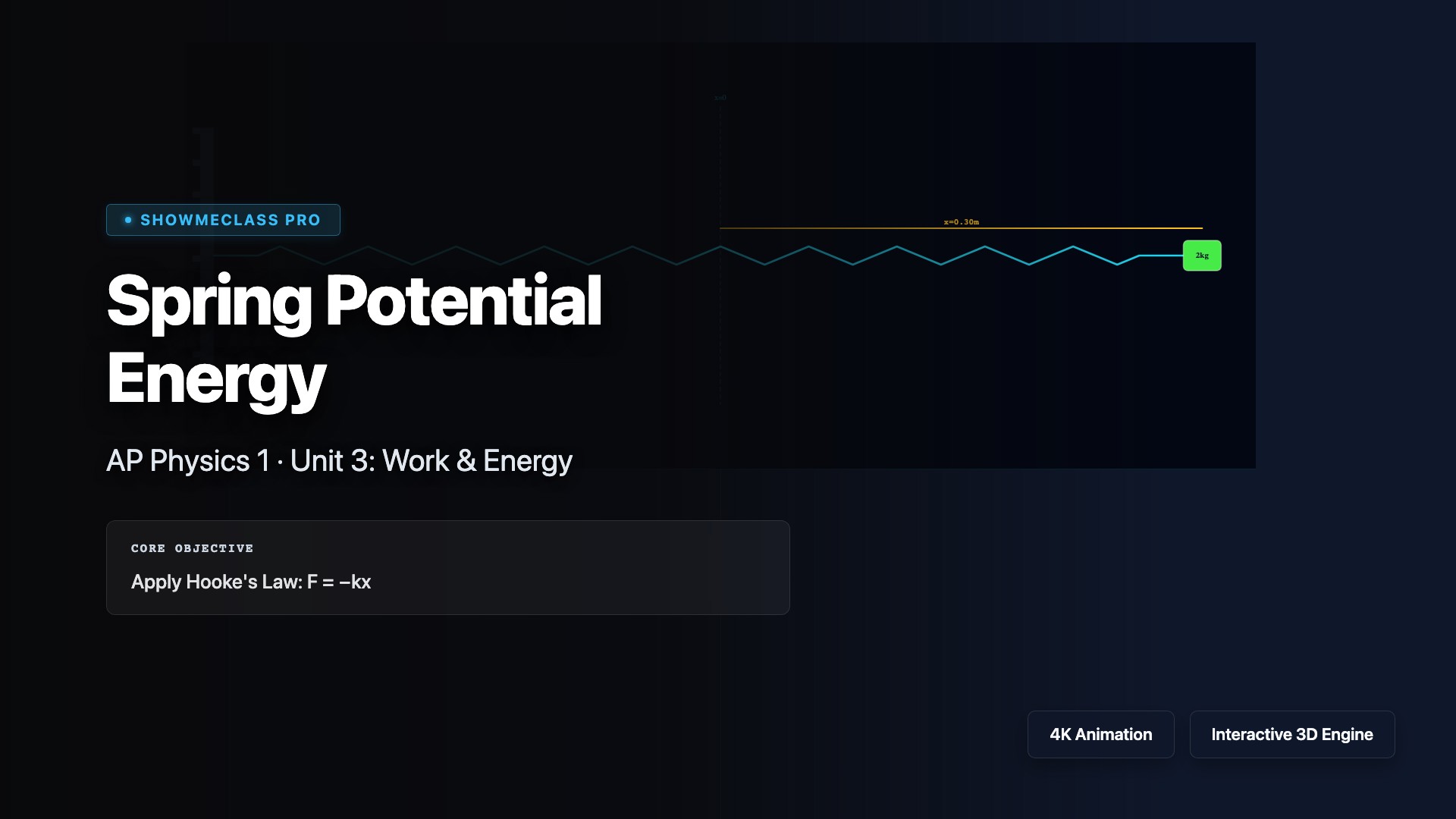
Spring Potential Energy
Explore elastic potential energy stored in springs using Hooke's Law (F = -kx) and the energy formula PEspring = ½kx², where k is the spring constant and x is displacement from equilibrium. Visualize how compressing or stretching a spring stores energy that can be converted to kinetic energy. Apply conservation of energy to spring-mass systems, understand the relationship between spring stiffness and stored energy, and solve problems involving springs in toys, shock absorbers, and oscillating systems.
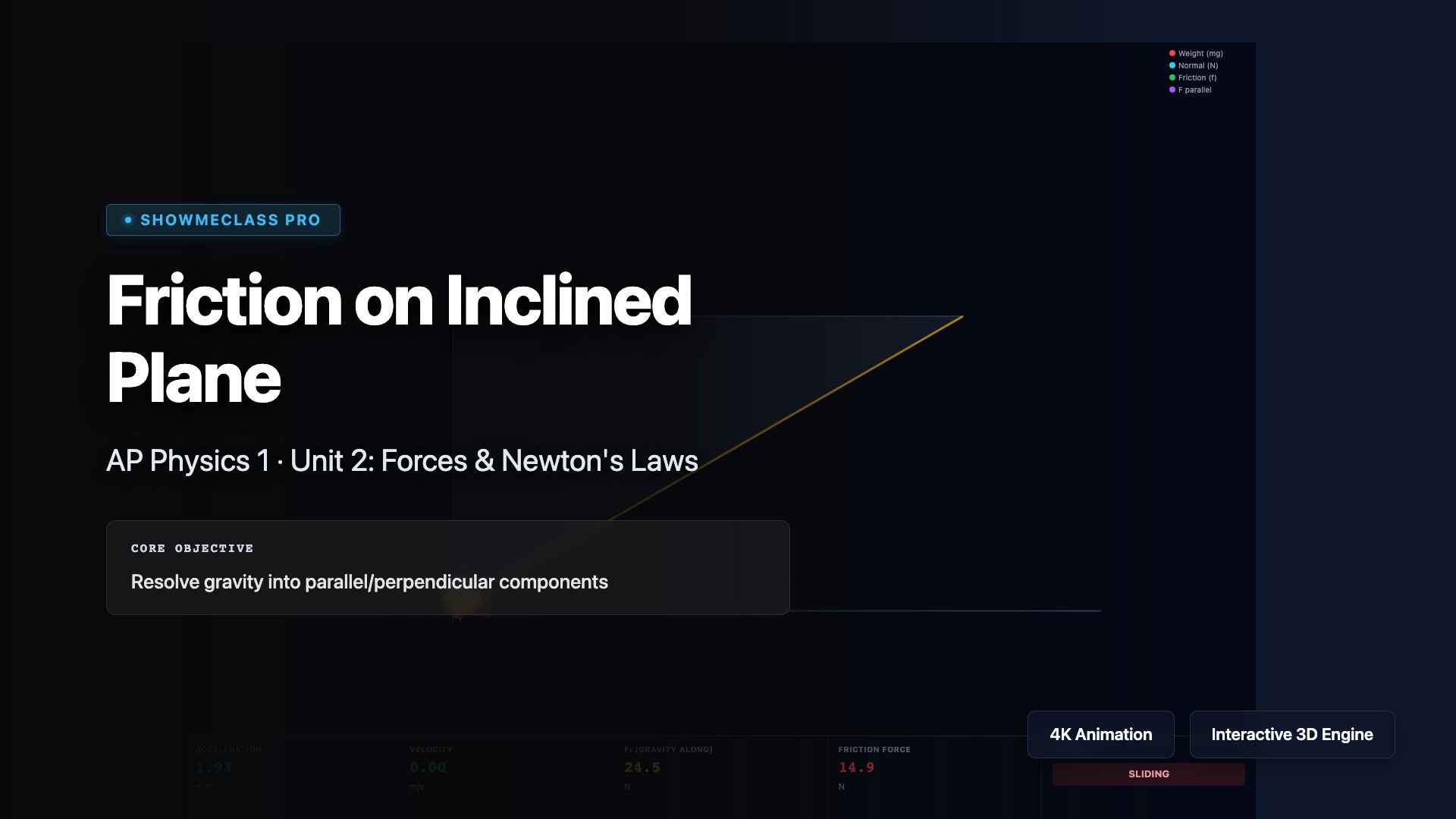
Friction on Inclined Plane
Analyze forces on objects on inclined planes including weight components (mg sin θ parallel to slope, mg cos θ perpendicular), normal force, and friction. Understand static friction (fs ≤ μsN prevents motion) versus kinetic friction (fk = μkN opposes motion). Practice decomposing forces, determining whether objects slide or remain stationary, calculating acceleration down slopes, and finding the critical angle where objects begin to slip based on the coefficient of static friction.
Projectile Motion
Visualize 2D projectile trajectories with adjustable launch angle, initial velocity, and gravitational acceleration. Observe how each parameter affects range, maximum height, and time of flight in real time.
Conservation of Energy
Visualize the law of conservation of energy stating that total mechanical energy (kinetic + potential) remains constant in isolated systems without friction. Explore energy transformations between gravitational potential energy (mgh), elastic potential energy (½kx²), and kinetic energy (½mv²). Understand how work done by non-conservative forces like friction converts mechanical energy to thermal energy, and apply energy conservation to solve problems involving pendulums, roller coasters, and springs.
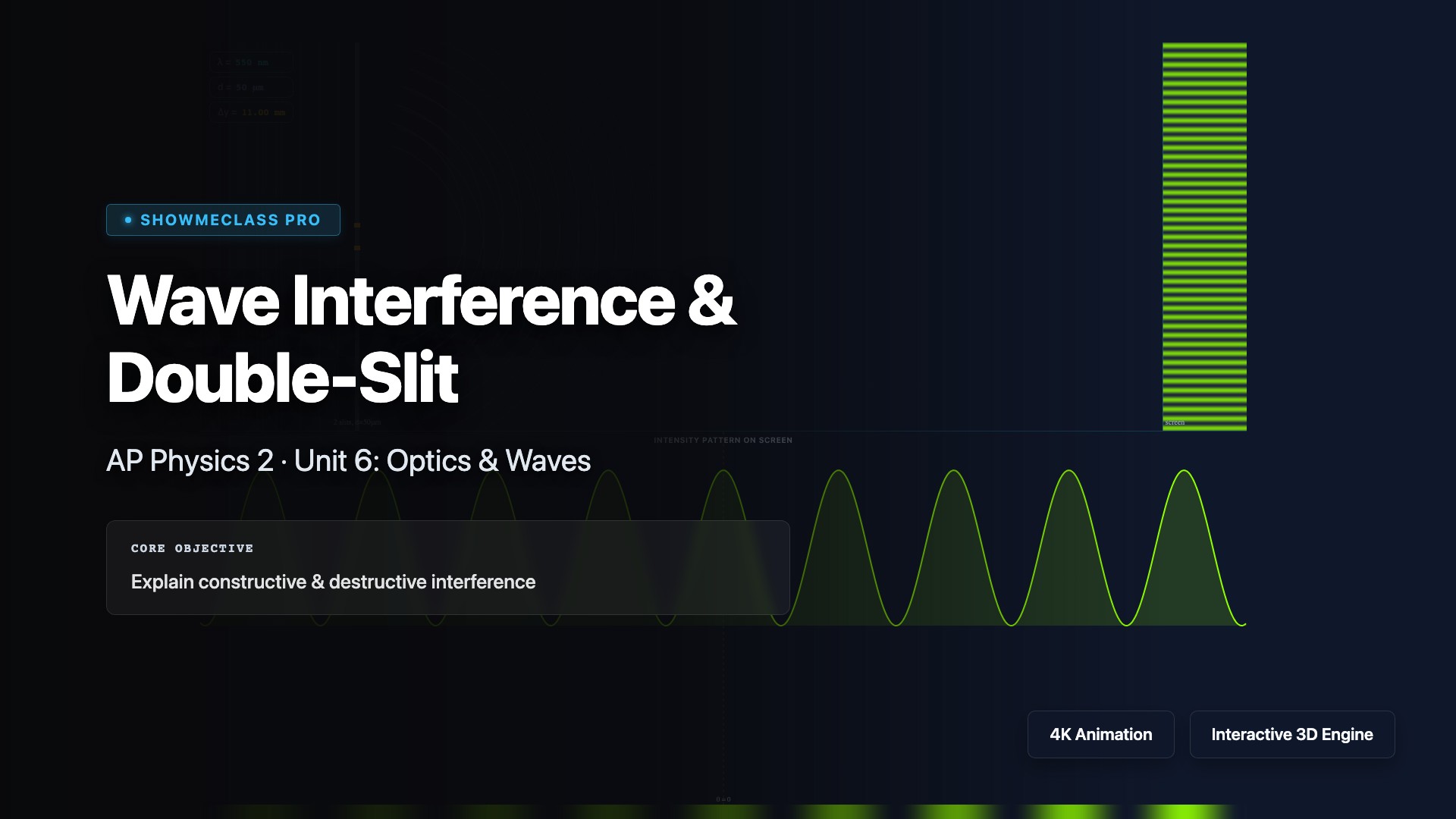
Wave Interference & Superposition
Interactive 3D ripple tank for studying mechanical wave interference. Manipulate wavelength, frequency, and source distance to observe nodal lines and superposition.
Projectile Motion & Air Drag
Interactive 3D physics simulator comparing ideal projectile motion to realistic air resistance. Graph terminal velocity and explore nonlinear trajectories.
Torque & Rotational Equilibrium
Interactively balance forces on a rigid lever by placing masses at different distances from the pivot. Observe torque magnitudes and directions, and understand the condition for rotational equilibrium.
Pendulum Oscillation
Visualize the simple pendulum and its harmonic motion. Investigate how length, gravity, and mass affect the period and frequency, complete with real-time energy bar charts.
Newton's Second Law
Explore Newton's second law stating that net force equals mass times acceleration (ΣF = ma). Understand that acceleration is directly proportional to net force and inversely proportional to mass. Practice applying F = ma to calculate unknown forces, masses, or accelerations in various scenarios. Visualize how multiple forces combine vectorially to produce net force, and solve problems involving tension, friction, gravity, and applied forces on objects in equilibrium or accelerating motion.
Gravitational Potential Energy Well
Interactive 3D potential energy well simulator. Understand negative gravitational potential energy, kinetic energy, and escape velocity.
Free Body Diagram Builder
Build free body diagrams (FBDs) to visualize all forces acting on an object as vectors from its center of mass. Practice identifying forces including weight (mg downward), normal force (perpendicular to surface), friction (parallel to surface, opposing motion), tension (along rope/string), and applied forces. Master using FBDs to apply Newton's second law ΣF = ma by resolving forces into components and solving for unknowns in equilibrium and accelerating systems.
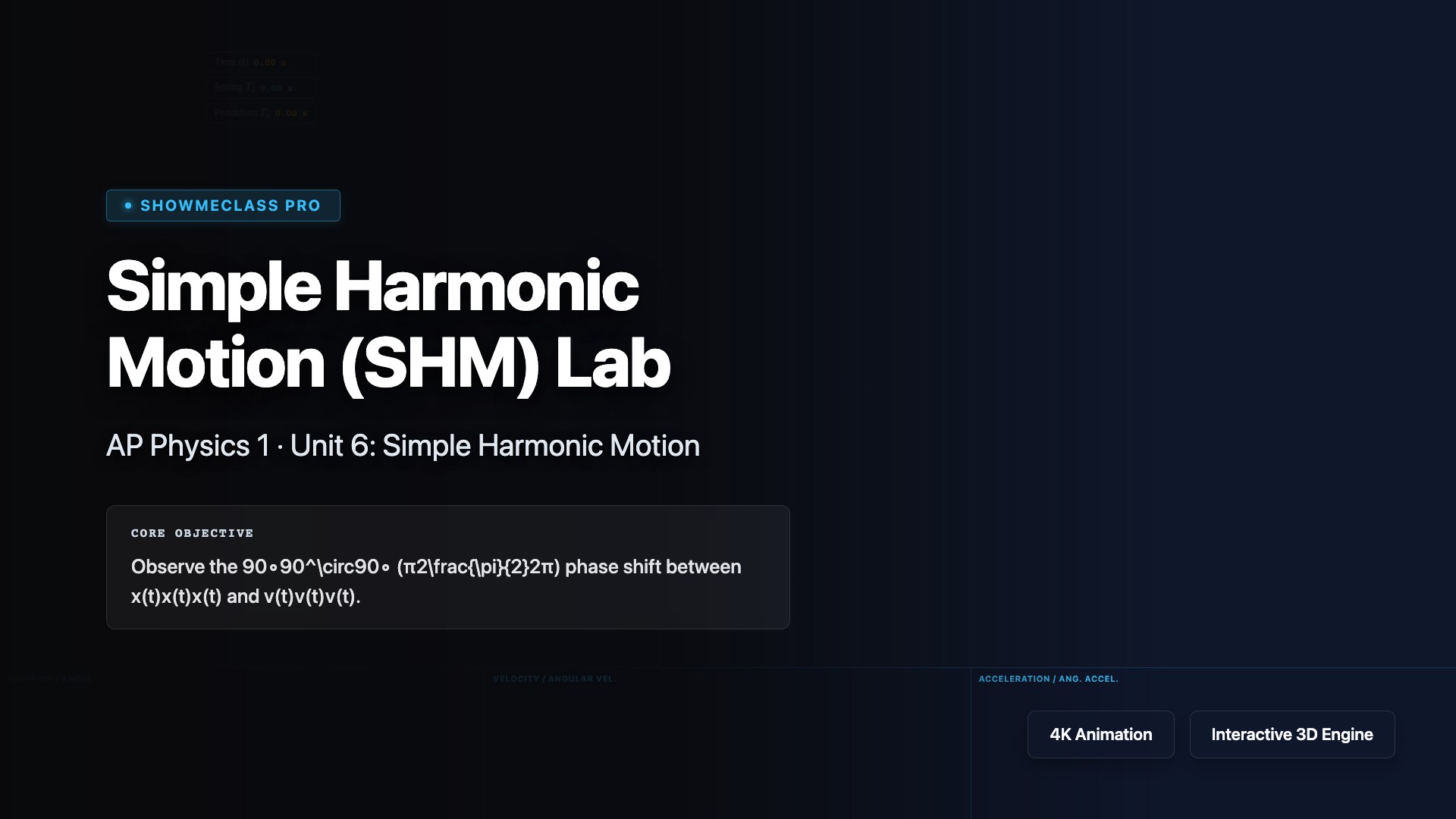
Simple Harmonic Motion
Explore mass-spring oscillations and energy transformations. Adjust mass, spring constant, and damping to observe how frequency, amplitude, and energy interchange between kinetic and potential forms.
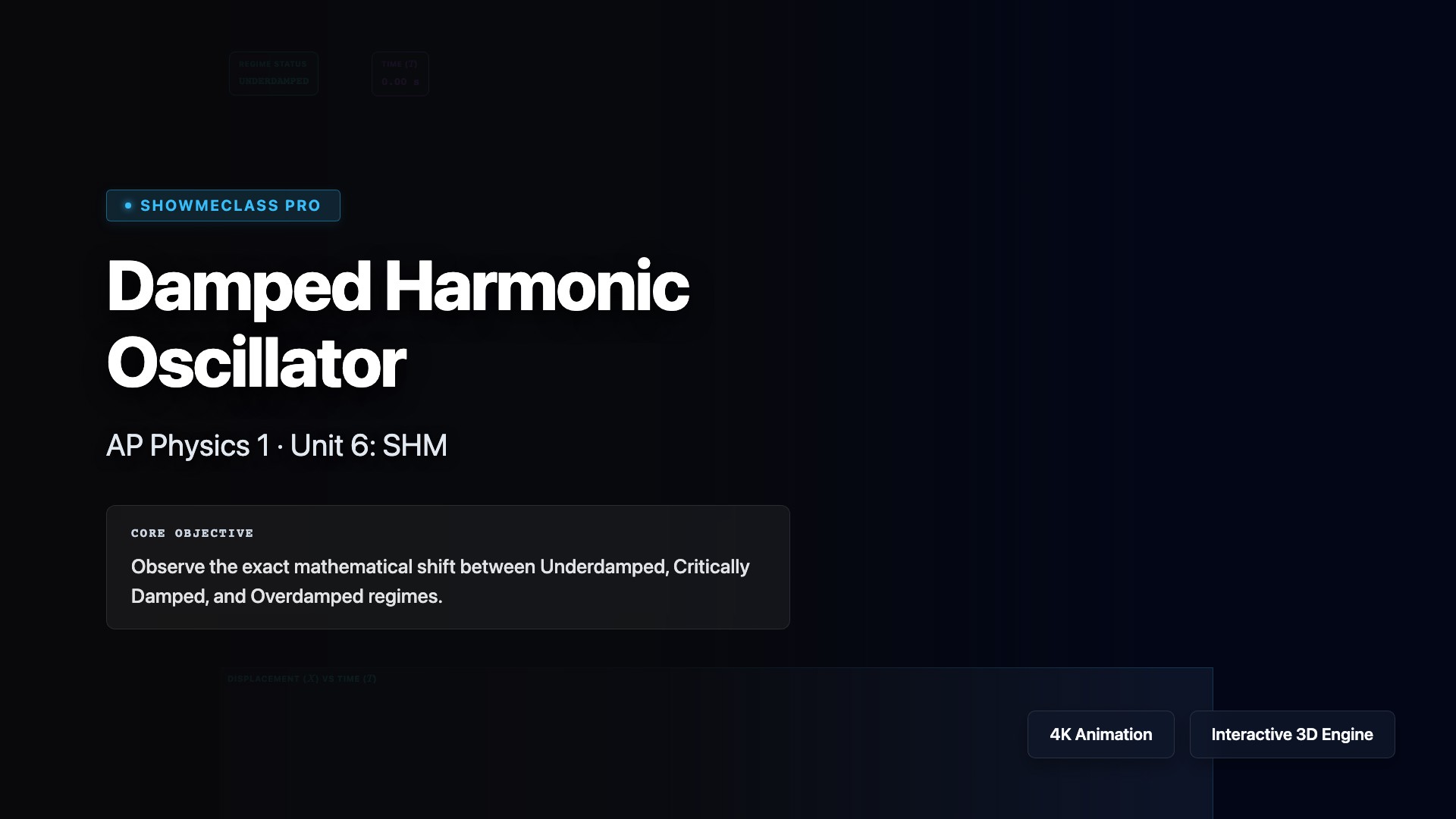
Damped Harmonic Oscillation
Interactive 3D damped spring-mass simulator. Explore underdamped, critically damped, and overdamped regimes with live analytical charting and decay envelopes.
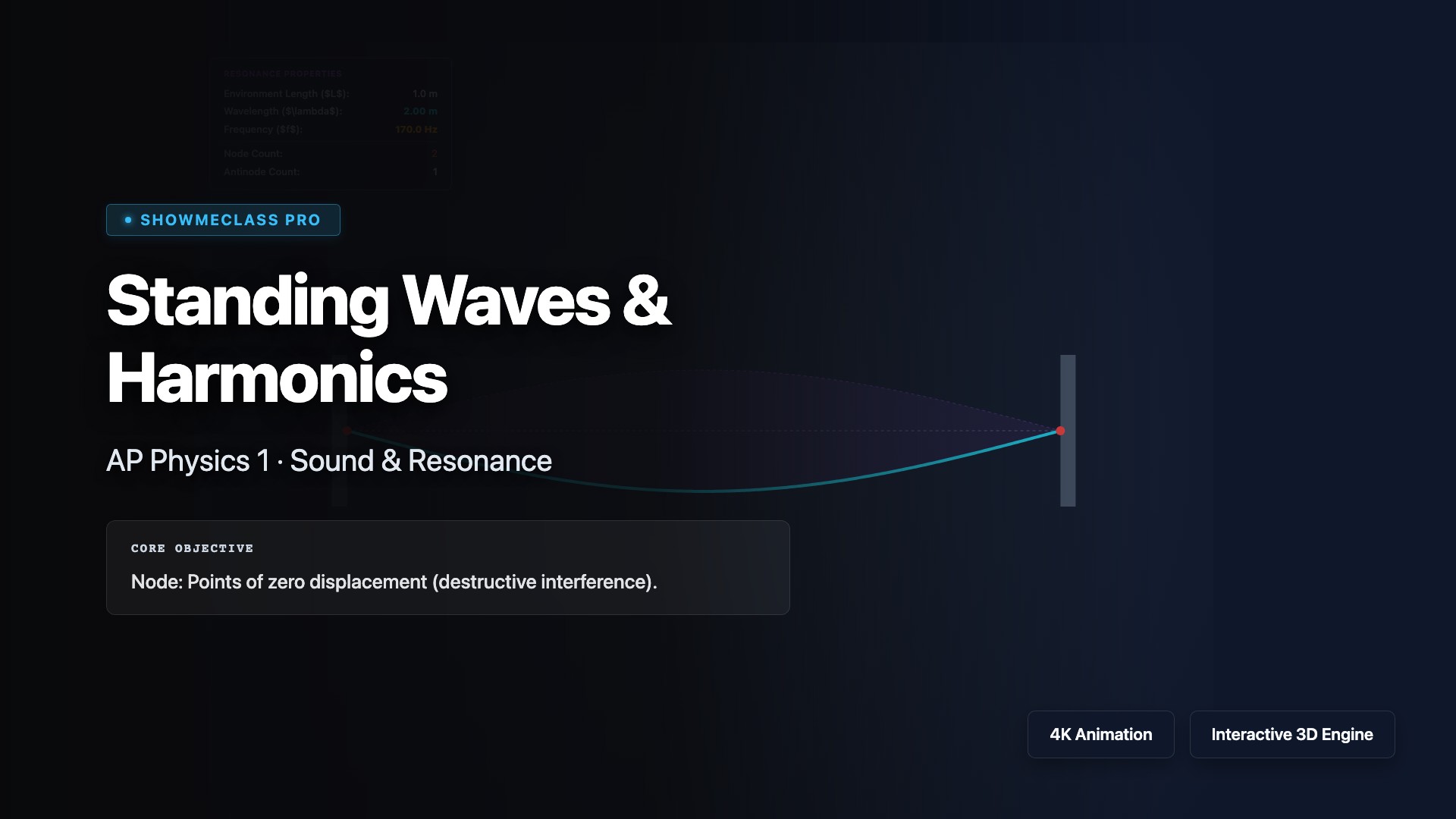
Standing Waves & Harmonics Lab
Interactive 3D simulation of standing waves on a string. Visualize nodes, antinodes, wave superposition, and harmonics with live D3 interference analysis.
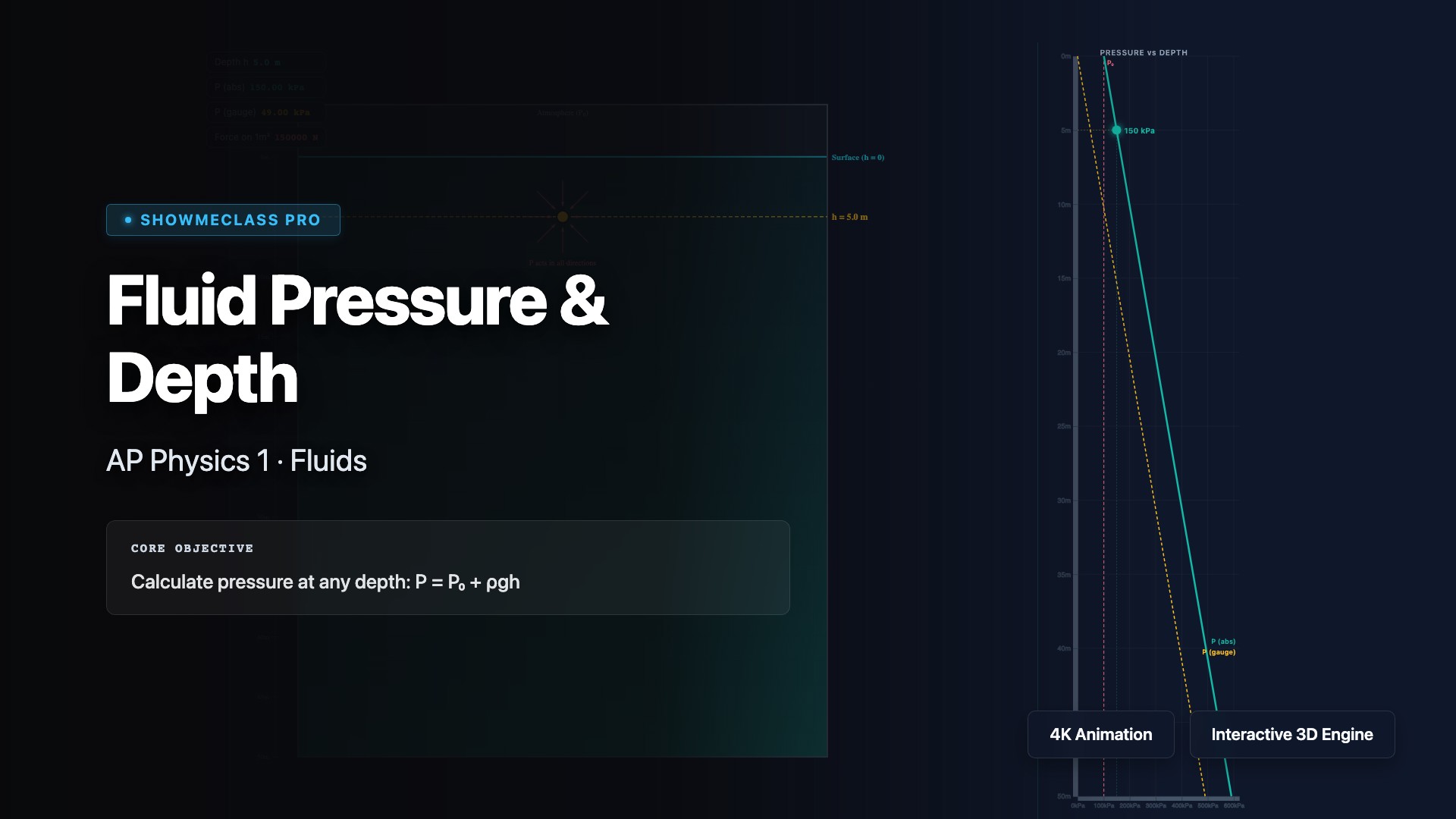
Fluid Pressure & Depth
Explore how fluid pressure increases with depth according to P = P₀ + ρgh, where P₀ is atmospheric pressure, ρ is fluid density, g is gravitational acceleration, and h is depth. Understand Pascal's principle stating that pressure applied to a confined fluid is transmitted equally throughout the fluid. Visualize applications including hydraulic lifts, dam design, submarine pressure limits, and why water pressure increases as divers descend deeper underwater.
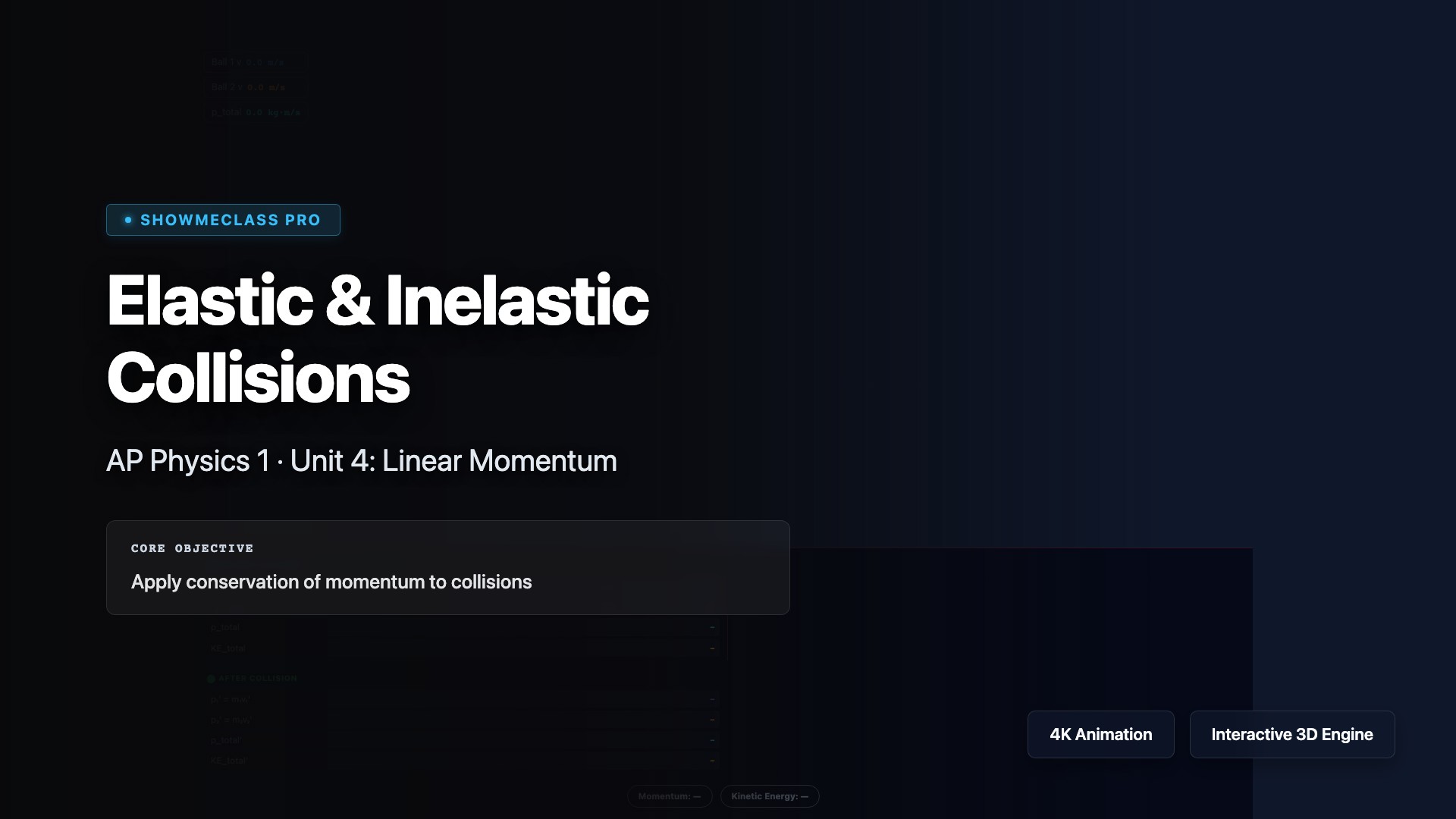
Elastic & Inelastic Collisions
Compare elastic collisions (both momentum and kinetic energy conserved) with inelastic collisions (only momentum conserved, kinetic energy lost to deformation, heat, sound). Visualize perfectly inelastic collisions where objects stick together after impact. Apply conservation of momentum p₁ᵢ + p₂ᵢ = p₁f + p₂f to calculate final velocities. Understand the coefficient of restitution, and analyze real-world collisions including car crashes, billiard balls, and atomic particle interactions.
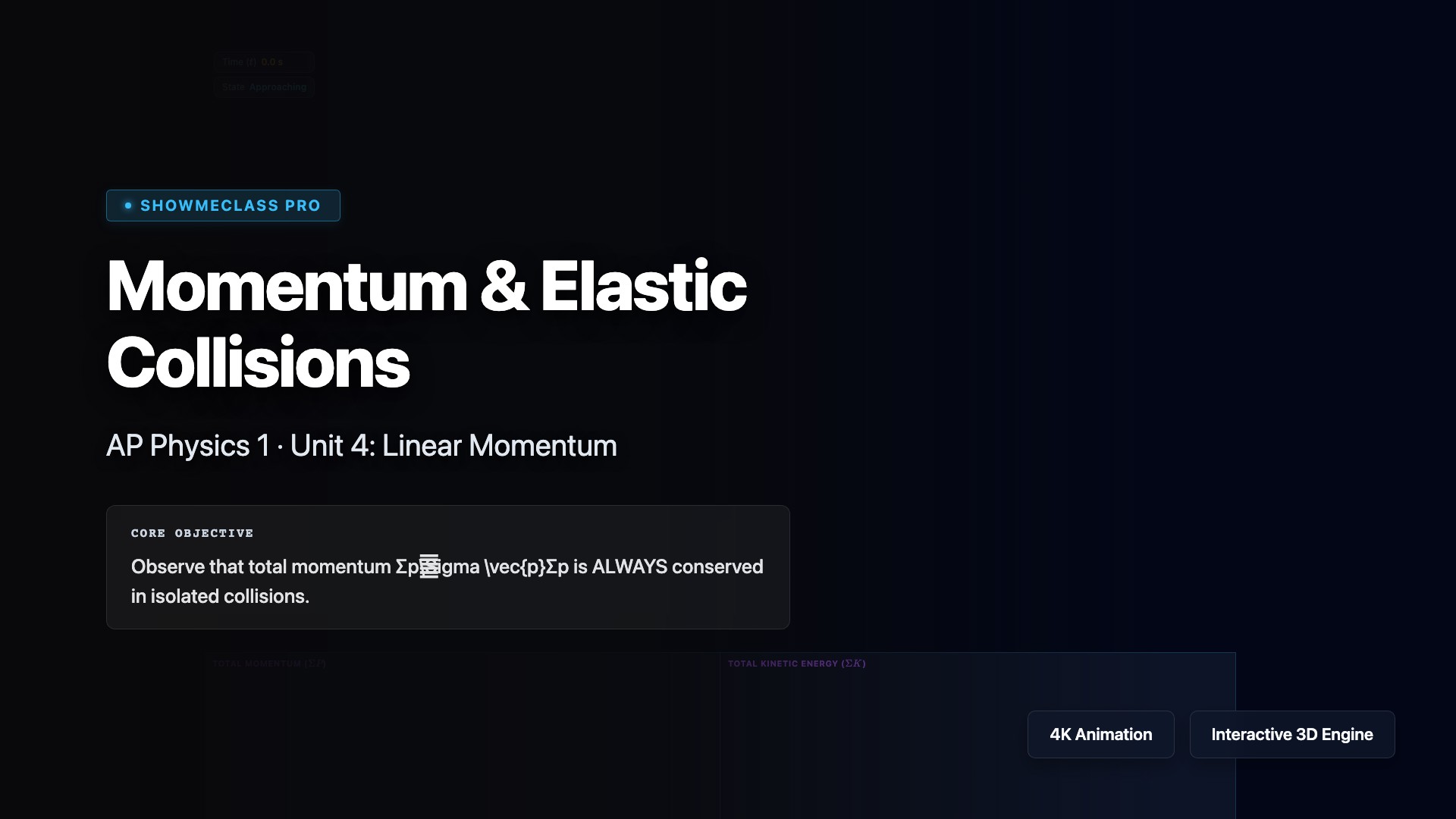
Momentum & Elastic Collisions
Interactive 1D collision physics simulator. Explore elastic and inelastic collisions, coefficient of restitution, and live momentum/energy conservation charts.
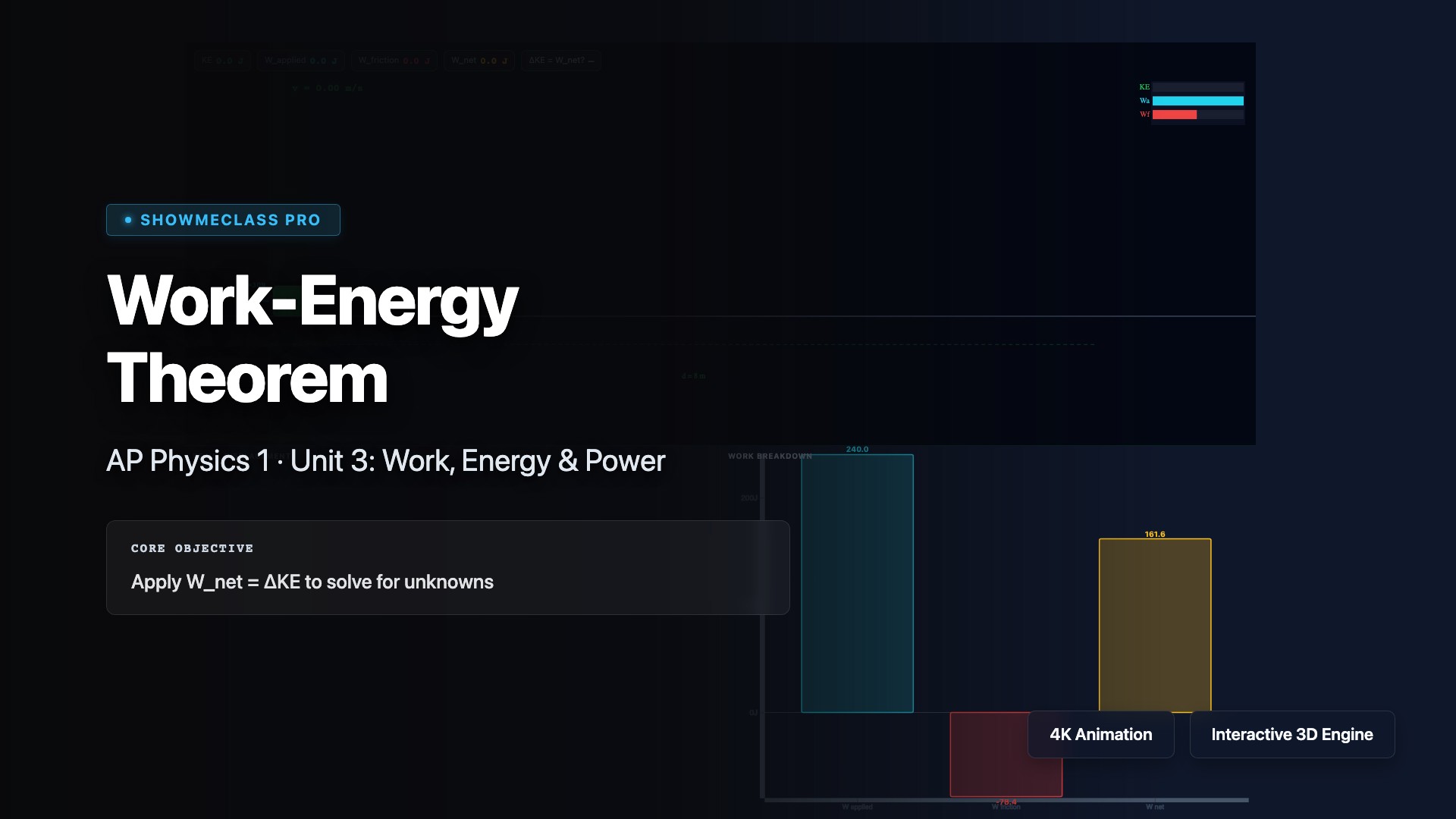
Work
Explore the work-energy theorem stating that net work done on an object equals its change in kinetic energy (Wnet = ΔKE). Understand that work is force times displacement in the direction of force (W = Fd cos θ), measured in joules. Visualize how positive work increases kinetic energy, negative work decreases it, and perpendicular forces do zero work. Apply the theorem to analyze motion with varying forces, friction, and gravitational effects.
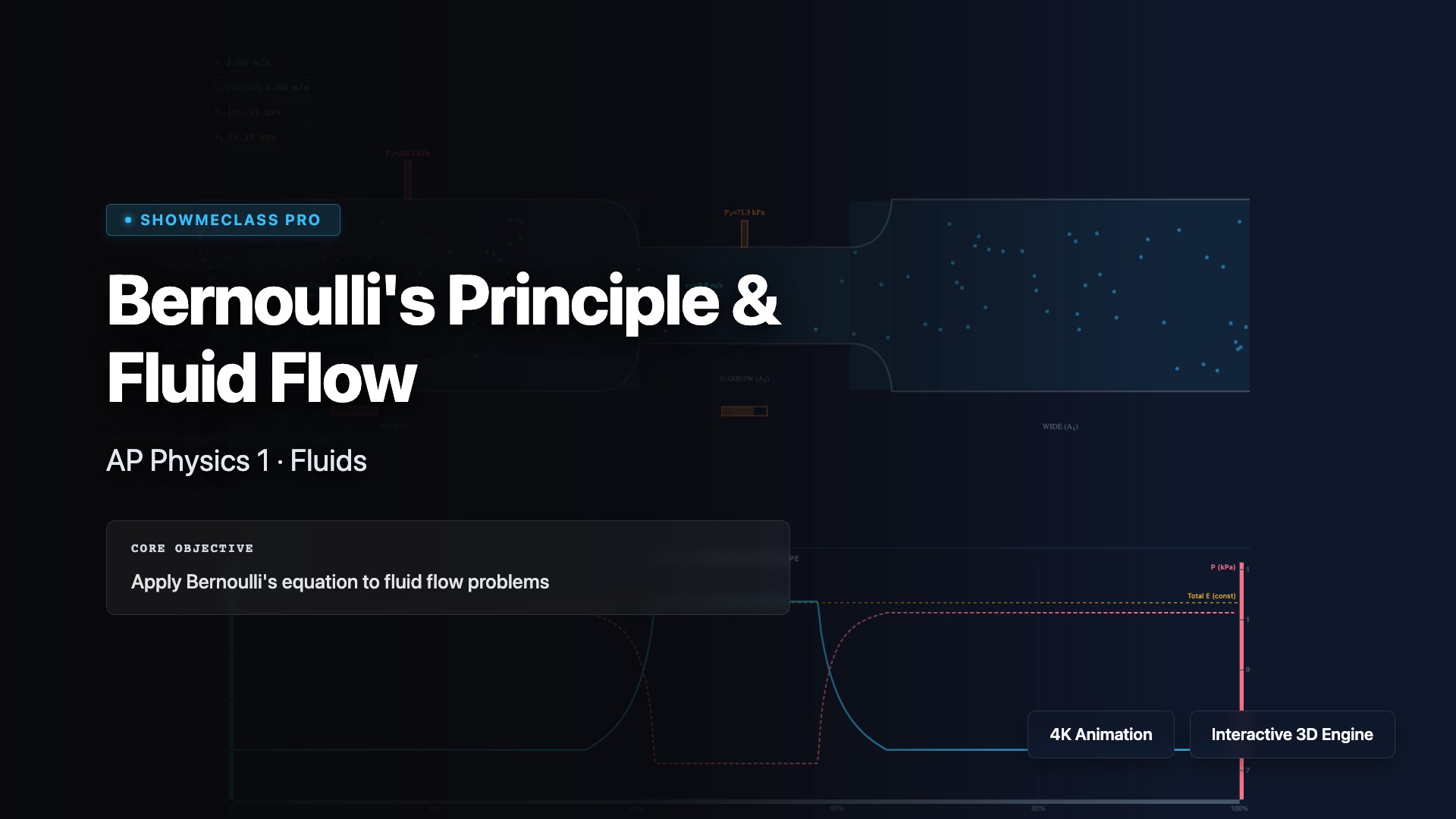
Bernoulli's Principle & Fluid Flow
Explore Bernoulli's principle stating that as fluid velocity increases, pressure decreases, derived from energy conservation in flowing fluids. Visualize the equation P + ½ρv² + ρgh = constant along a streamline. Understand applications including airplane lift (faster airflow over curved wing creates lower pressure), venturi effect in carburetors, and how the continuity equation A₁v₁ = A₂v₂ relates to Bernoulli's principle in explaining fluid behavior through varying pipe diameters.
1D Kinematics: Position, Velocity & Acceleration
Explore one-dimensional motion through position-time, velocity-time, and acceleration-time graphs. Understand that velocity is the derivative of position (v = dx/dt) and acceleration is the derivative of velocity (a = dv/dt). Practice using kinematic equations for constant acceleration: v = v₀ + at, x = x₀ + v₀t + ½at², and v² = v₀² + 2aΔx. Interpret graph slopes and areas to analyze motion, and solve problems involving free fall, braking, and accelerating objects.
Center of Mass Finder
Place and drag masses on a 2D canvas to calculate the center of mass in real time. Visualize how mass distribution affects the balance point of a system of particles.
Momentum & Impulse Lab
Simulate elastic and perfectly inelastic collisions. Adjust masses and velocities to verify conservation of momentum and compare kinetic energy before and after impact.
Torque & Rotational Equilibrium
Balance a beam by adjusting masses, distances, and pivot point. Visualize clockwise and counterclockwise torques and observe rotational equilibrium conditions in real time.
Simple Harmonic Motion Explorer
Animate a spring-mass system in SHM with real-time x(t), v(t), a(t) graphs. Adjust amplitude, mass, and spring constant to see how period, frequency, and energy change.
Standing Waves Generator
Visualize standing wave harmonics on a fixed string. Adjust harmonic number, amplitude, and wave speed to see nodes, antinodes, wavelength, and frequency in real time.
Rotational Inertia Comparator
Race shapes down a ramp to see which arrives first. Compare rotational inertia of solid/hollow spheres, cylinders, and rods. Understand how I/(mR²) determines rolling acceleration.
Work-Energy Theorem Lab
Push a block with adjustable force, mass, friction, and angle to verify W_net = ΔKE. Track kinetic energy, work by each force, and total net work with real-time graphs.
Circular Motion & Centripetal Force
Animate uniform circular motion with real-time velocity, acceleration, and force vectors. Adjust speed, radius, and mass to see how centripetal acceleration a_c = v²/r changes.
Static Equilibrium Bridge Builder
Analyze a simply supported beam with movable load. Calculate support reactions NA and NB using ΣF=0 and Στ=0 equilibrium conditions.
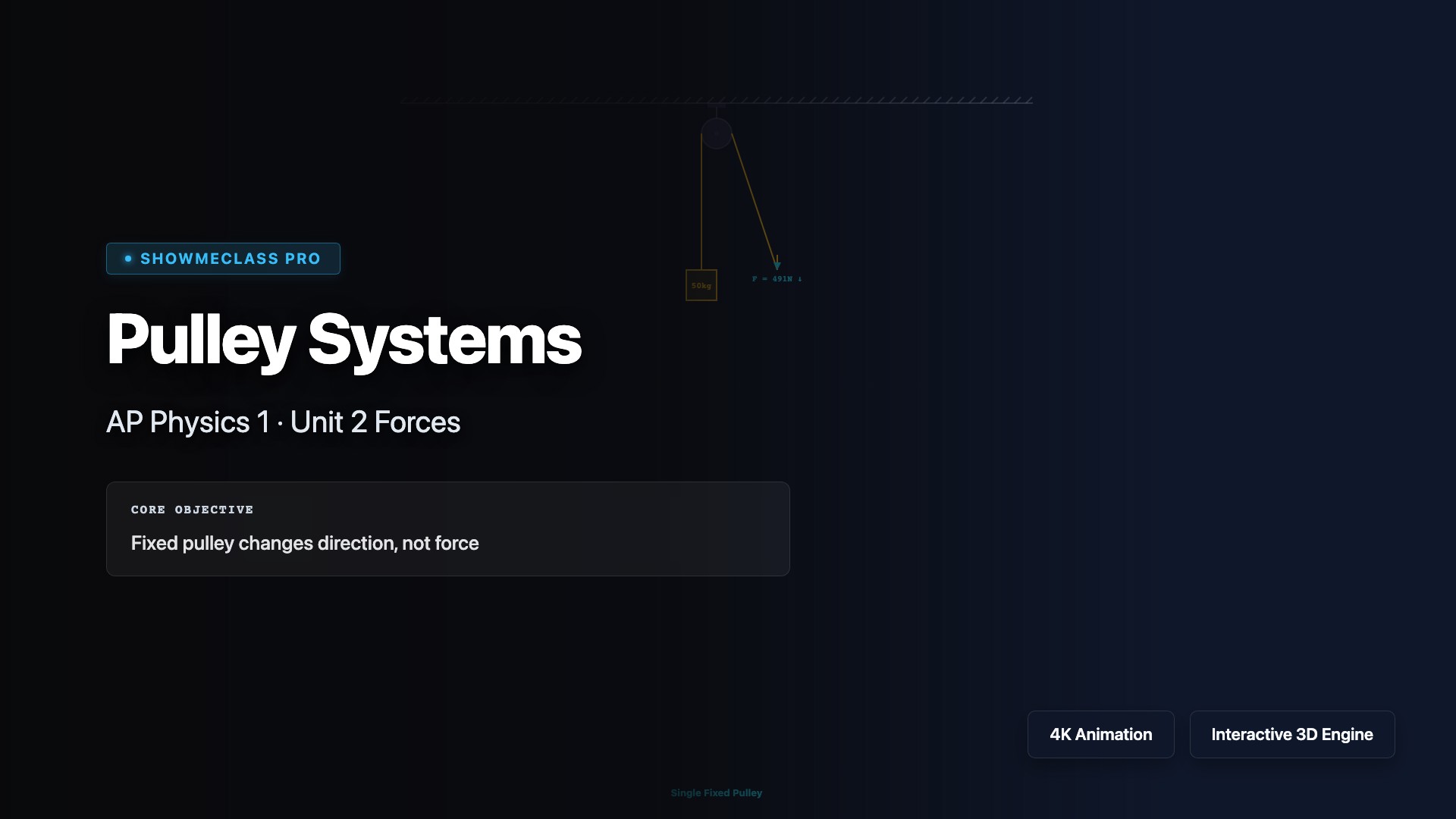
Pulley Systems & Mechanical Advantage
Compare 4 pulley configurations: single fixed, single movable, compound, and block & tackle. See how mechanical advantage trades force for distance.
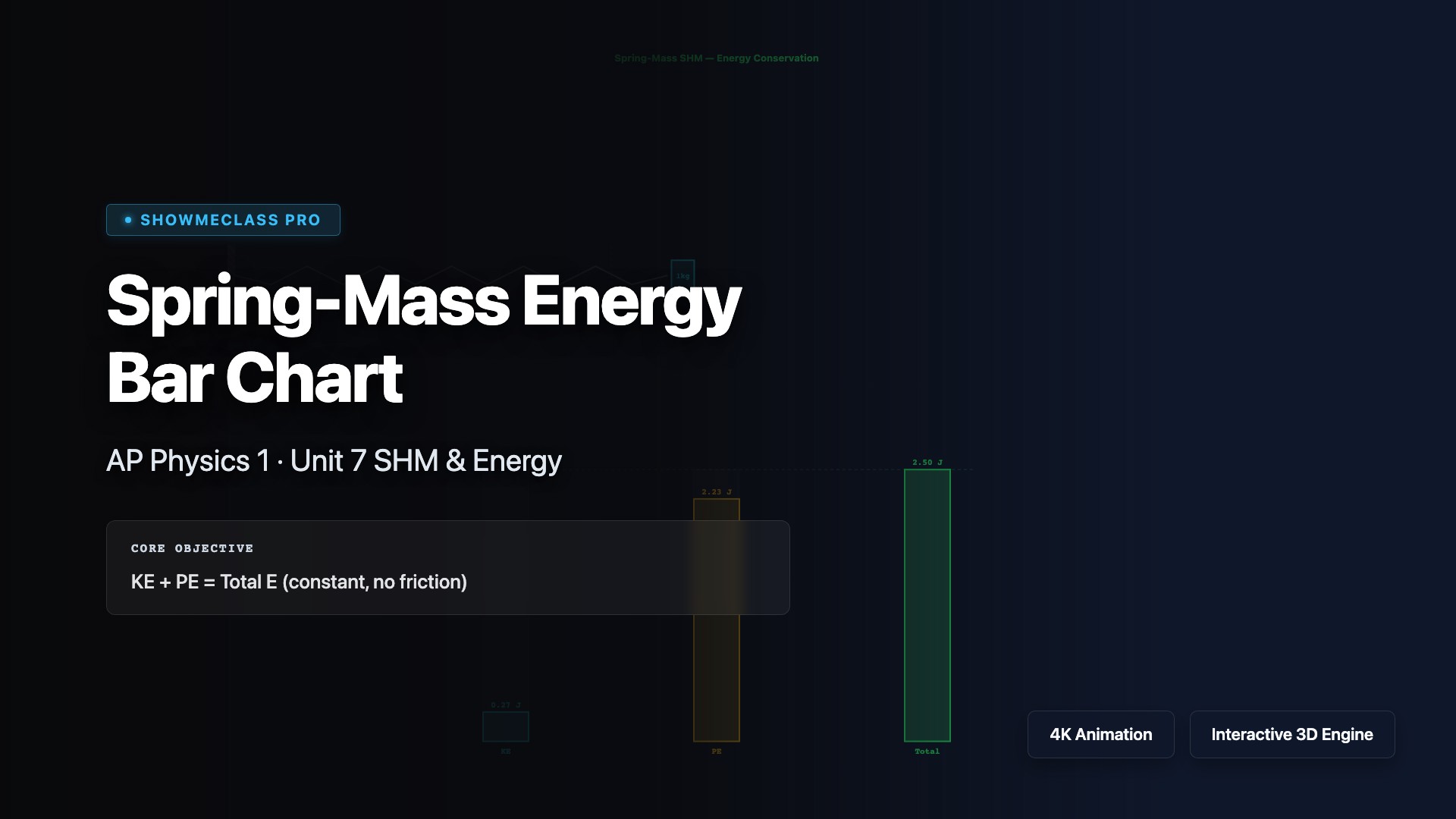
Spring-Mass Energy Bar Chart
Animated spring-mass SHM with real-time KE/PE/Total energy bar chart. PE = ½kx², KE = ½mv². Optional damping shows energy loss.
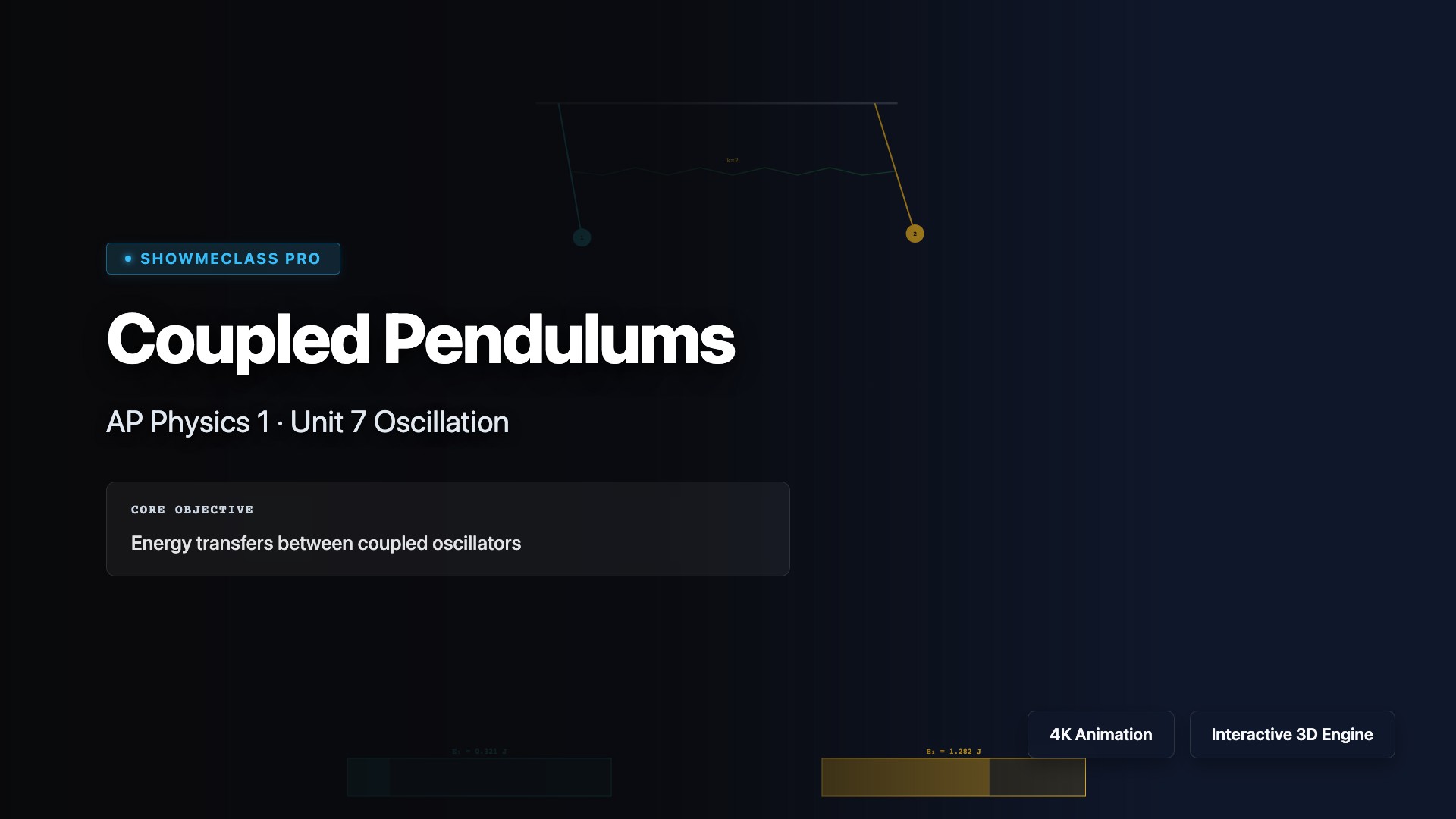
Coupled Pendulums & Energy Transfer
Two pendulums coupled by a spring exchange energy via beat oscillation. Adjust coupling strength to see faster/slower energy transfer between normal modes.
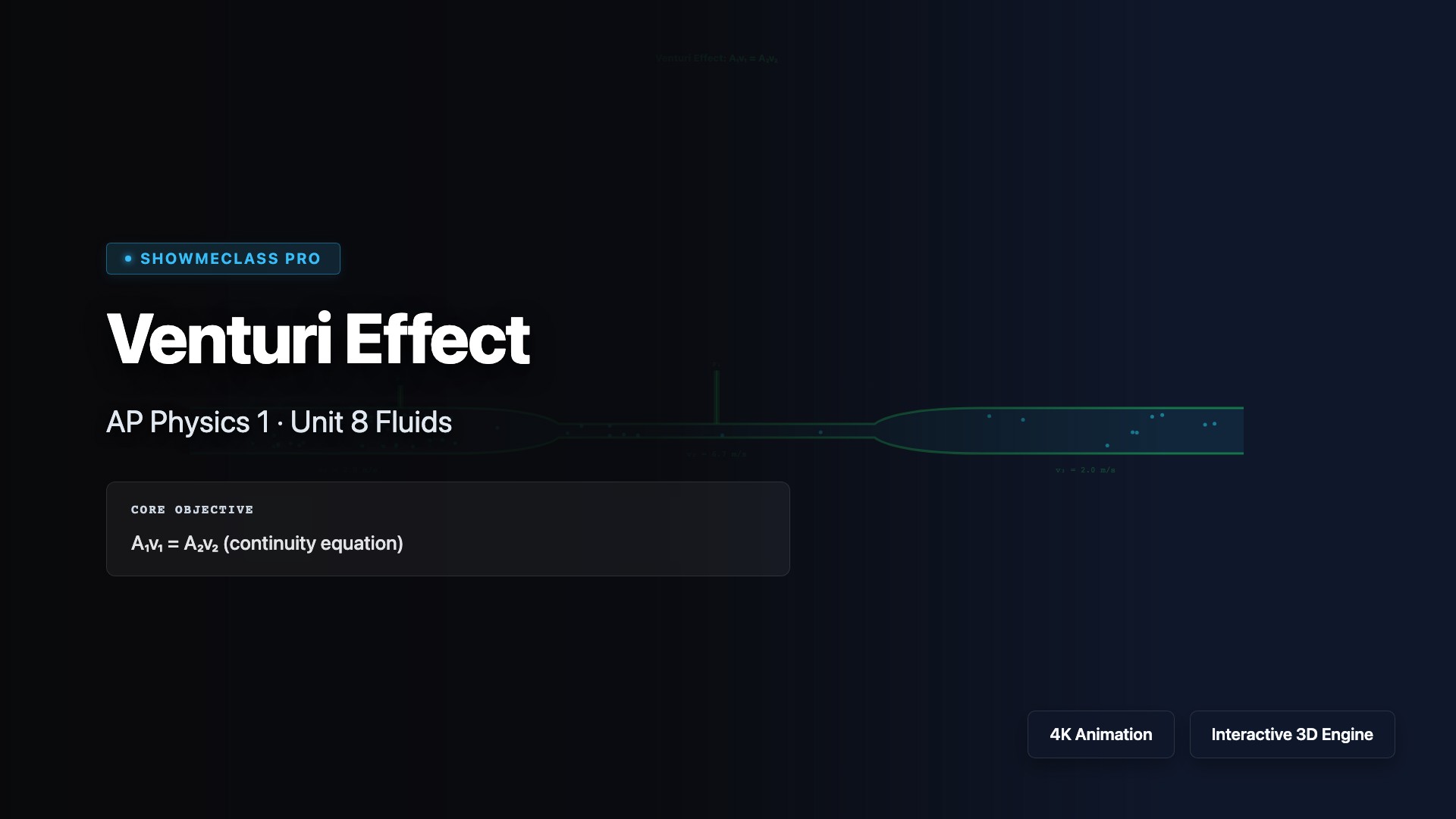
Venturi Effect & Flow Speed
Animated Venturi tube with flowing particles. A₁v₁ = A₂v₂ continuity equation and Bernoulli pressure drop visualization with manometer tubes.
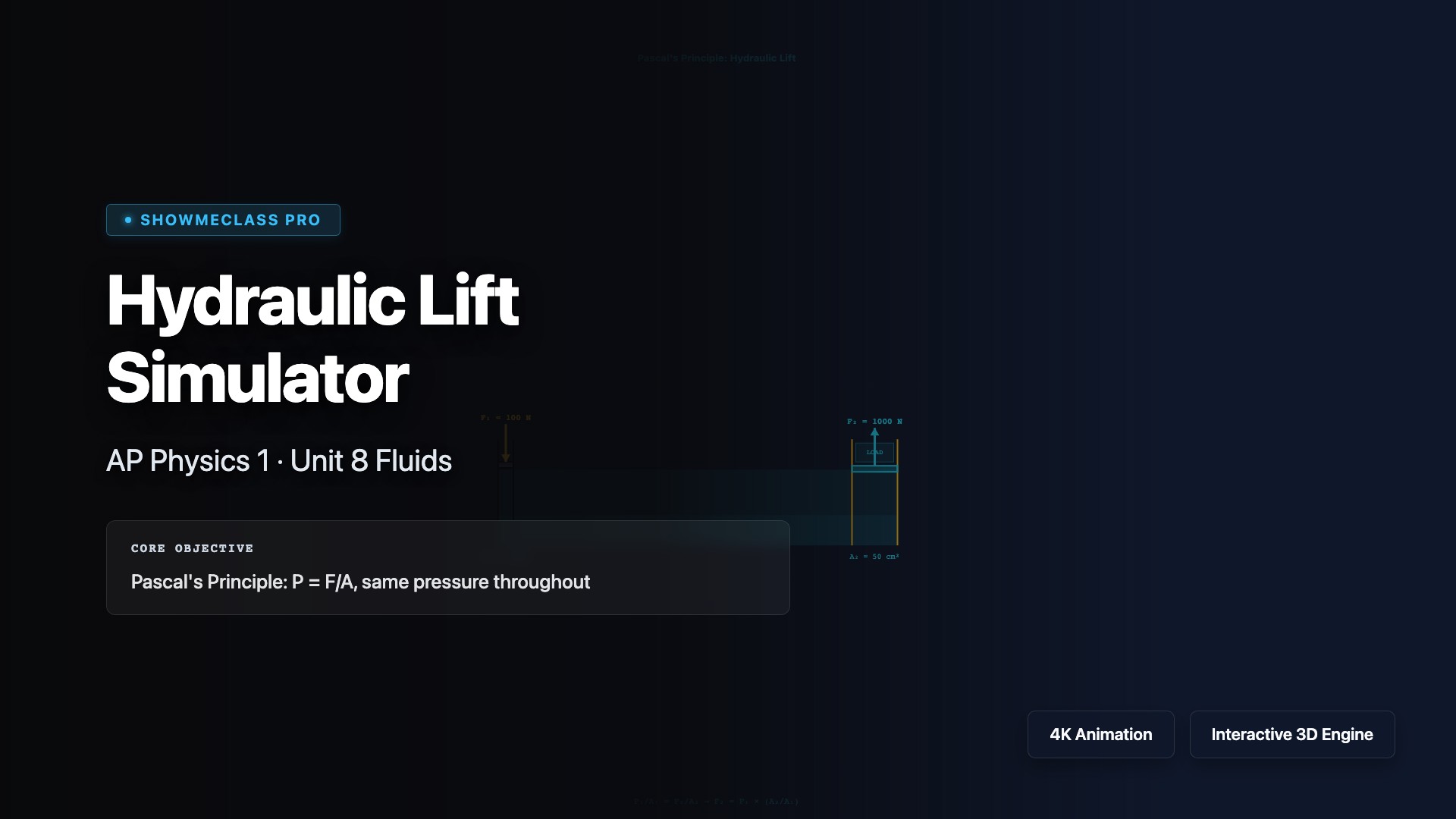
Hydraulic Lift Simulator
Pascal's Principle in action: F₁/A₁ = F₂/A₂. Visualize how a small piston force creates a much larger output force. Shows MA = A₂/A₁.
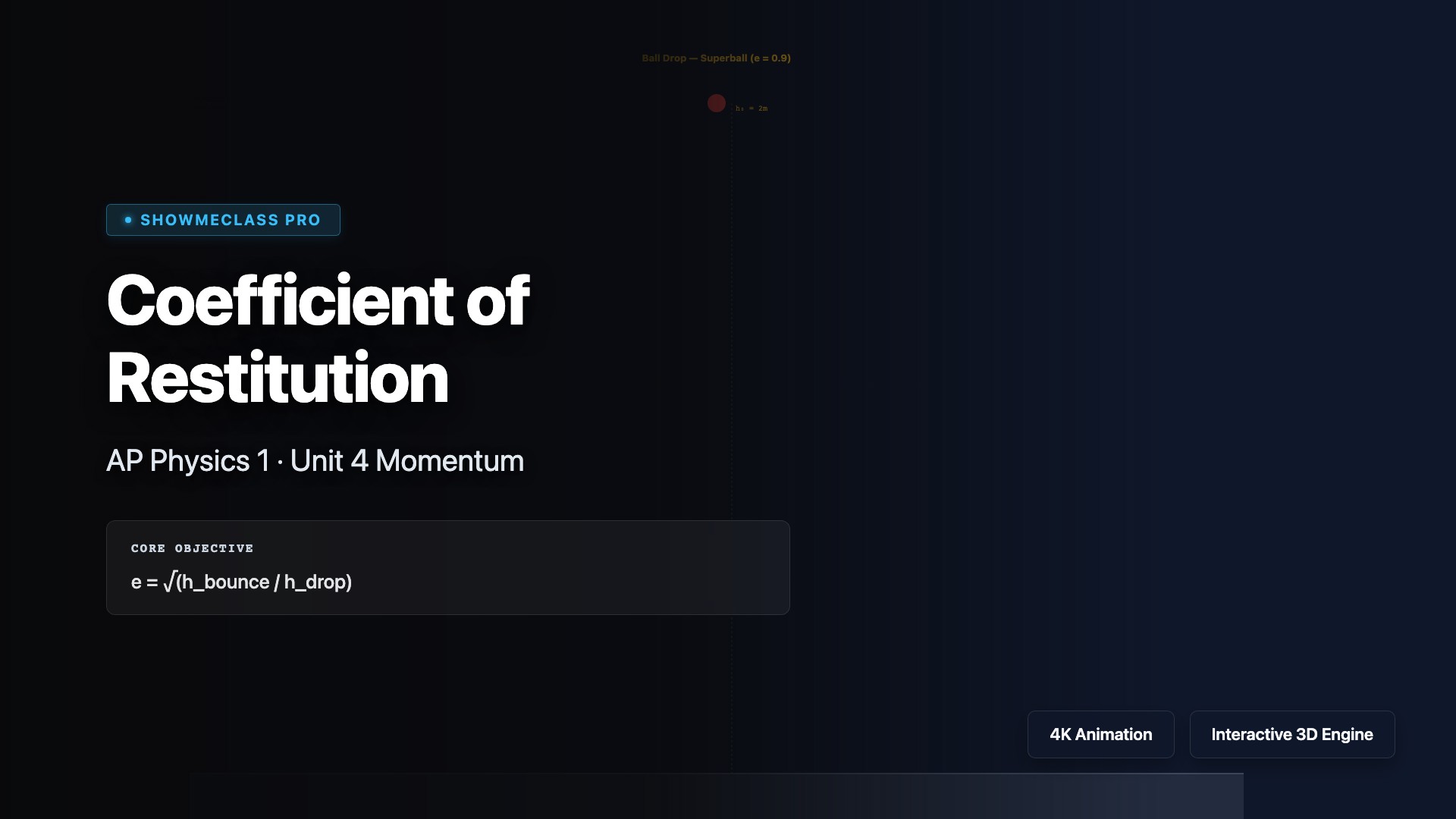
Coefficient of Restitution Lab
Drop balls of 6 materials (superball to clay) and measure bounce height to calculate e = √(h_bounce/h_drop). Compare energy lost per bounce.
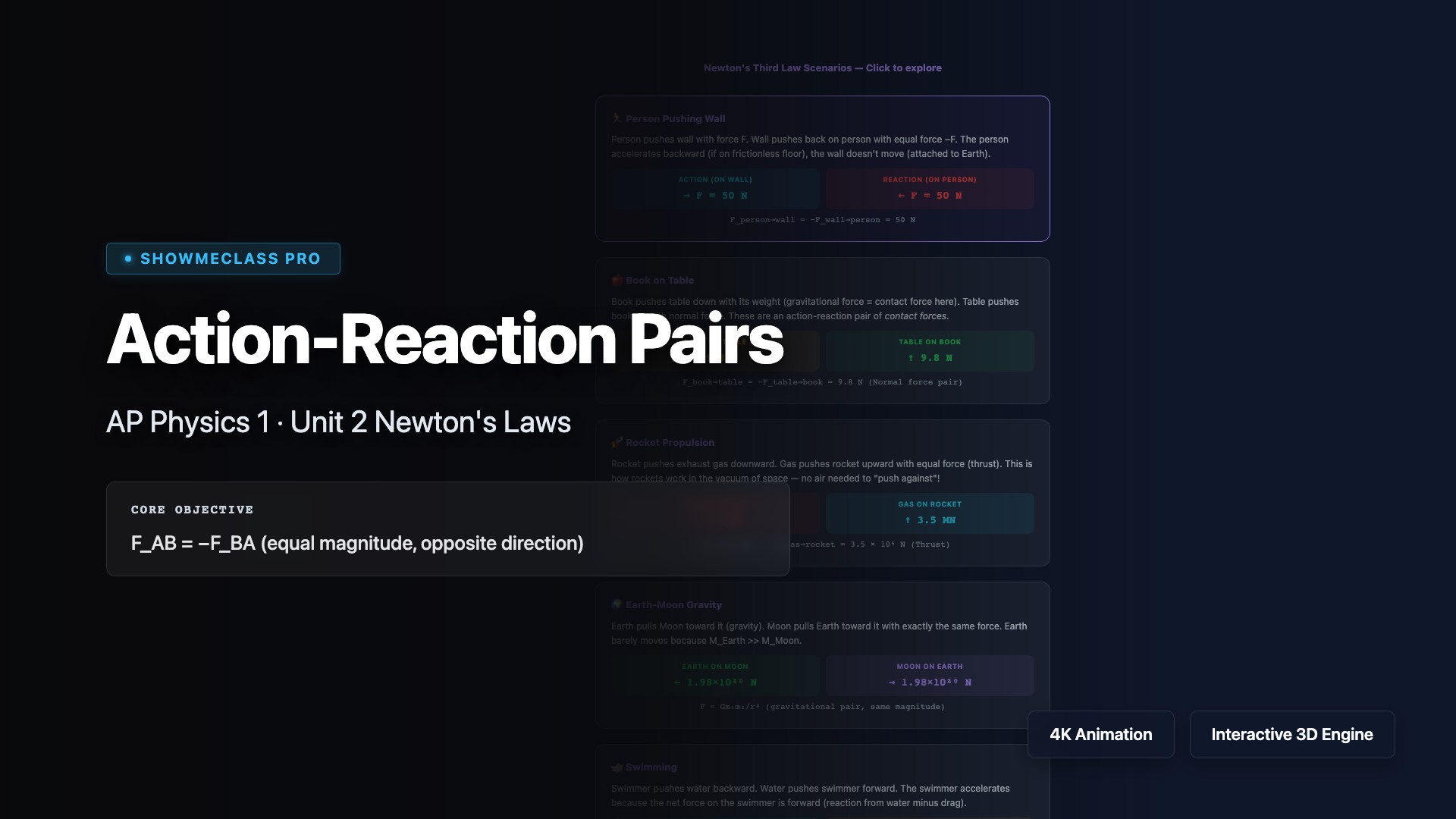
Newton's Third Law Action-Reaction Pairs
Explore 5 scenarios demonstrating F_AB = −F_BA: pushing a wall, book on table, rocket propulsion, Earth-Moon gravity, and swimming. Forces act on different objects.
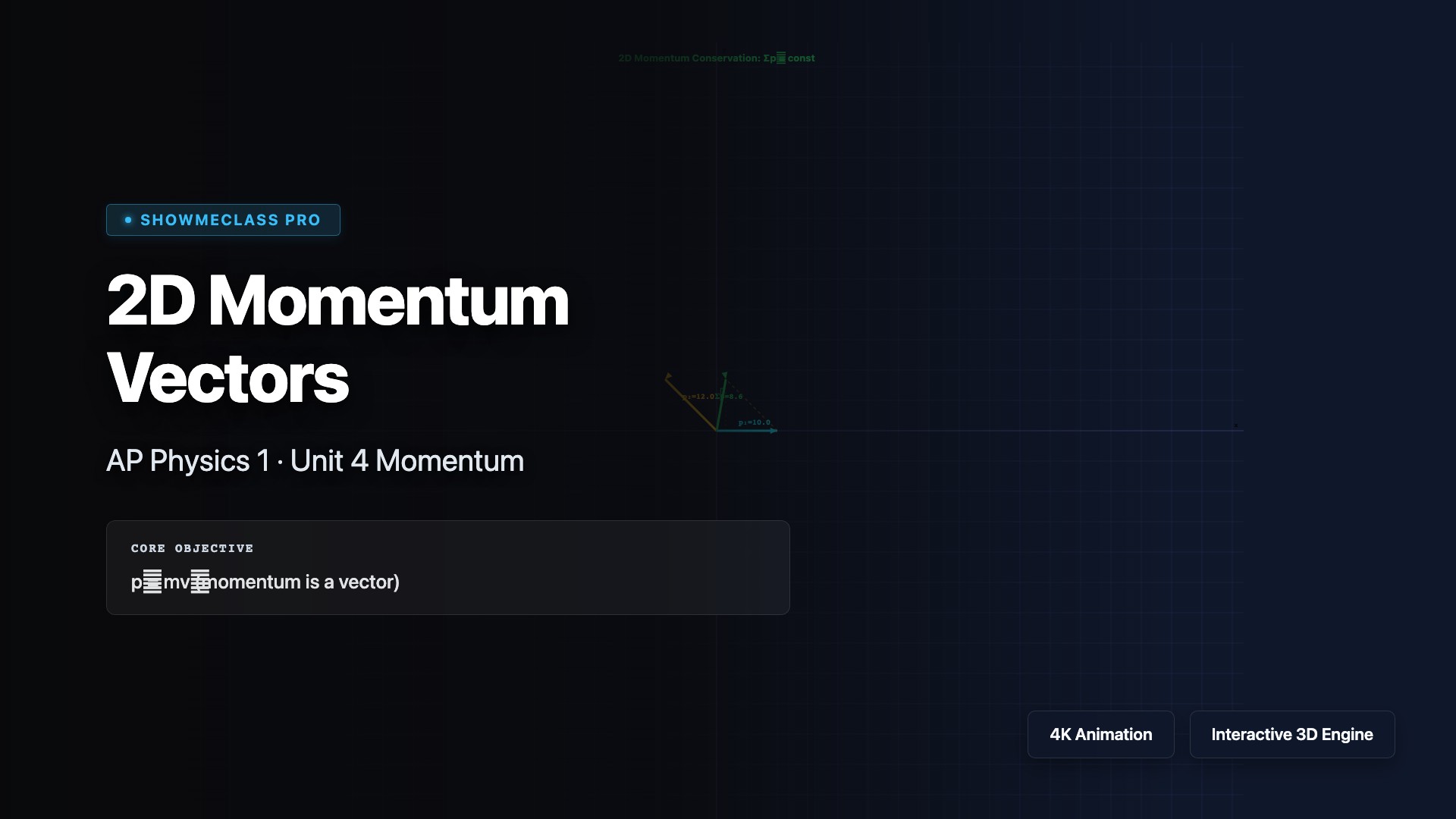
2D Momentum Vector Addition
Adjust mass, speed, and angle of two objects to see 2D momentum vector addition. Tail-to-tip method shows total momentum conservation with x/y components.
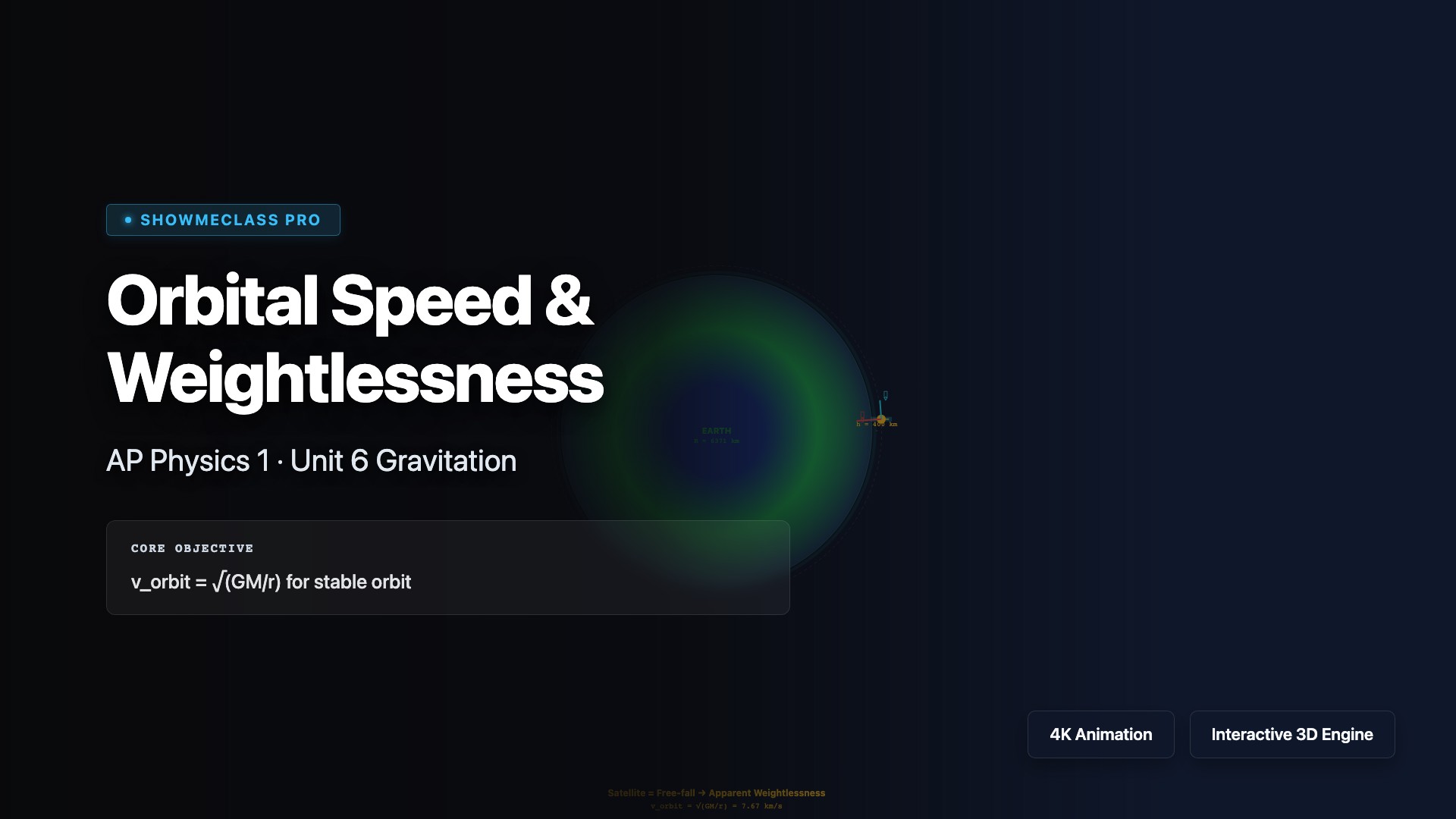
Orbital Speed & Weightlessness
Animated satellite orbiting Earth. v_orbit = √(GM/r). Adjust altitude from LEO to GEO to see speed, period, and local g. Free-fall = apparent weightlessness.
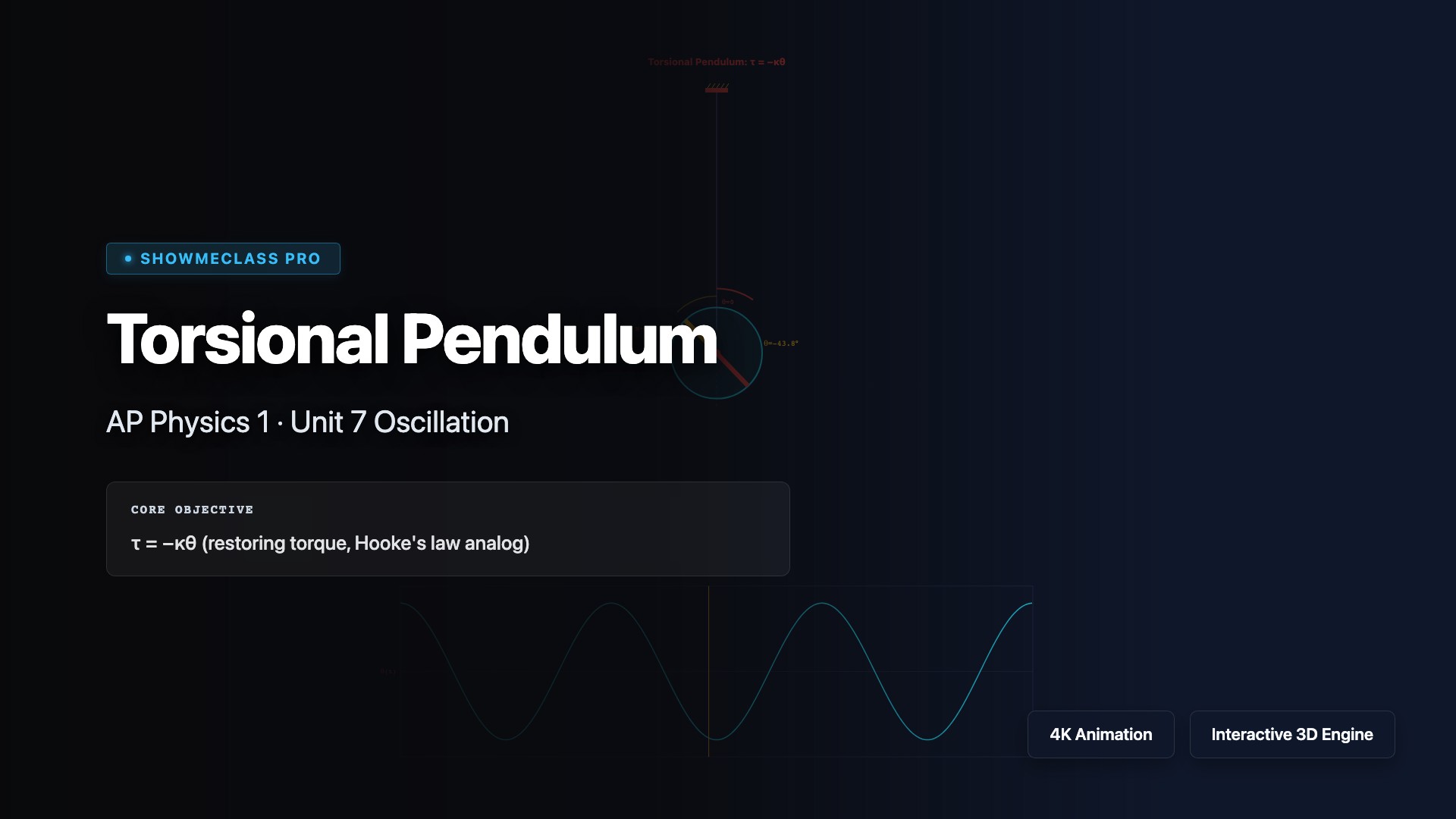
Torsional Pendulum
Rotating disk with τ = −κθ restoring torque. Angular SHM: T = 2π√(I/κ). Real-time θ(t) graph with adjustable torsion constant, moment of inertia, and damping.
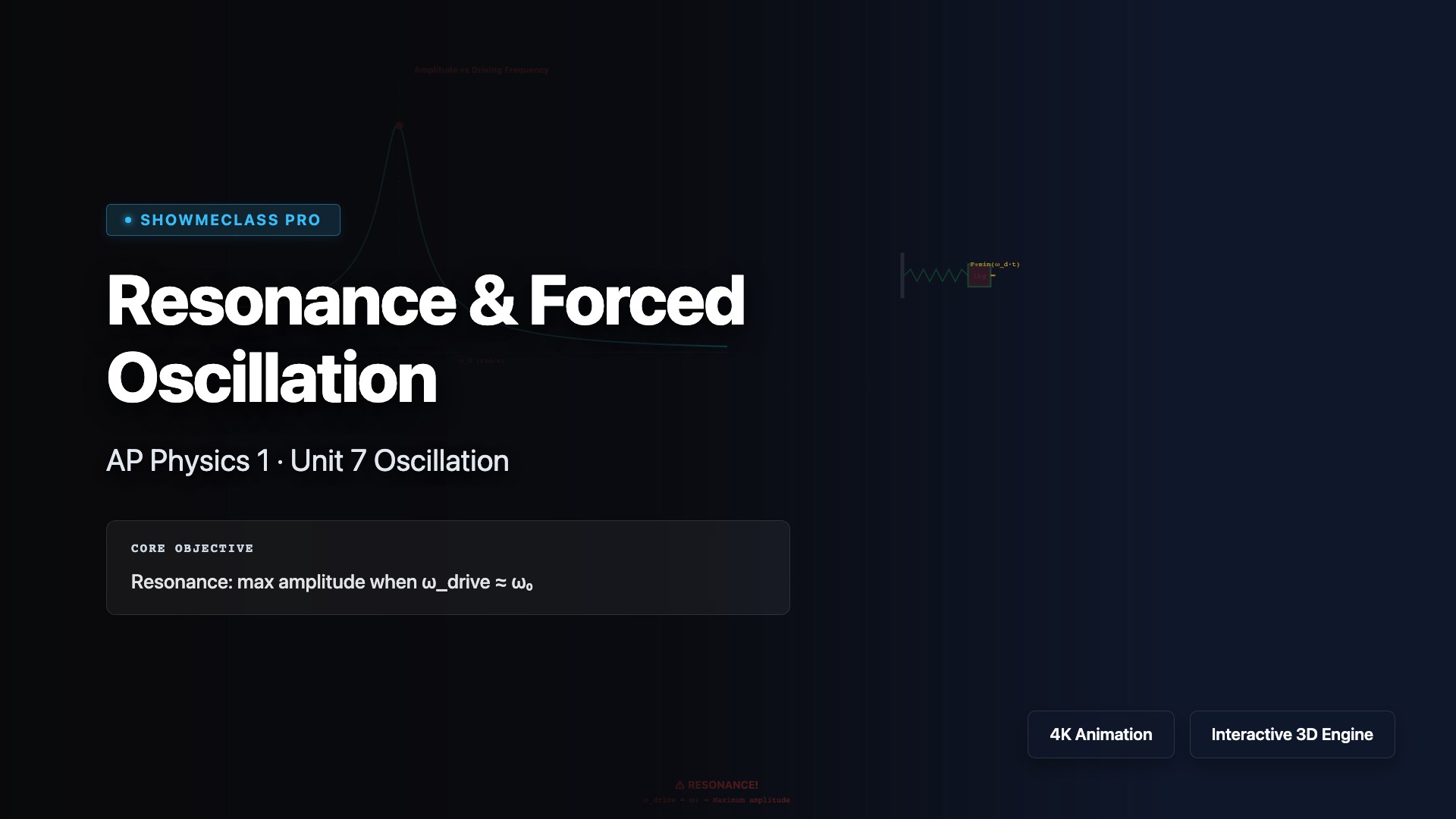
Resonance & Forced Oscillation
Amplitude vs driving frequency resonance curve. Maximum amplitude at ω_drive ≈ ω₀. Adjustable damping, spring constant, mass, and driving force.
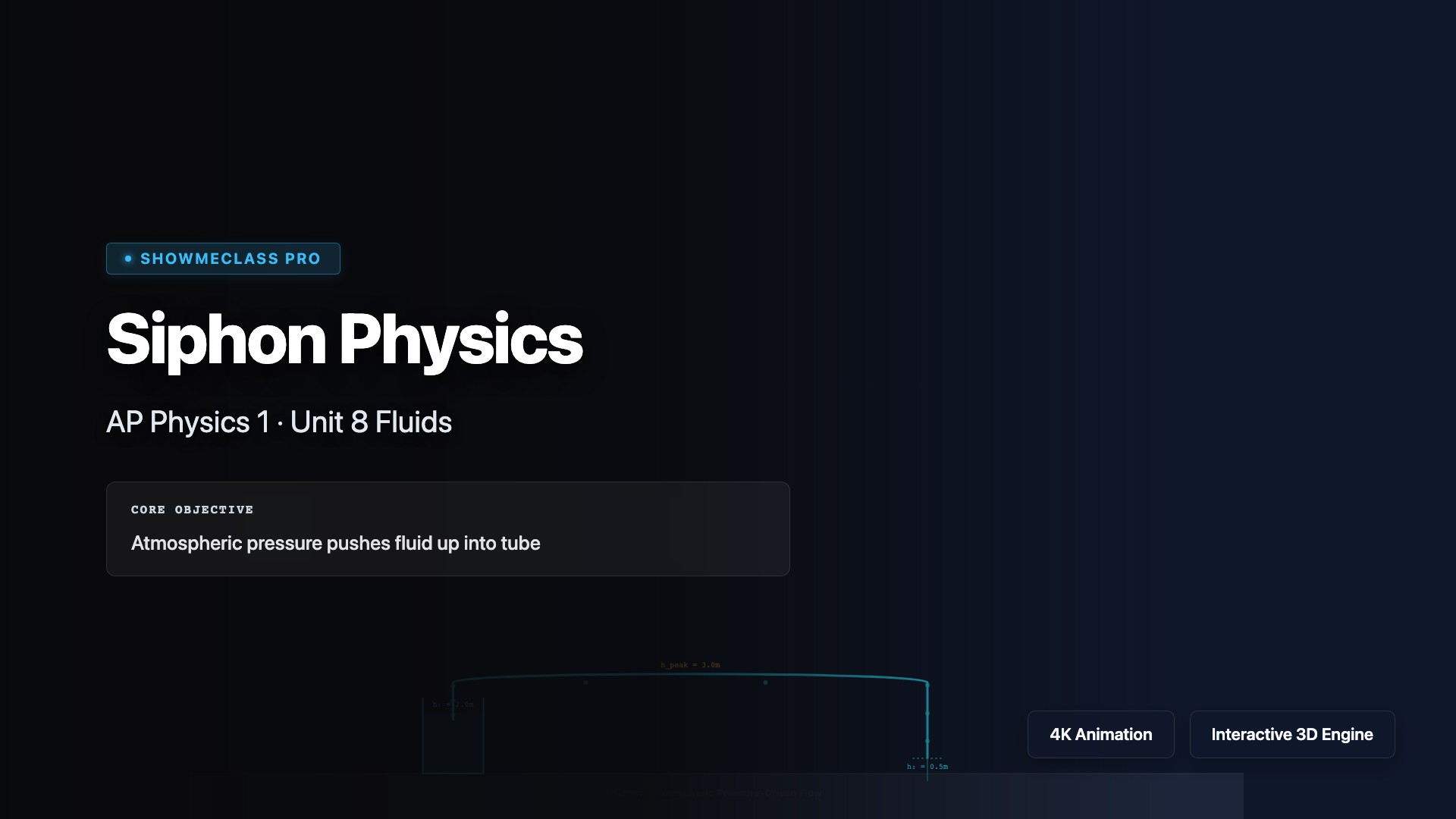
Siphon Physics Simulator
Atmospheric pressure drives fluid over barrier. Adjust source/outlet heights and tube peak. v = √(2g·Δh). Warning at 10.3m atmospheric limit.
Relative Motion & Reference Frames
Compare same motion from ground frame vs moving observer frame. v_AB = v_A − v_B. Two cars animated side-by-side in both perspectives.
Kepler's Laws of Planetary Motion
Prove Kepler's Laws visually. Alter orbital eccentricity and watch as planets sweep out perfectly equal geometric areas in equal times, regardless of whether they are slingshotting past perihelion or crawling through aphelion.

Atwood Machine & Inclined Plane Dynamics
Interactive 3D simulation of a dual-mass Atwood machine on an inclined plane. Visualizes tension, friction, and Newton's laws dynamically.