
← BACK TO LIBRARY

AP Human Geography

Interactive maps and models of population, migration, culture, and urban/rural land use.

13 visualizationsFree & interactiveNo login required
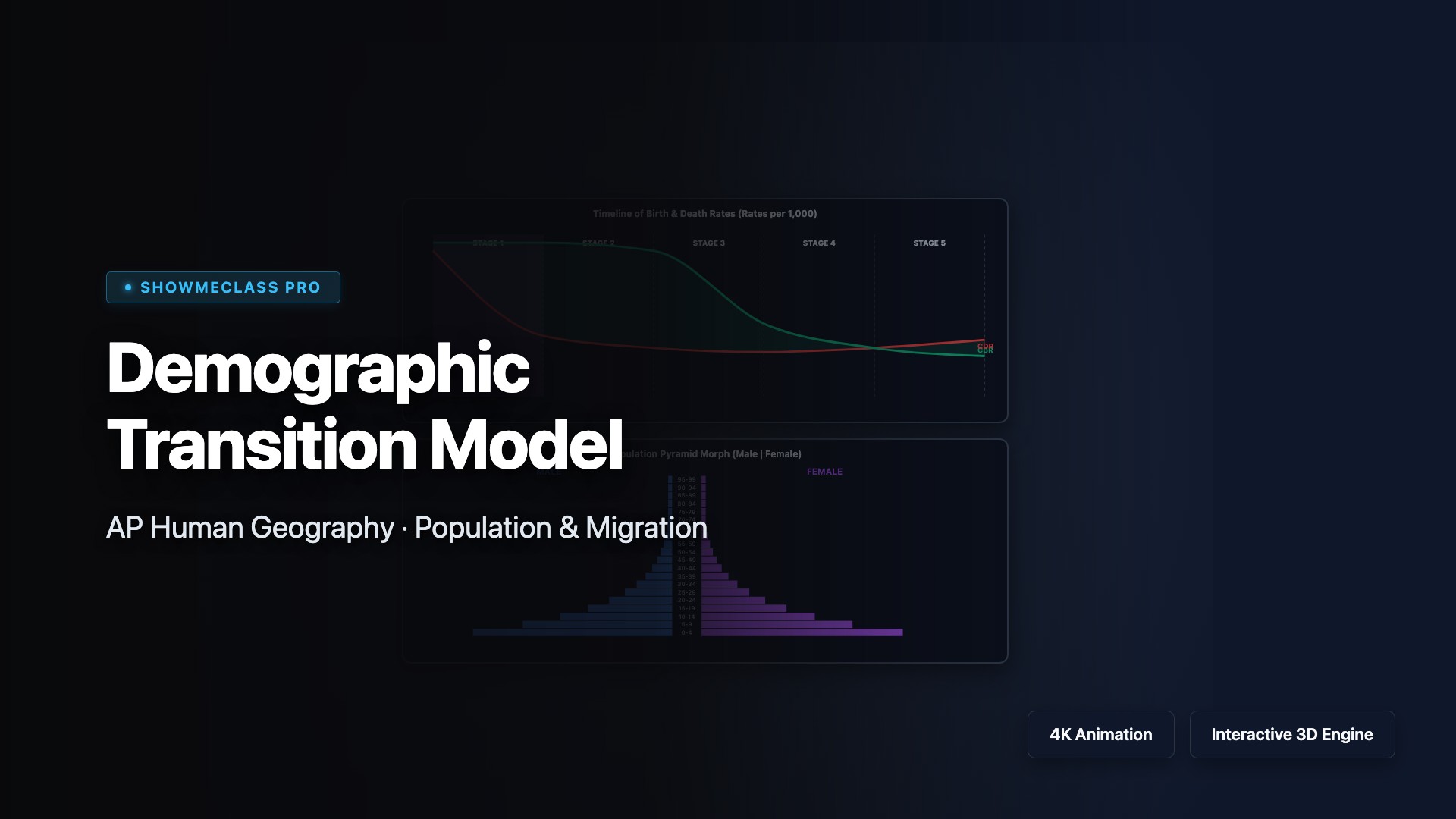
DTM Expanded Model visualization thumbnail
AP HUMAN GEOGRAPHY

DTM Expanded Model

Scrub through the 5 stages of the Demographic Transition Model. Watch CBR, CDR, and Natural Increase shift while witnessing the real-time morphing of population pyramids.
Central Place Theory visualization thumbnail
AP HUMAN GEOGRAPHY

Central Place Theory

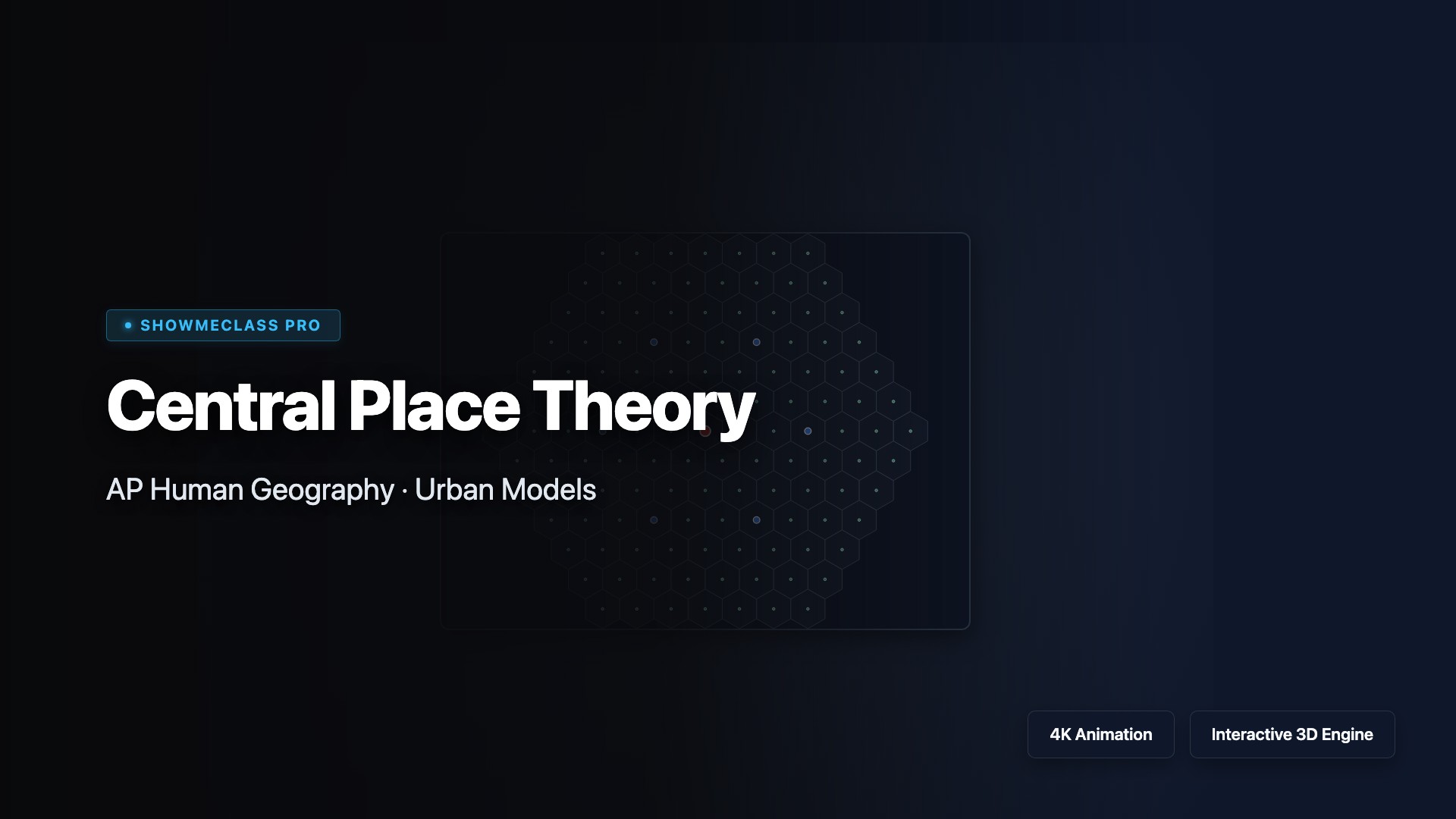
Unlock Walter Christaller's urban model. Toggle Range and Threshold parameters across a hexagonal grid to understand the spatial distribution of hamlets, villages, towns, and massive Central Cities.
Migration Push/Pull Factors visualization thumbnail
AP HUMAN GEOGRAPHY

Migration Push/Pull Factors

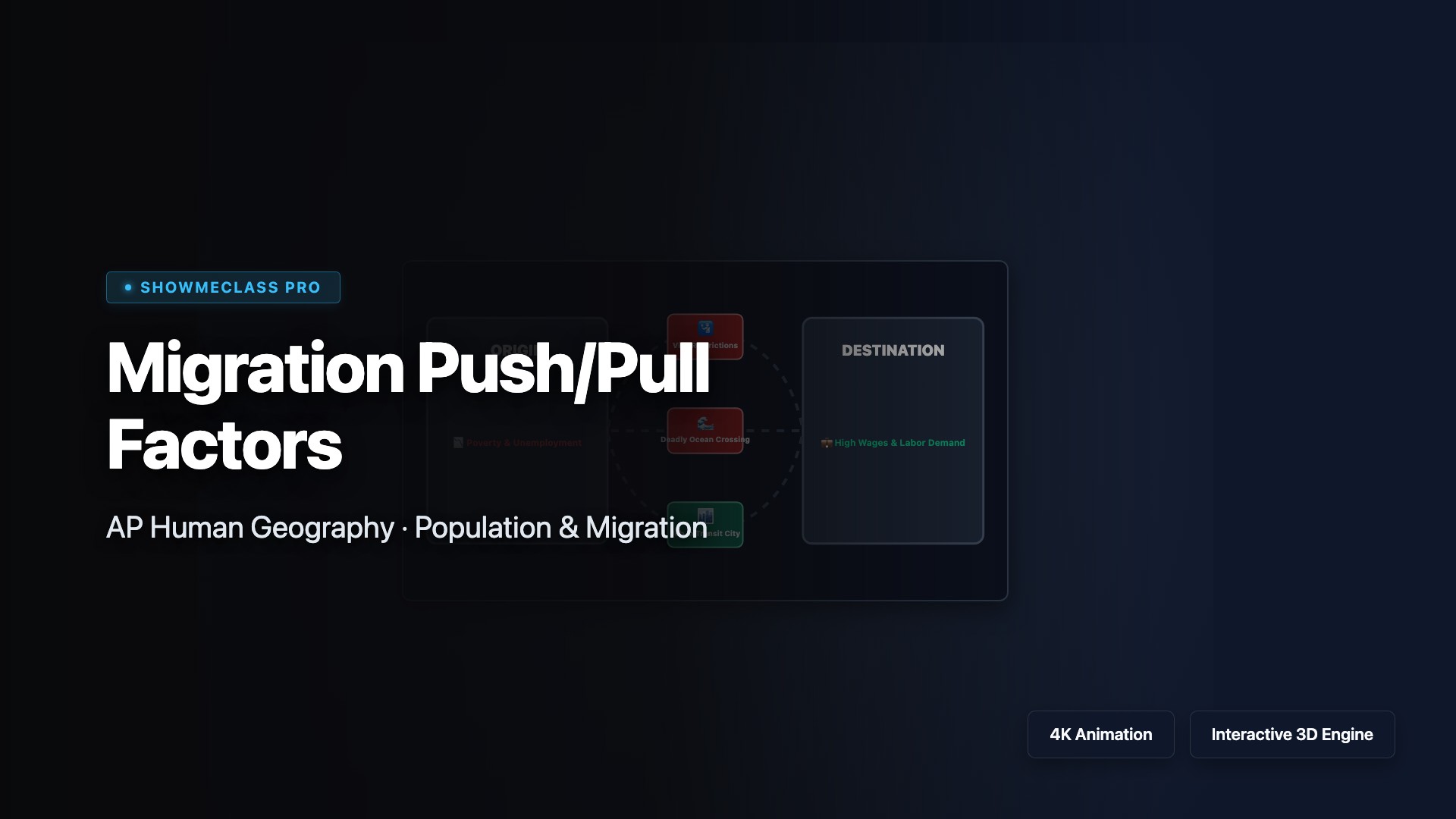
Visualize the forces of global migration. Set economic, political, and environmental push/pull factors, and watch how intervening obstacles and opportunities alter the migration stream.
Urban Models: Burgess/Hoyt visualization thumbnail
AP HUMAN GEOGRAPHY

Urban Models: Burgess/Hoyt

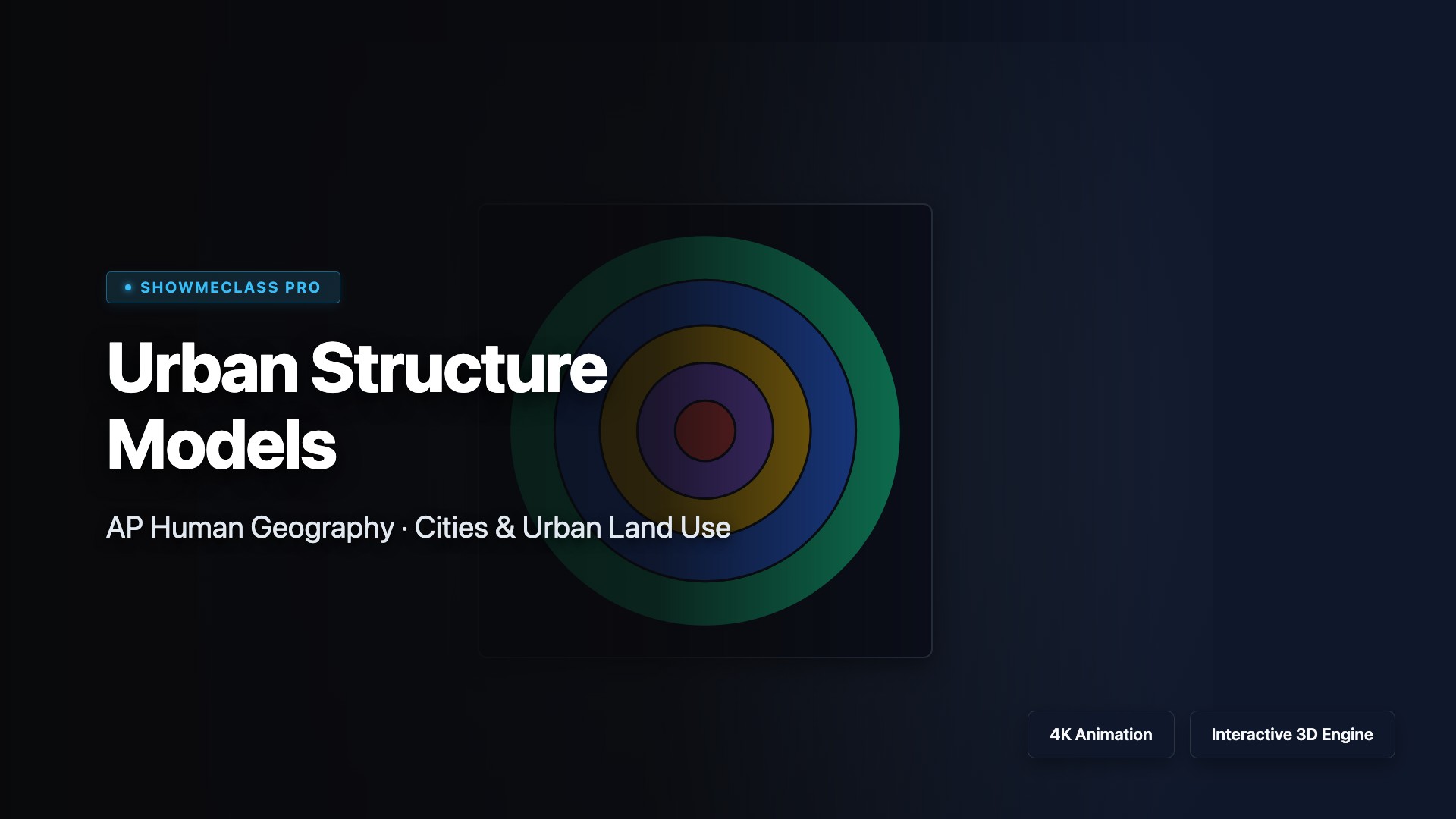
Compare the core North American urban models. Toggle between the Burgess Concentric Zone and Hoyt Sector models to understand socio-economic spatial layout.
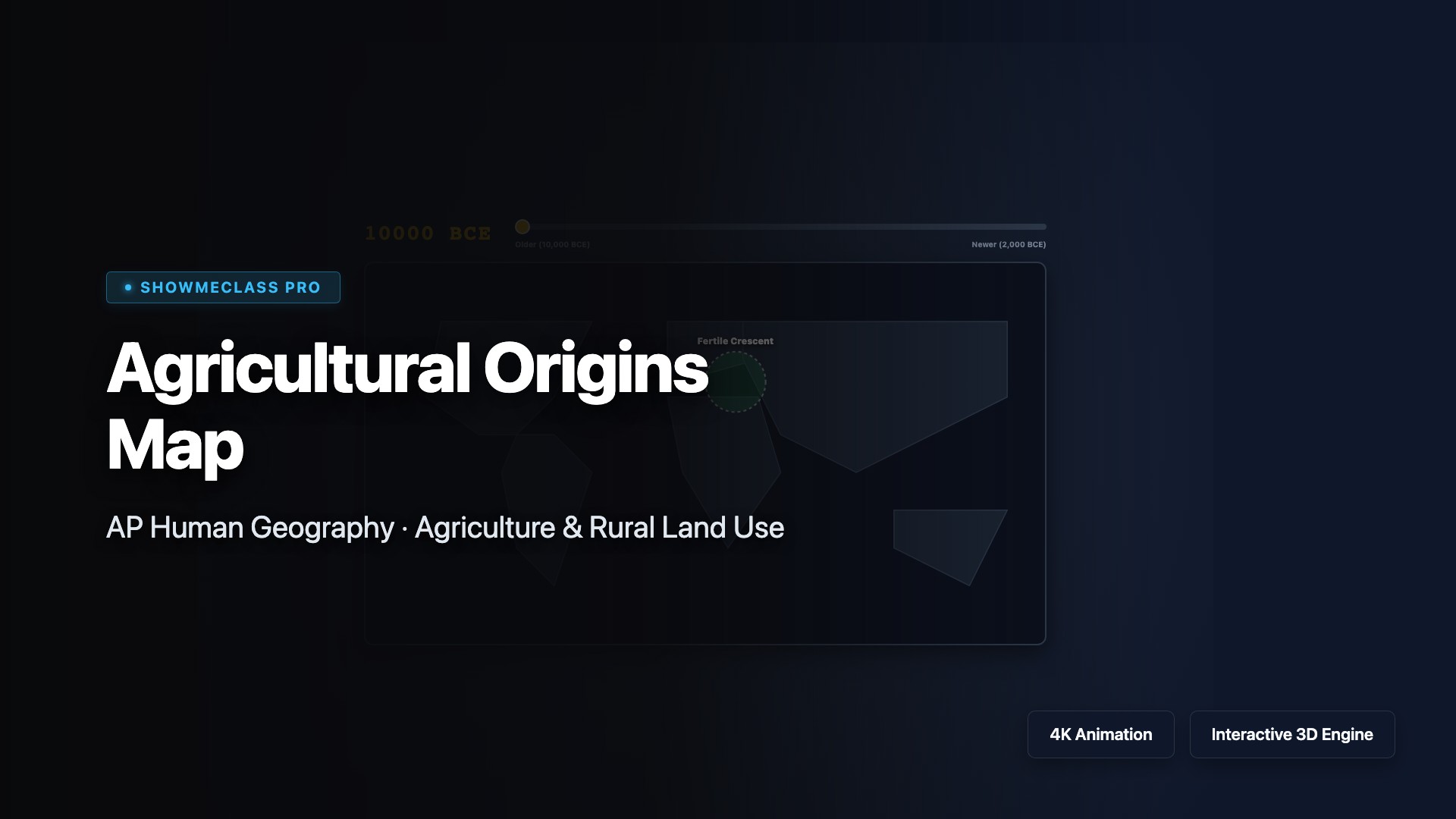
Agricultural Origins Map visualization thumbnail
AP HUMAN GEOGRAPHY

Agricultural Origins Map

Explore the First Agricultural Revolution on an interactive timeline. Click flashing hearths to discover the origin points for global domestication of plants and animals.
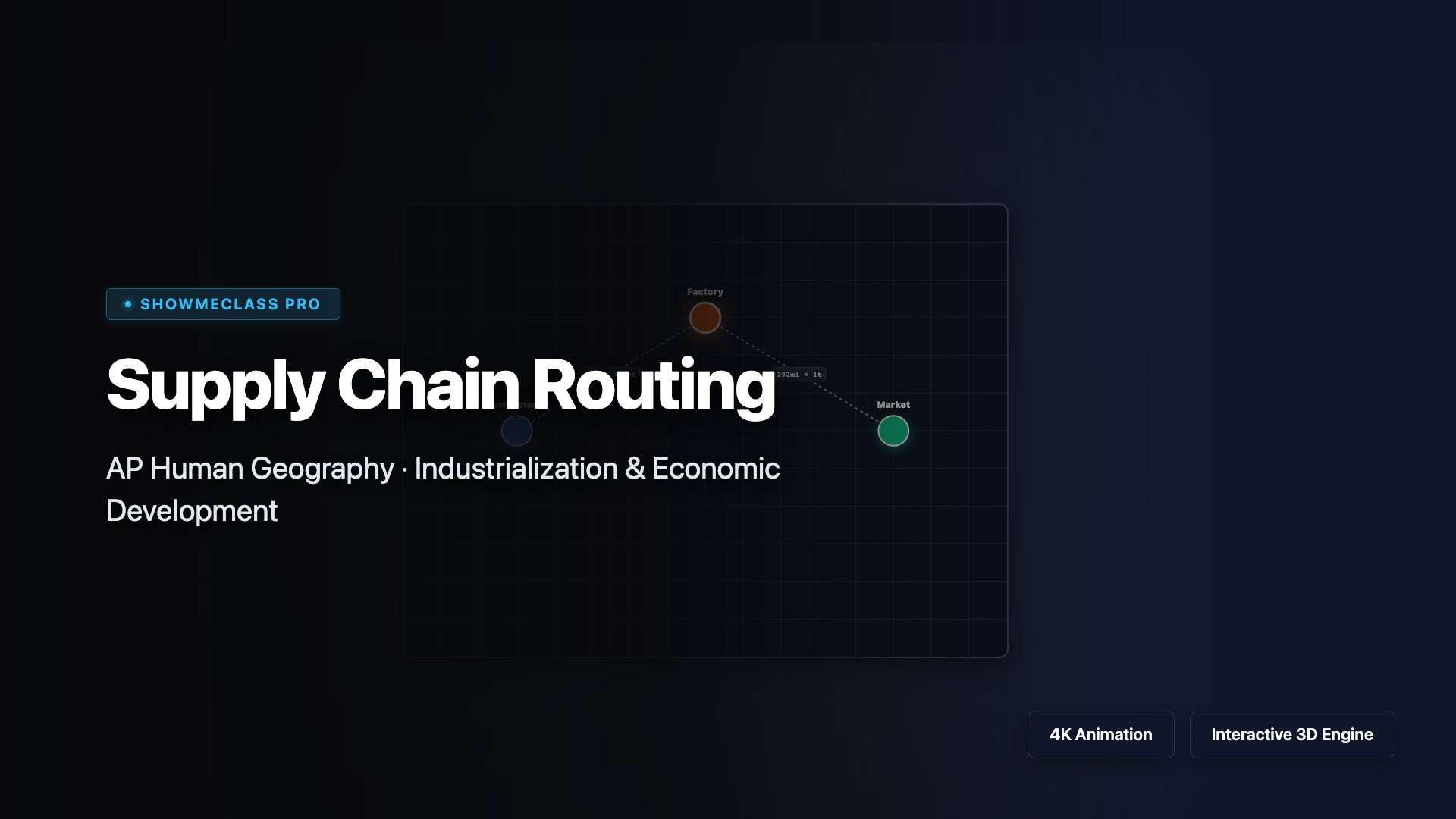
Supply Chain Routing visualization thumbnail
AP HUMAN GEOGRAPHY

Supply Chain Routing

Test Weber's Least Cost Theory. Drag factory locations across a map to balance raw material and market distances for bulk-gaining and bulk-reducing industries.
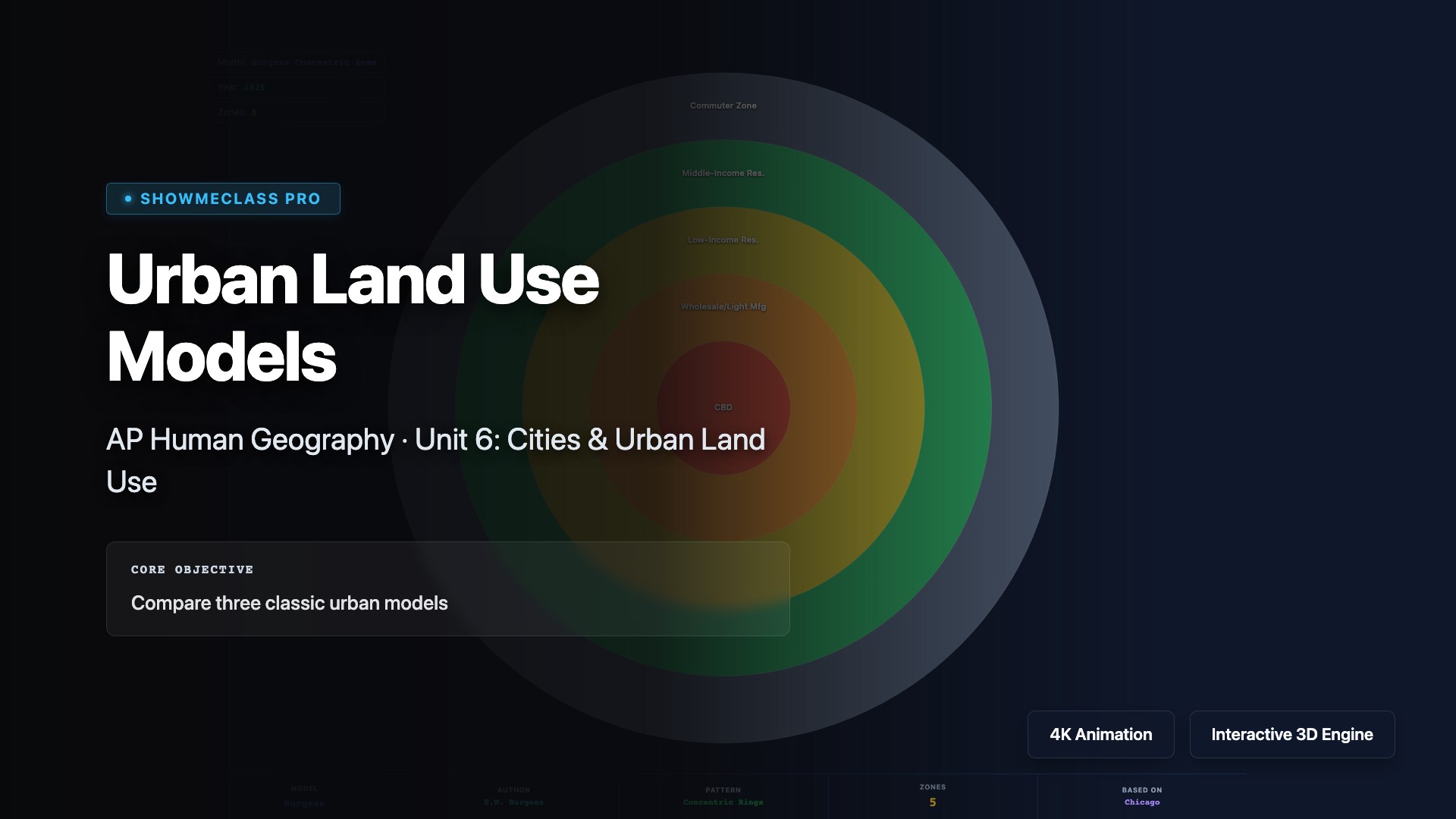
Urban Land Use Models – AP Human Geography visualization thumbnail
AP HUMAN GEOGRAPHY

Urban Land Use Models – AP Human Geography

Interactive visualization for Urban Land Use Models – AP Human Geography in AP HUMAN GEOGRAPHY.
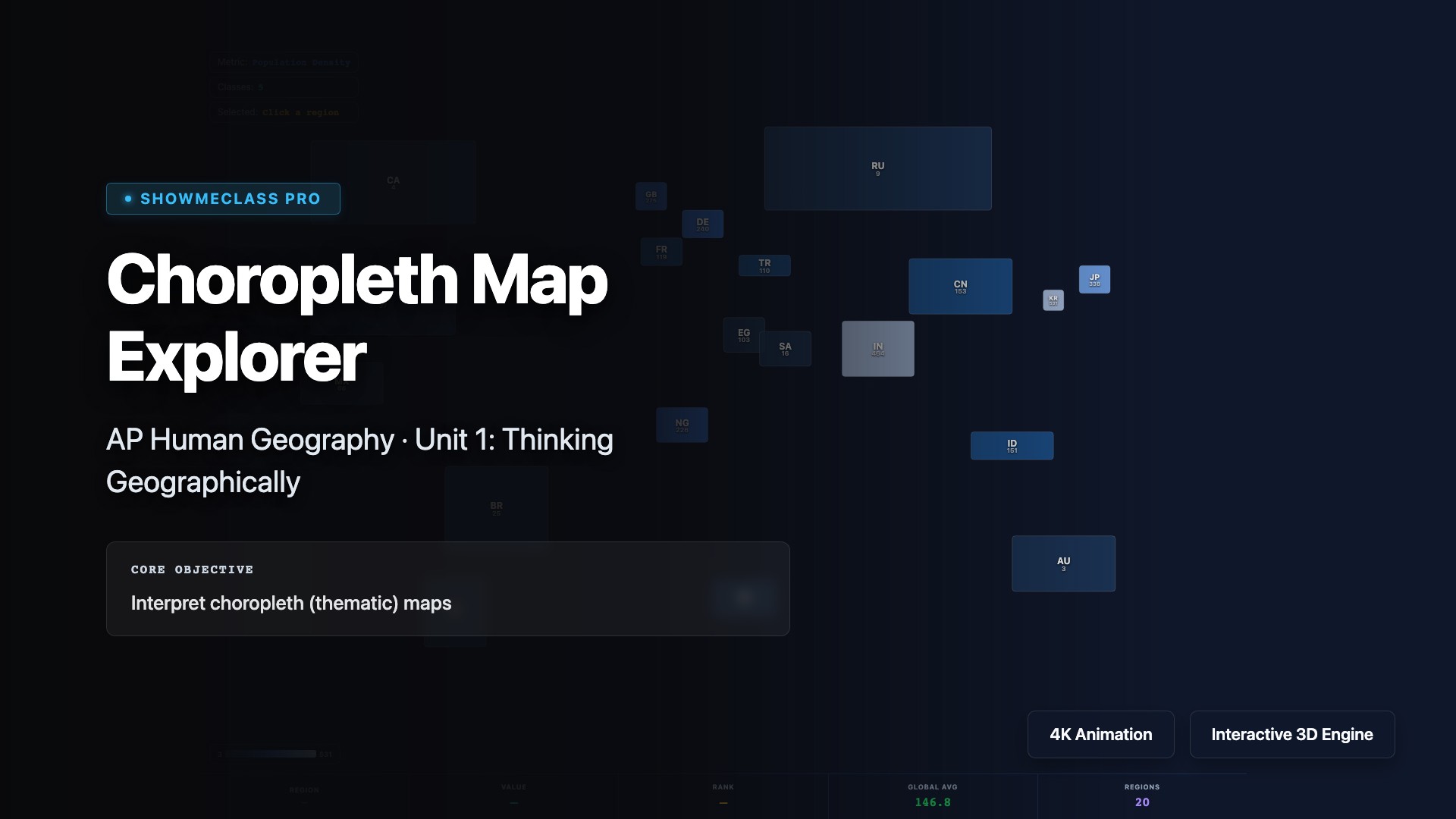
Choropleth Map Explorer – AP Human Geography visualization thumbnail
AP HUMAN GEOGRAPHY

Choropleth Map Explorer – AP Human Geography

Interactive visualization for Choropleth Map Explorer – AP Human Geography in AP HUMAN GEOGRAPHY.
Types of Diffusion – AP Human Geography visualization thumbnail
AP HUMAN GEOGRAPHY

Types of Diffusion – AP Human Geography

Interactive visualization for Types of Diffusion – AP Human Geography in AP HUMAN GEOGRAPHY.
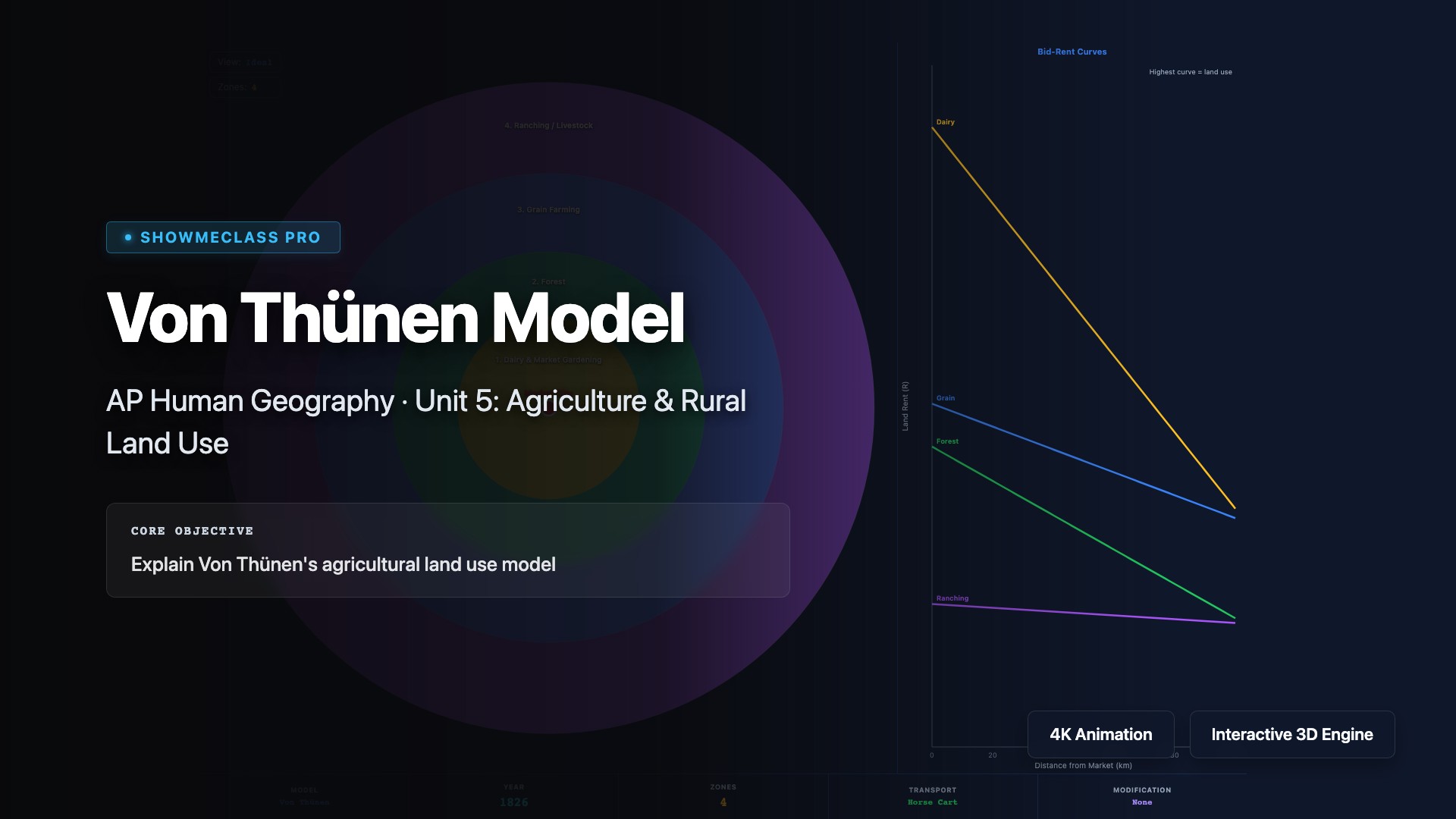
Von Thünen Model – AP Human Geography visualization thumbnail
AP HUMAN GEOGRAPHY

Von Thünen Model – AP Human Geography

Interactive visualization for Von Thünen Model – AP Human Geography in AP HUMAN GEOGRAPHY.
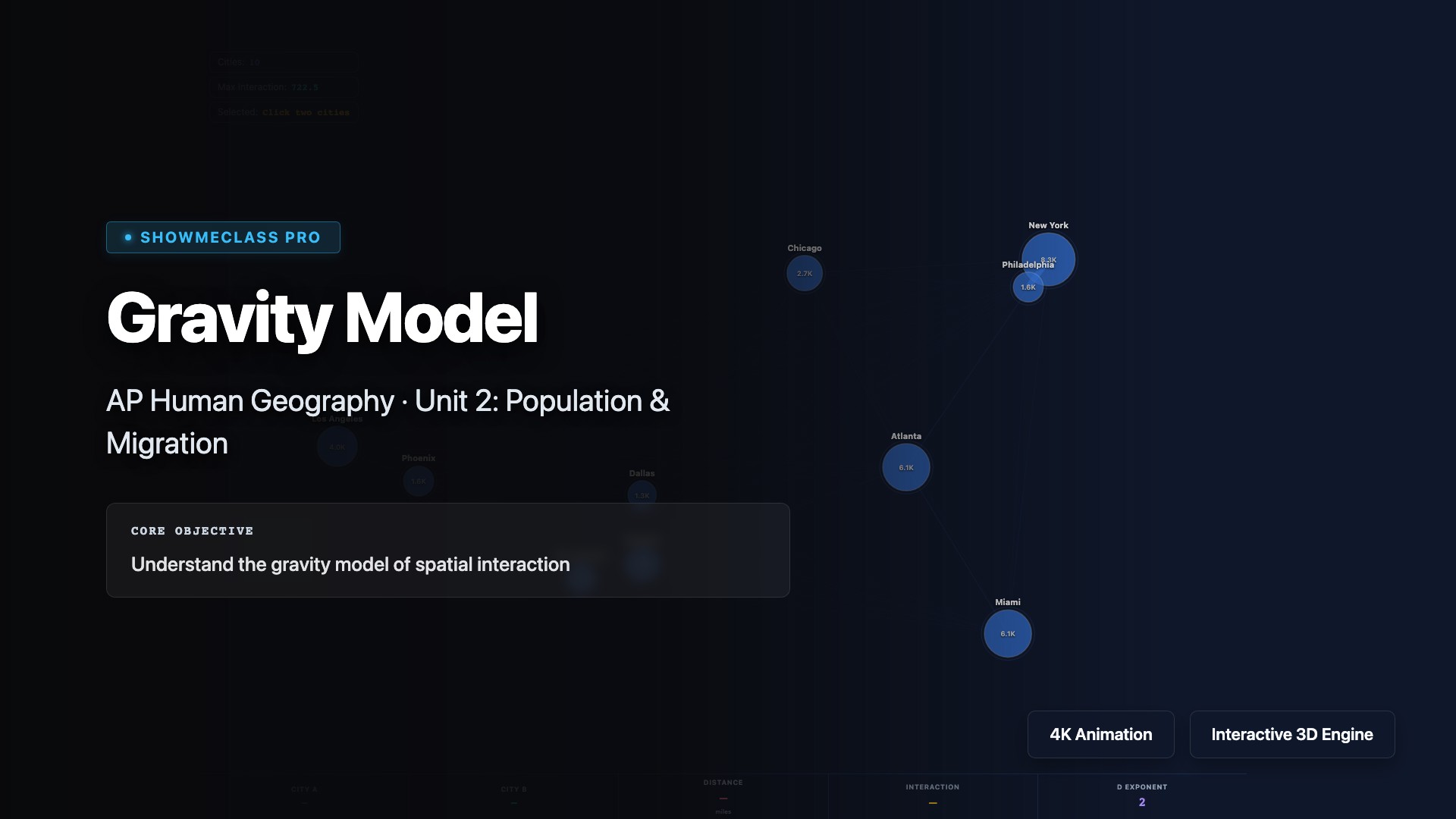
Gravity Model – AP Human Geography visualization thumbnail
AP HUMAN GEOGRAPHY

Gravity Model – AP Human Geography

Interactive visualization for Gravity Model – AP Human Geography in AP HUMAN GEOGRAPHY.
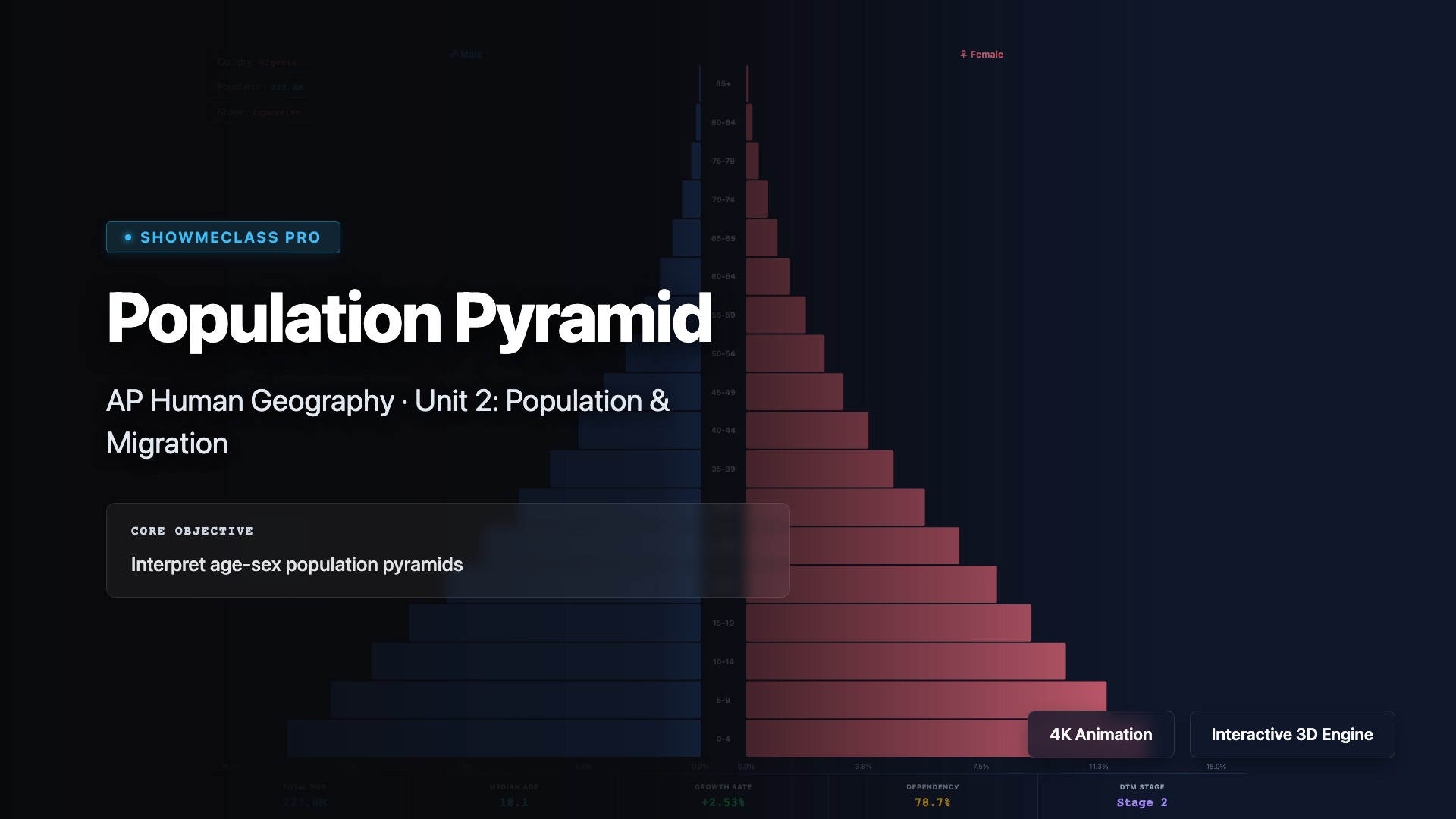
Population Pyramid – AP Human Geography visualization thumbnail
AP HUMAN GEOGRAPHY

Population Pyramid – AP Human Geography

Interactive visualization for Population Pyramid – AP Human Geography in AP HUMAN GEOGRAPHY.
Rostow's Stages of Growth visualization thumbnail
AP HUMAN GEOGRAPHY

Rostow's Stages of Growth

Navigate the 5 linear stages W.W. Rostow asserted all countries must pass through to modernize, from Traditional Society to High Mass Consumption.

Decode Global Patterns with AP Human Geography Maps

AP Human Geography (APHG) introduces students to the rigorous, spatial study of how human populations shape, and are shaped by, their environment. Unlike physical geography, which focuses on landforms and climate, human geography focuses almost exclusively on demographics, migration, cultural diffusion, geopolitical borders, and urban development. ShowMeClass upgrades the traditional static atlas into dynamic, data-driven interactive maps and models.

The curriculum consists of seven tightly linked units: Thinking Geographically (Unit 1) covers map projections and spatial analysis tools (GIS); Population and Migration Patterns (Unit 2); Cultural Patterns and Processes (Unit 3); Political Patterns and Processes (Unit 4); Agriculture and Rural Land-Use (Unit 5); Cities and Urban Land-Use (Unit 6); and Industrial and Economic Development (Unit 7).

Interactive Urban Models and Demographic Shifts

Grasping the spatial dimensions of urban models—such as the Burgess Concentric Zone Model, the Hoyt Sector Model, and the Multiple Nuclei Model—is critical for the exam. Our interactive city builder allows you to overlap these theoretical rings onto actual modern city maps (like Chicago or Los Angeles) to identify historical similarities and modern deviations. Additionally, you can manipulate population pyramids to trace a country's evolution through the Demographic Transition Model in real-time.

Frequently Asked Questions

Can these tools help visualize Von Thünen's Agricultural Model?

Absolutely. We offer a dynamic Von Thünen visualizer where you can adjust the central market's location, modify transportation costs, or introduce geographical barriers (like a river). The concentric rings of agricultural activity (dairy, forestry, grains) immediately shift to mathematically reflect the changing bid-rent theory.

Do you have interactive population pyramids?

Yes. Our population pyramid tool allows you to input historical census data for various countries. You can watch the pyramid morph over decades, vividly illustrating the societal impacts of baby booms, warfare, and healthcare improvements.

How does APHG test spatial analysis?

The AP exam heavily tests your ability to read maps at different 'scales of analysis' (e.g., local vs. national vs. global). Our interactive maps allow you to toggle choropleth heatmaps between state-level, county-level, and global boundaries, demonstrating how changing the scale can completely alter the apparent demographic trend.