
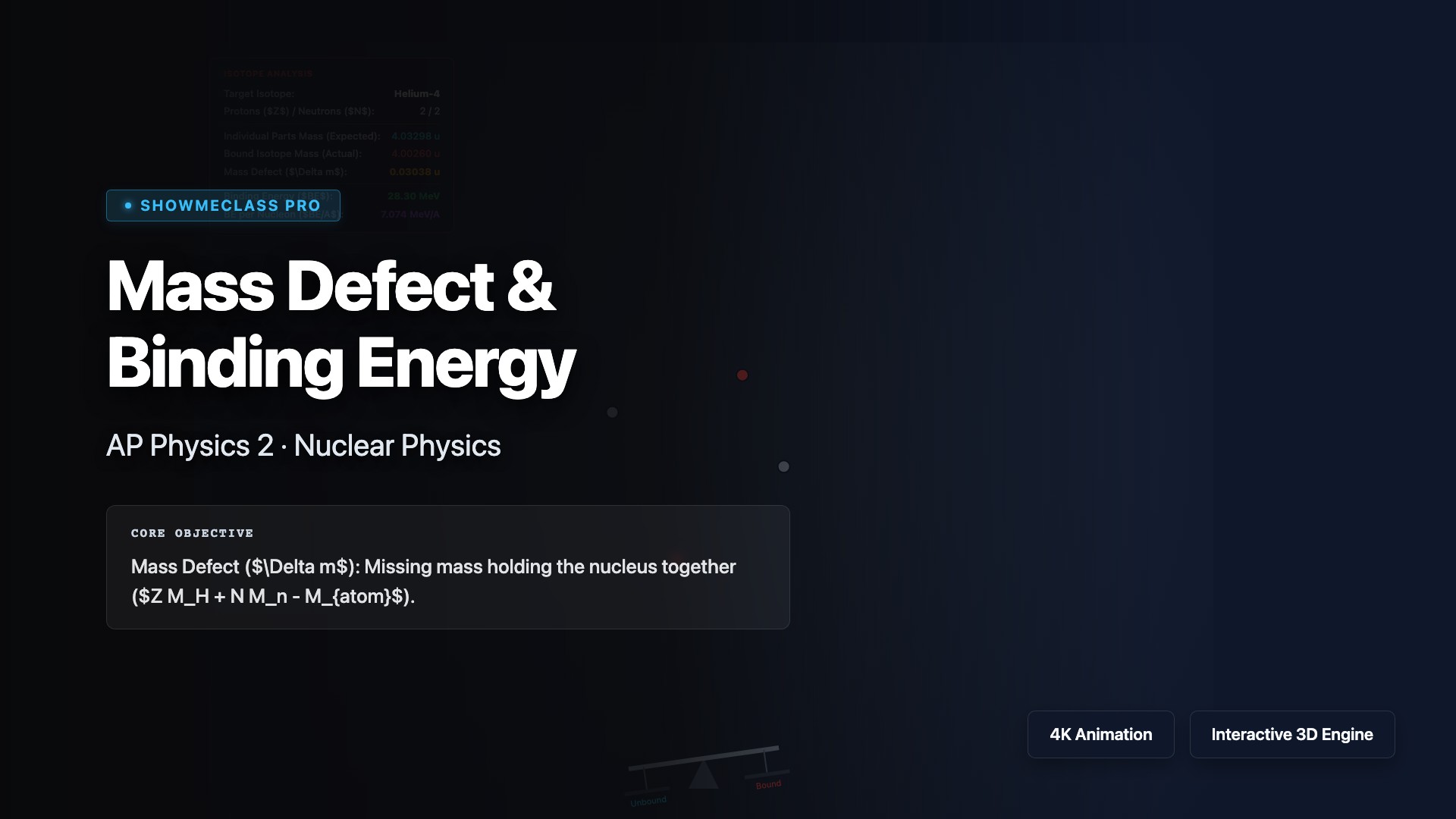
Mass Defect & Binding Energy
Weigh the separate protons and neutrons against the bound nucleus of specific isotopes. Convert the missing mass defect into nuclear strong force binding energy using E=mc².
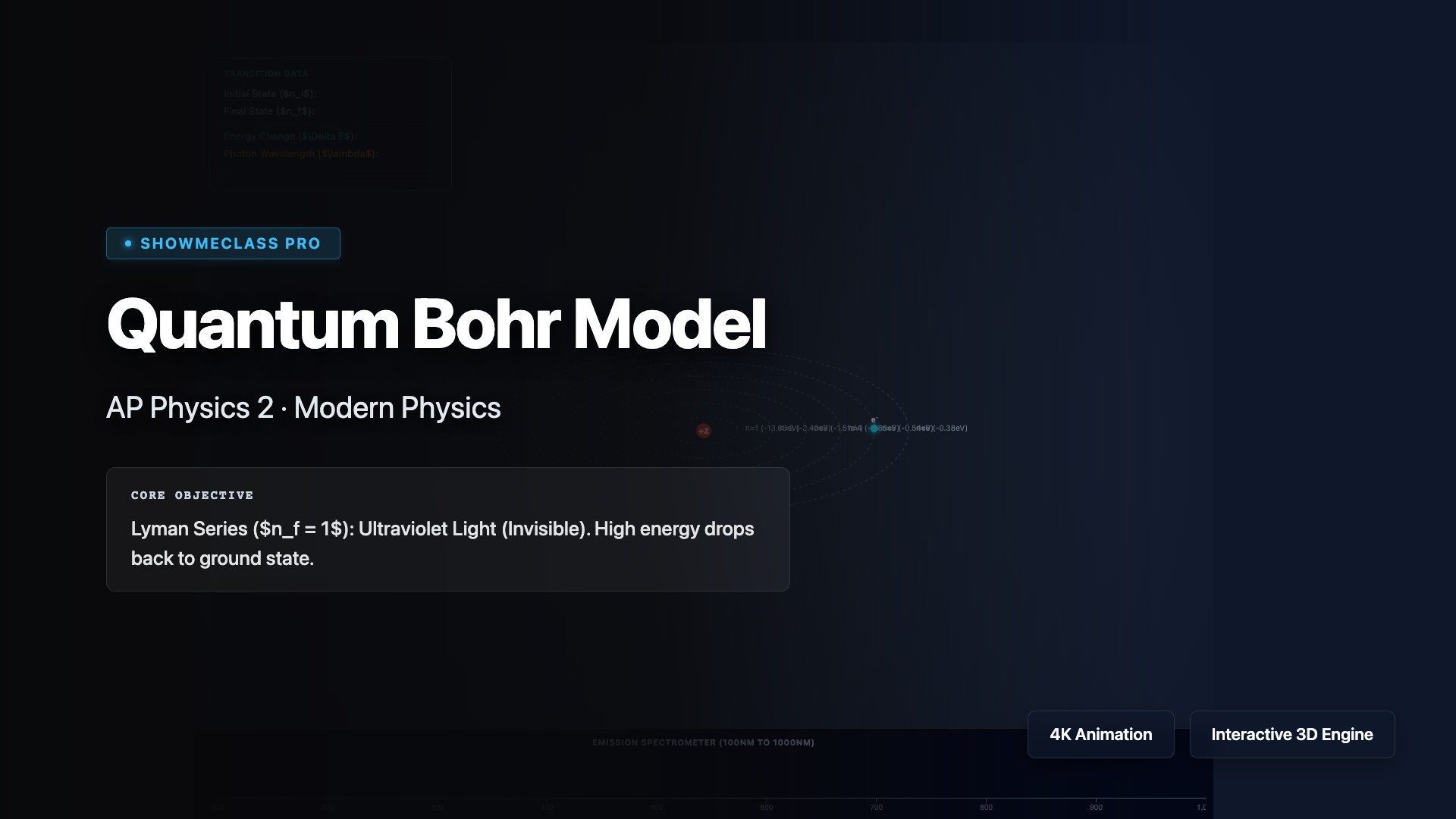
Quantum Bohr Model
Visualize electron orbital transitions in Hydrogen-like atoms. Calculate photon emission wavelengths and generate real-time spectral lines (Lyman, Balmer, Paschen).
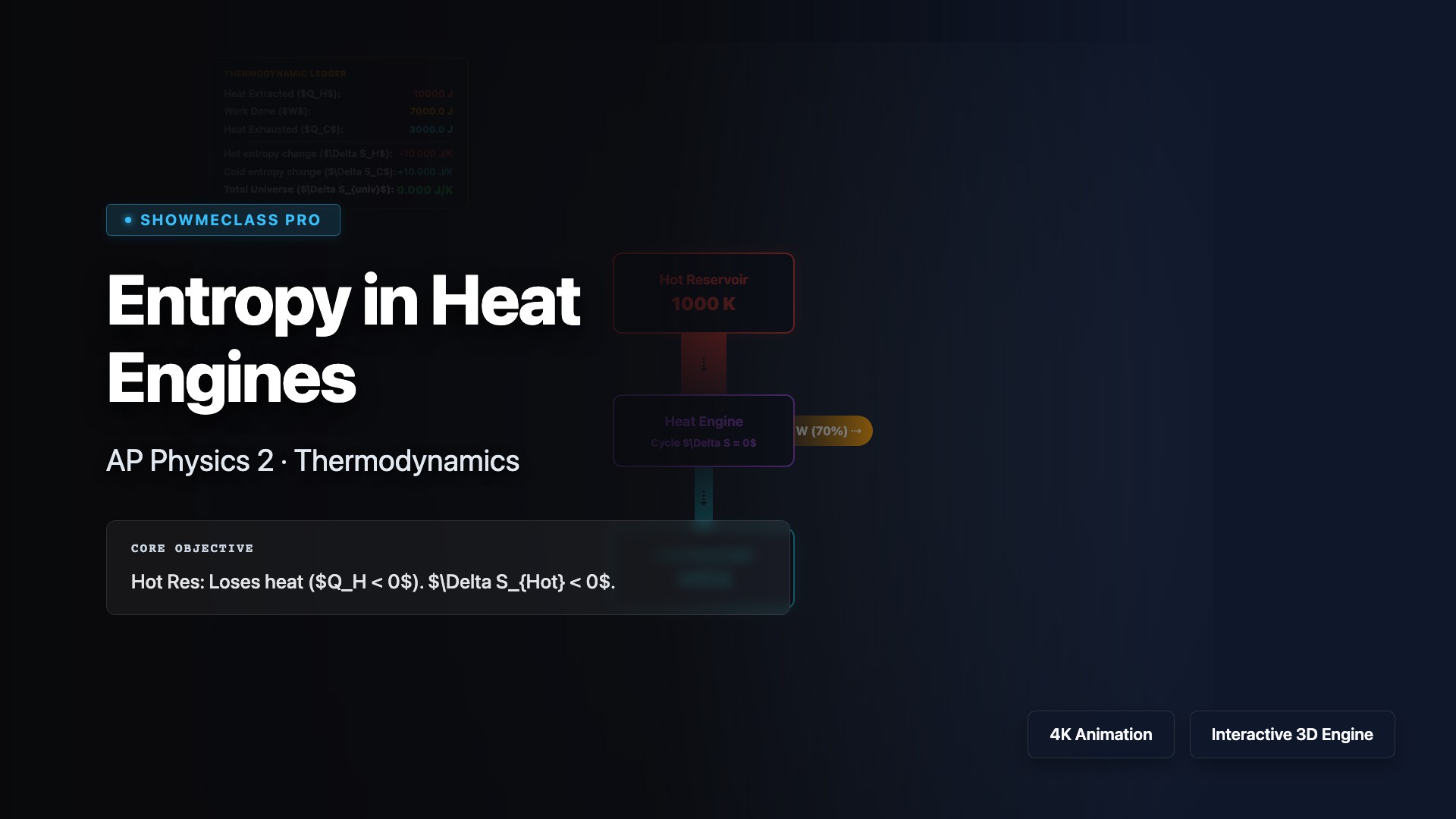
Entropy in Heat Engines
Visualize the 2nd Law of Thermodynamics. Build reversible Carnot engines and irreversible real engines to track the exact entropy changes in the hot reservoir, cold reservoir, and the universe.
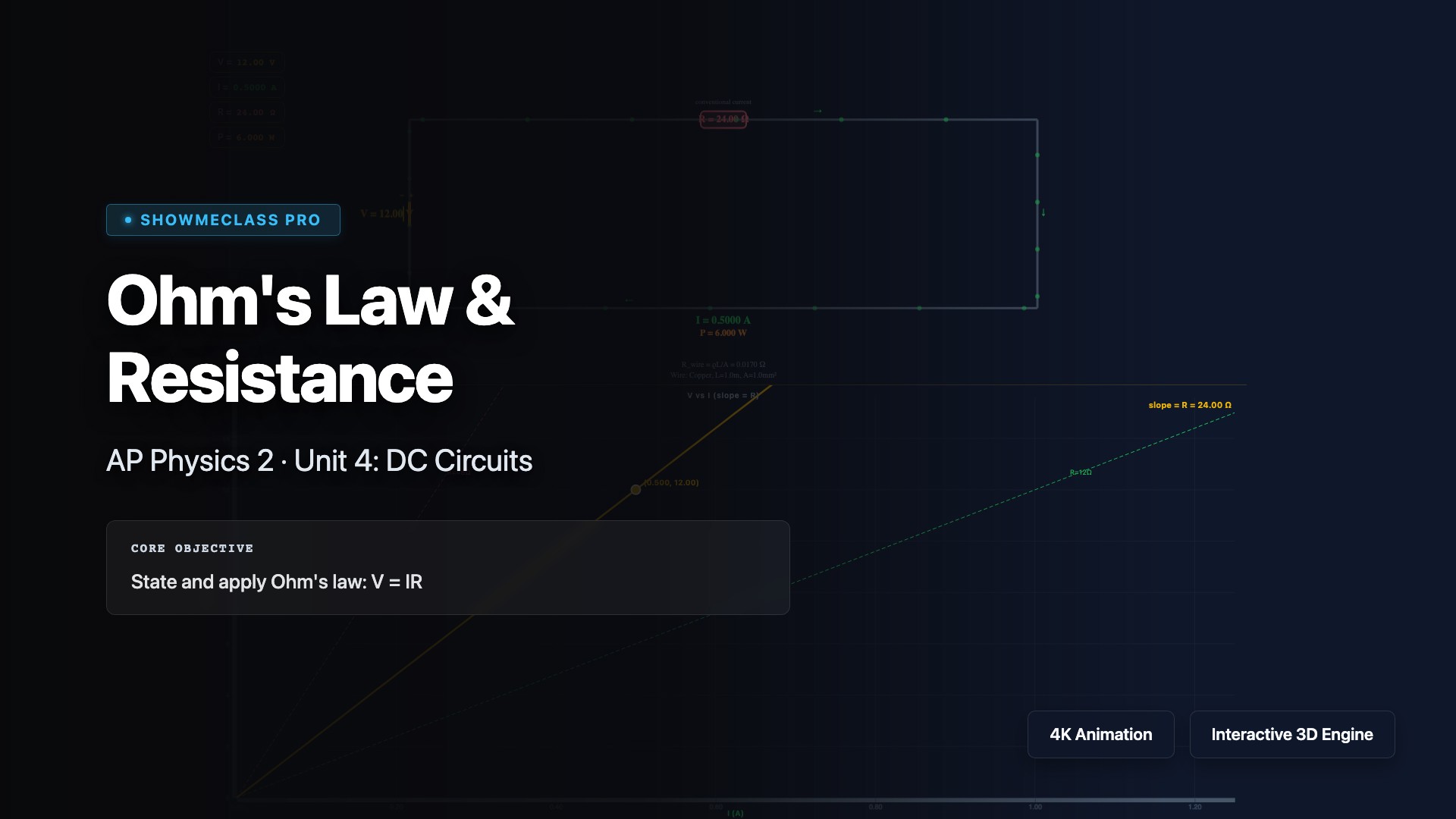
Ohm's Law & Resistance
Explore Ohm's Law stating that voltage across a conductor is proportional to current: V = IR, where R is resistance measured in ohms. Understand how resistance depends on material properties (resistivity ρ), length, and cross-sectional area: R = ρL/A. Calculate power dissipation using P = IV = I²R = V²/R. Analyze how temperature affects resistance, and apply Ohm's Law to solve circuit problems involving series and parallel resistor combinations.
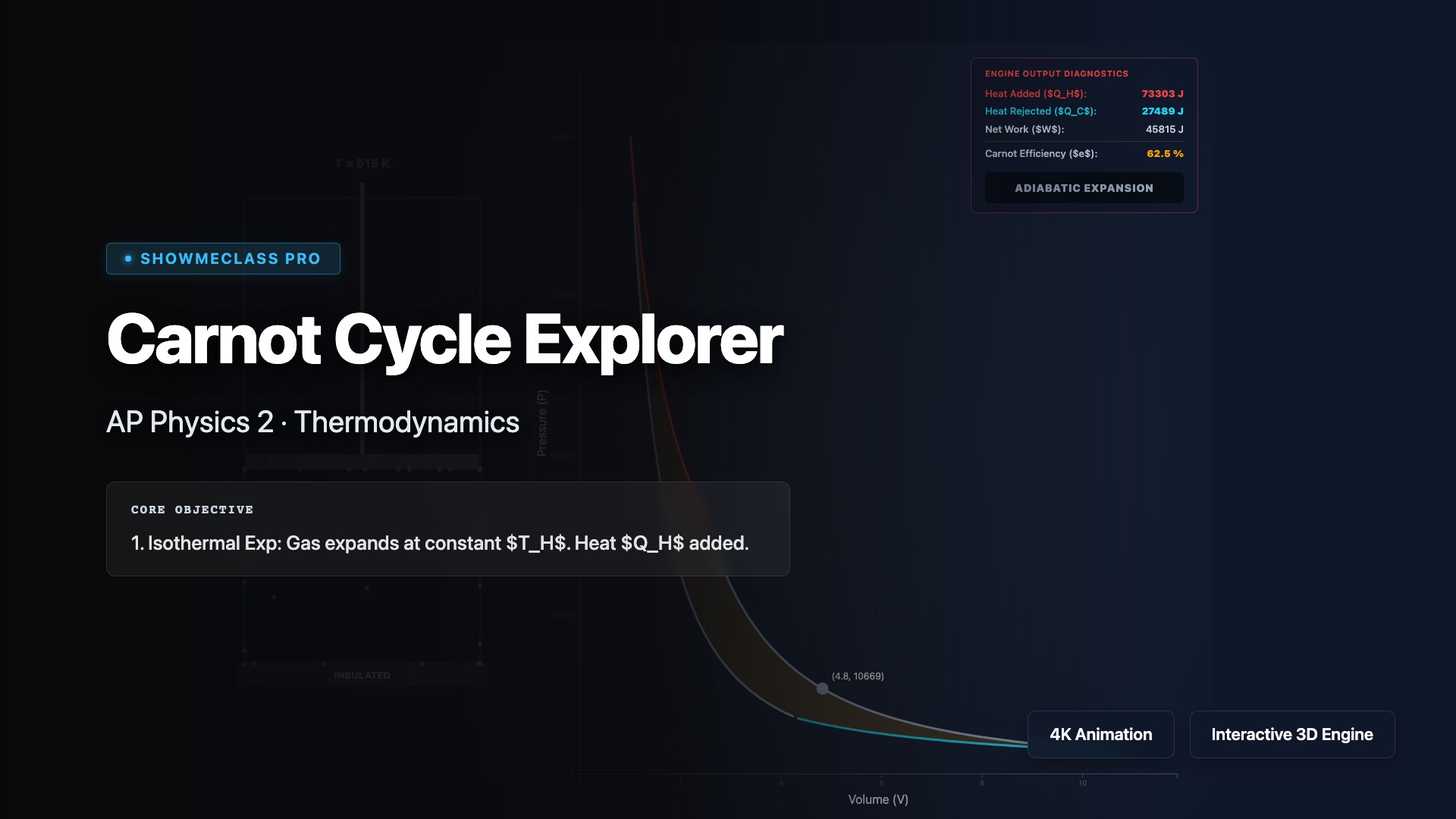
Carnot Cycle Explorer
Trace the ideal thermodynamic Carnot Engine. Calculate P-V diagram work area, thermodynamic efficiency, and heat transfer across isothermal and adiabatic processes.
Electric Potential & Equipotentials
Explore electric potential (voltage) as the electric potential energy per unit charge, measured in volts. Calculate potential from point charges using V = kQ/r and understand that equipotential lines connect points of equal potential, always perpendicular to electric field lines. Visualize how positive charges move from high to low potential (downhill), work is done moving charges against the field, and the relationship ΔV = -∫E·ds connects potential difference to electric field.
Electromagnetic Induction
Explore Faraday's law of electromagnetic induction stating that changing magnetic flux through a loop induces an electromotive force (EMF) given by ε = -dΦB/dt. Understand Lenz's law: the induced current creates a magnetic field opposing the flux change. Visualize how moving magnets near coils, changing current in nearby circuits, or rotating loops in magnetic fields generate electricity. Apply these principles to generators, transformers, and induction cooktops.
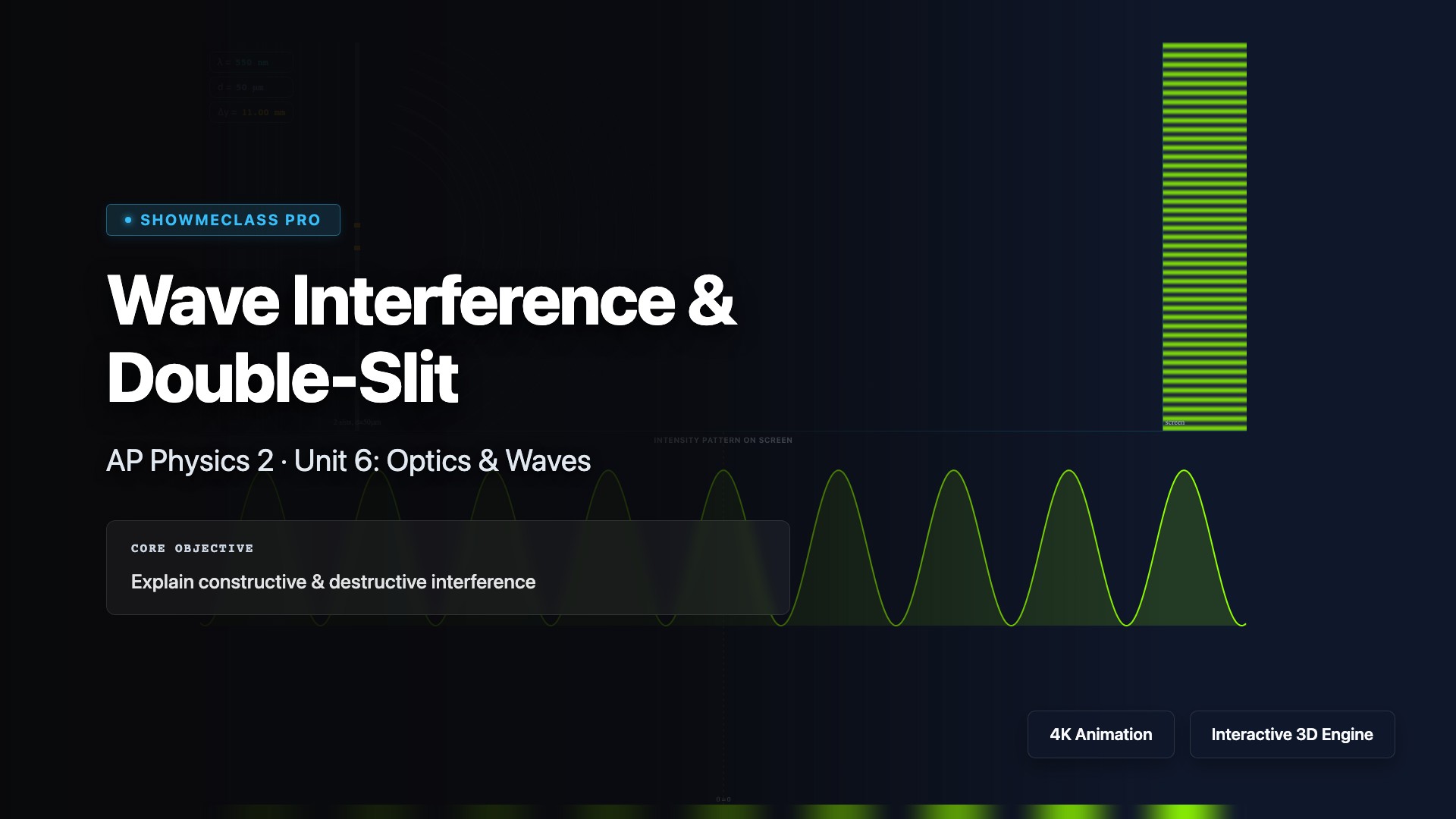
Wave Interference & Double-Slit
Explore Young's double-slit experiment demonstrating wave interference and the wave nature of light. Visualize constructive interference (bright fringes) where path difference equals integer wavelengths (dsin θ = mλ) and destructive interference (dark fringes) at half-wavelength differences. Calculate fringe spacing, understand how wavelength and slit separation affect patterns, and explore single-slit diffraction. This experiment provided crucial evidence for light's wave properties.
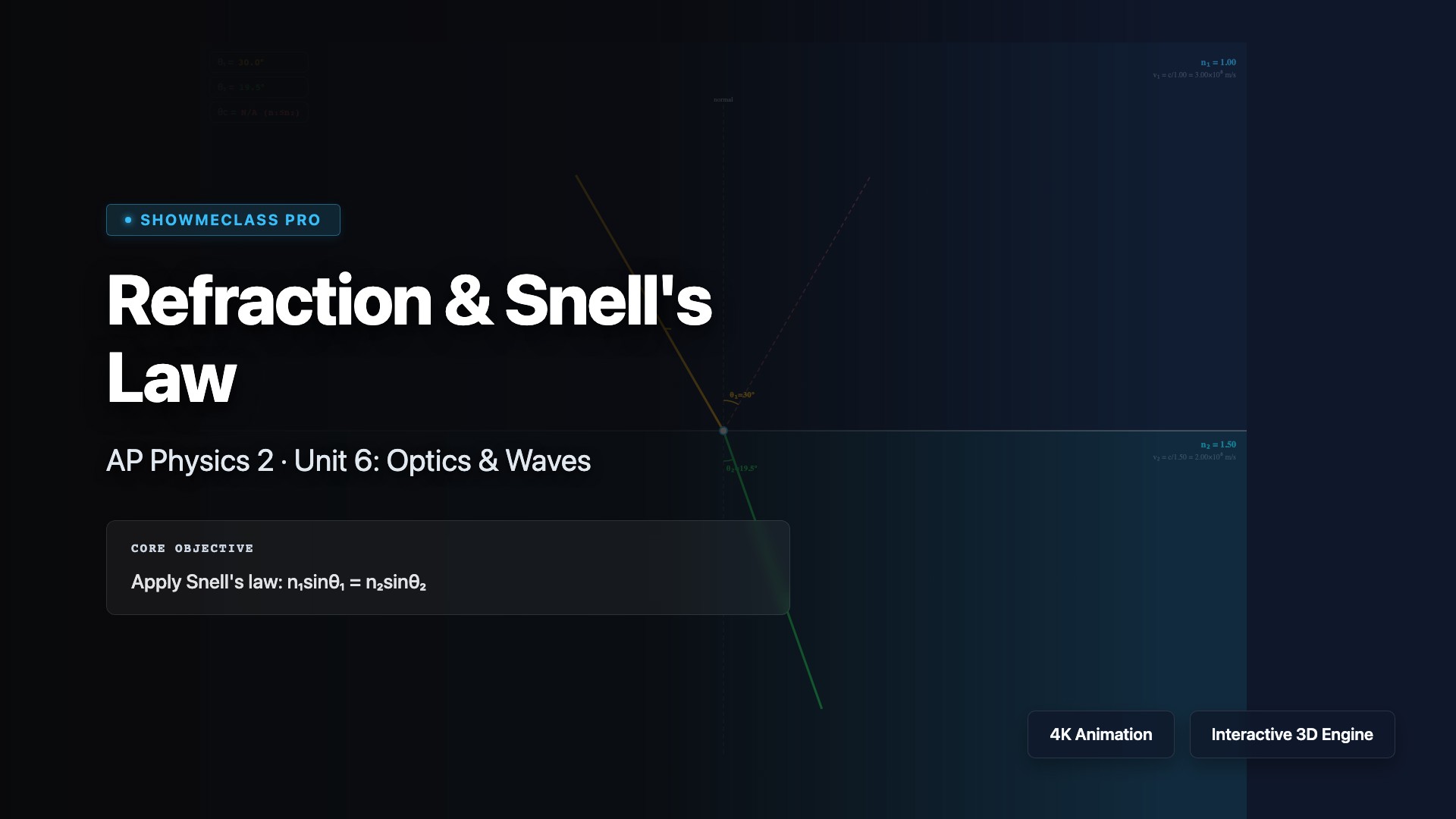
Refraction & Snell's Law
Explore light refraction at interfaces between media using Snell's Law: n₁ sin θ₁ = n₂ sin θ₂, where n is the refractive index. Understand that light bends toward the normal when entering denser media (higher n) and away when entering less dense media. Visualize total internal reflection (TIR) occurring when light travels from high to low index at angles exceeding the critical angle θc = sin⁻¹(n₂/n₁). Apply to fiber optics, prisms, and mirages.
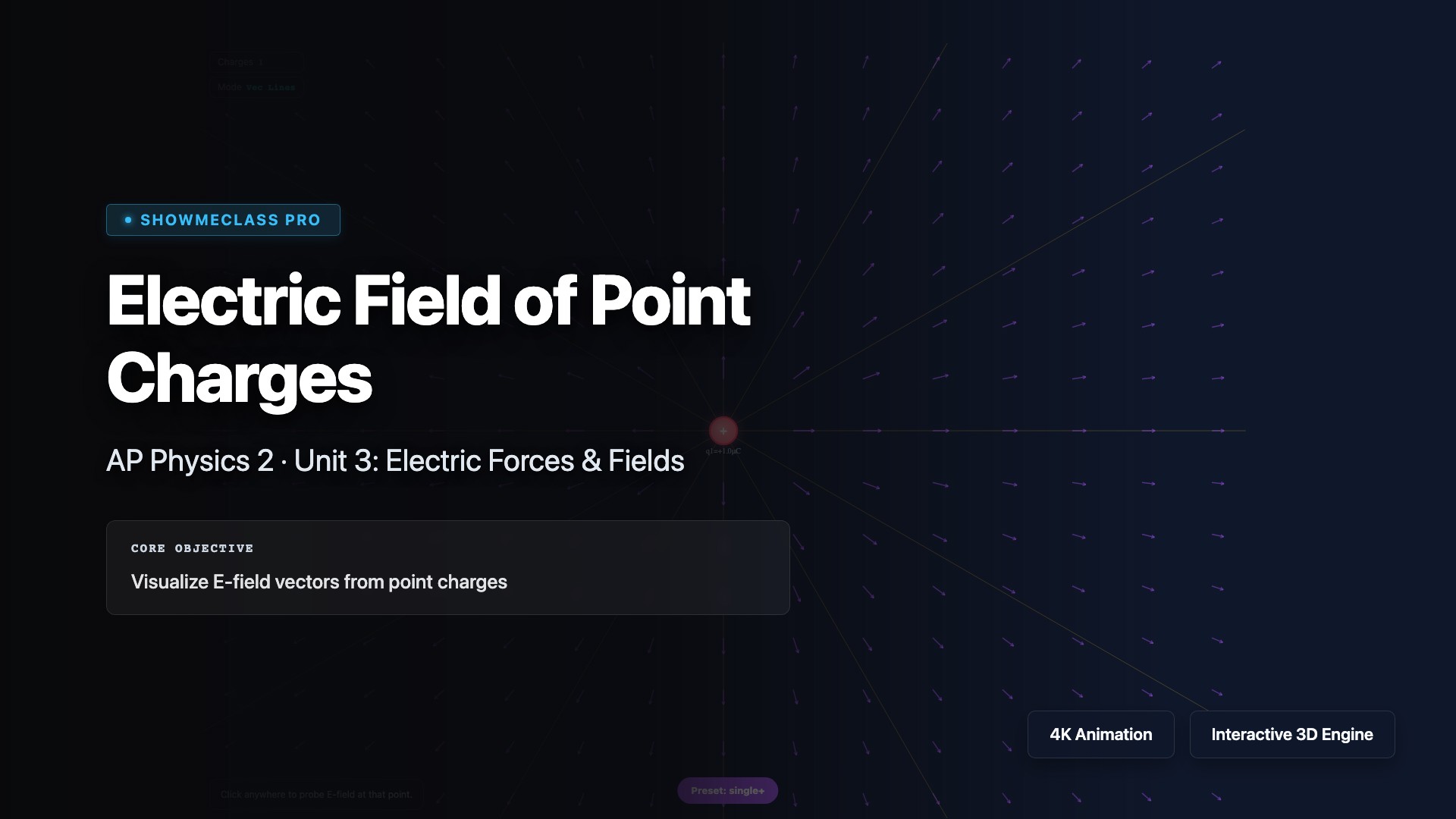
Electric Field of Point Charges
Visualize electric fields created by point charges using field lines radiating outward from positive charges and inward toward negative charges. Calculate electric field strength using E = kQ/r² and apply the superposition principle to find net fields from multiple charges. Understand that field line density indicates field strength, lines never cross, and the electric field direction shows the force a positive test charge would experience at each point in space.
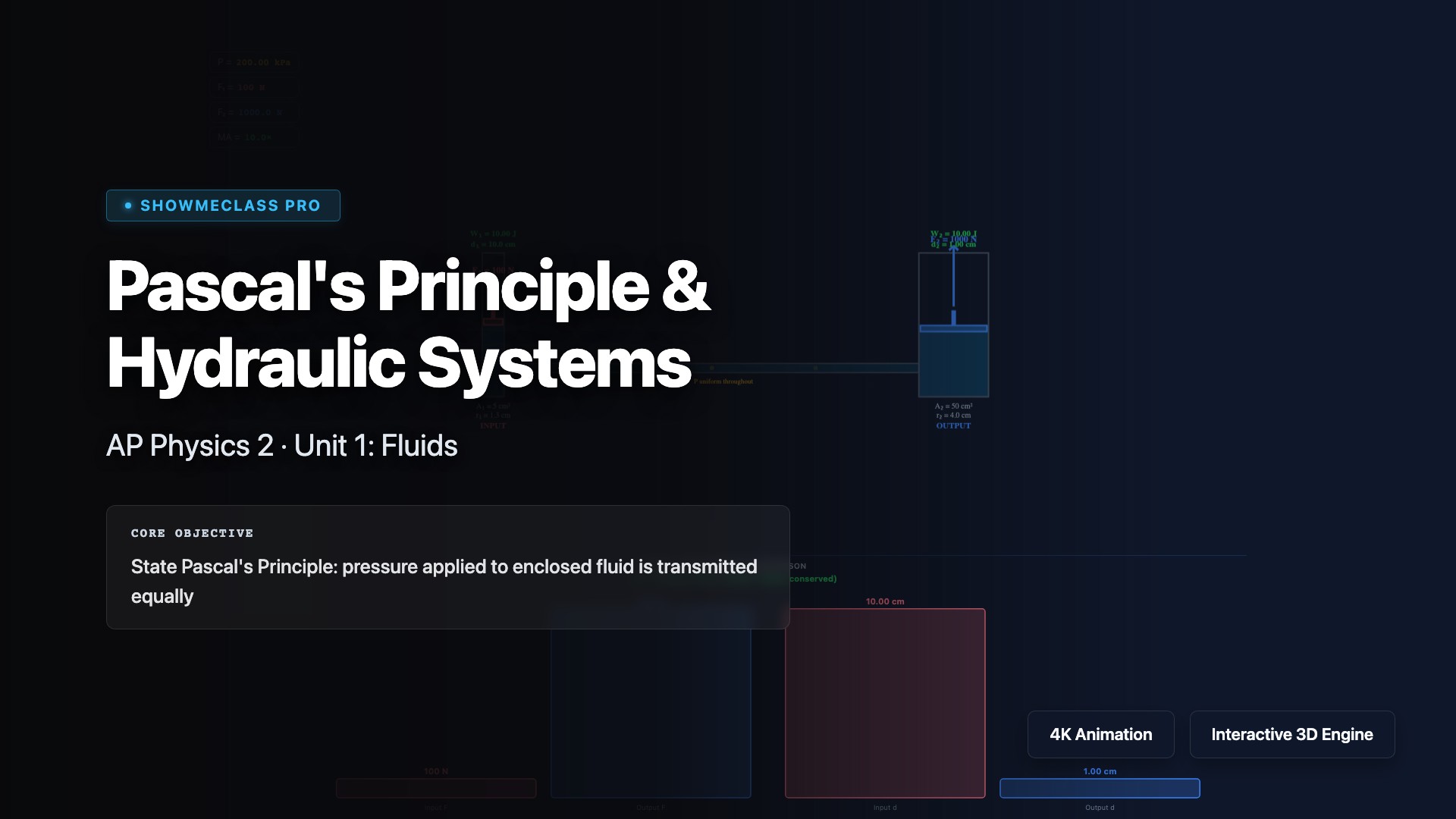
Pascal's Principle & Hydraulic Systems
Explore Pascal's principle stating that pressure applied to a confined fluid is transmitted undiminished throughout the fluid. Understand hydraulic systems where a small force on a small piston creates a large force on a large piston: F₁/A₁ = F₂/A₂. Visualize mechanical advantage in hydraulic lifts, car brakes, and hydraulic presses. Learn how incompressible fluids enable force multiplication while conserving energy through different displacement distances.
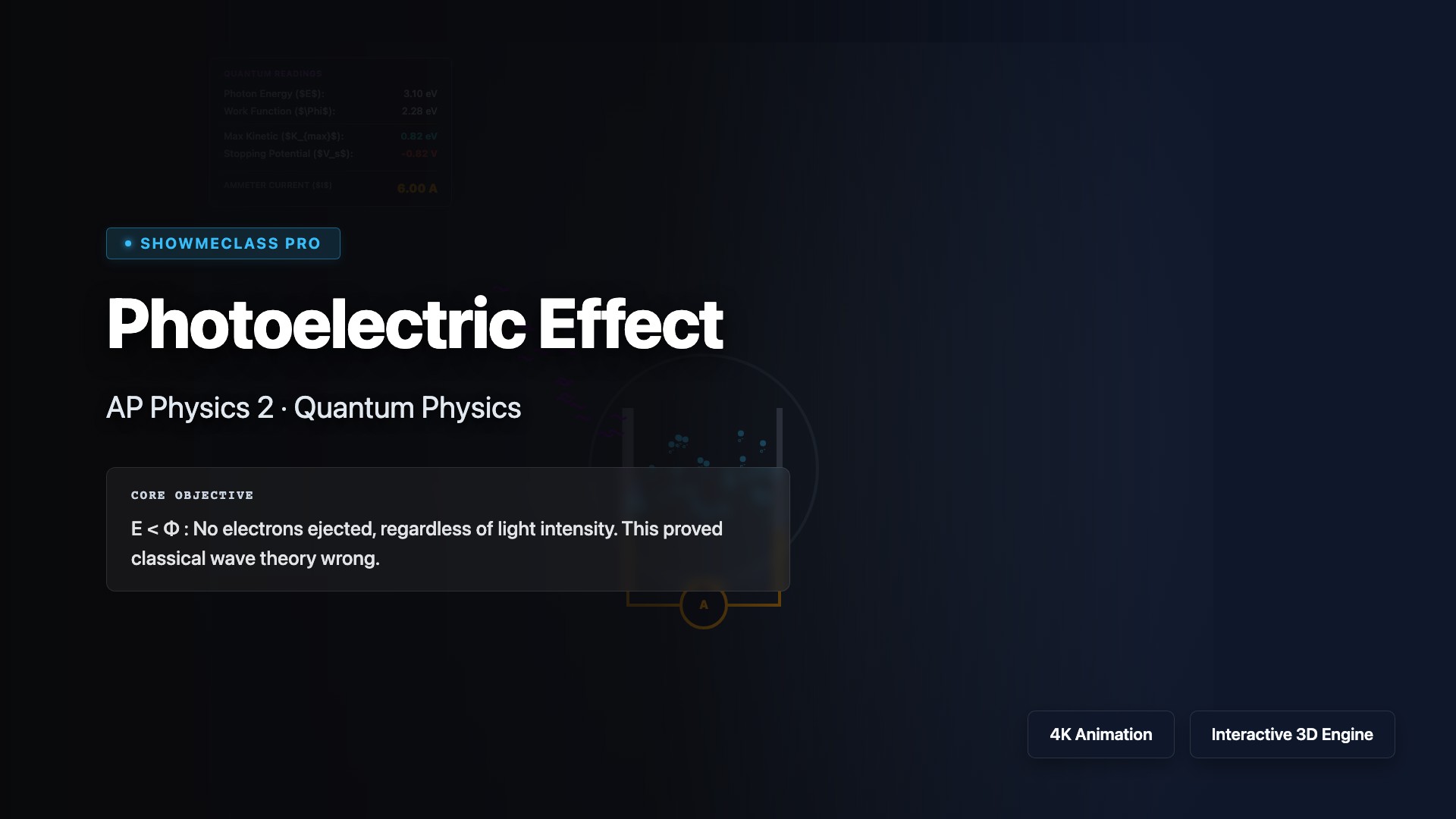
Photoelectric Effect
Experiment with the quantum nature of light. Adjust wavelength, intensity, target metal, and stopping potential to verify the Einstein photoelectric equation.
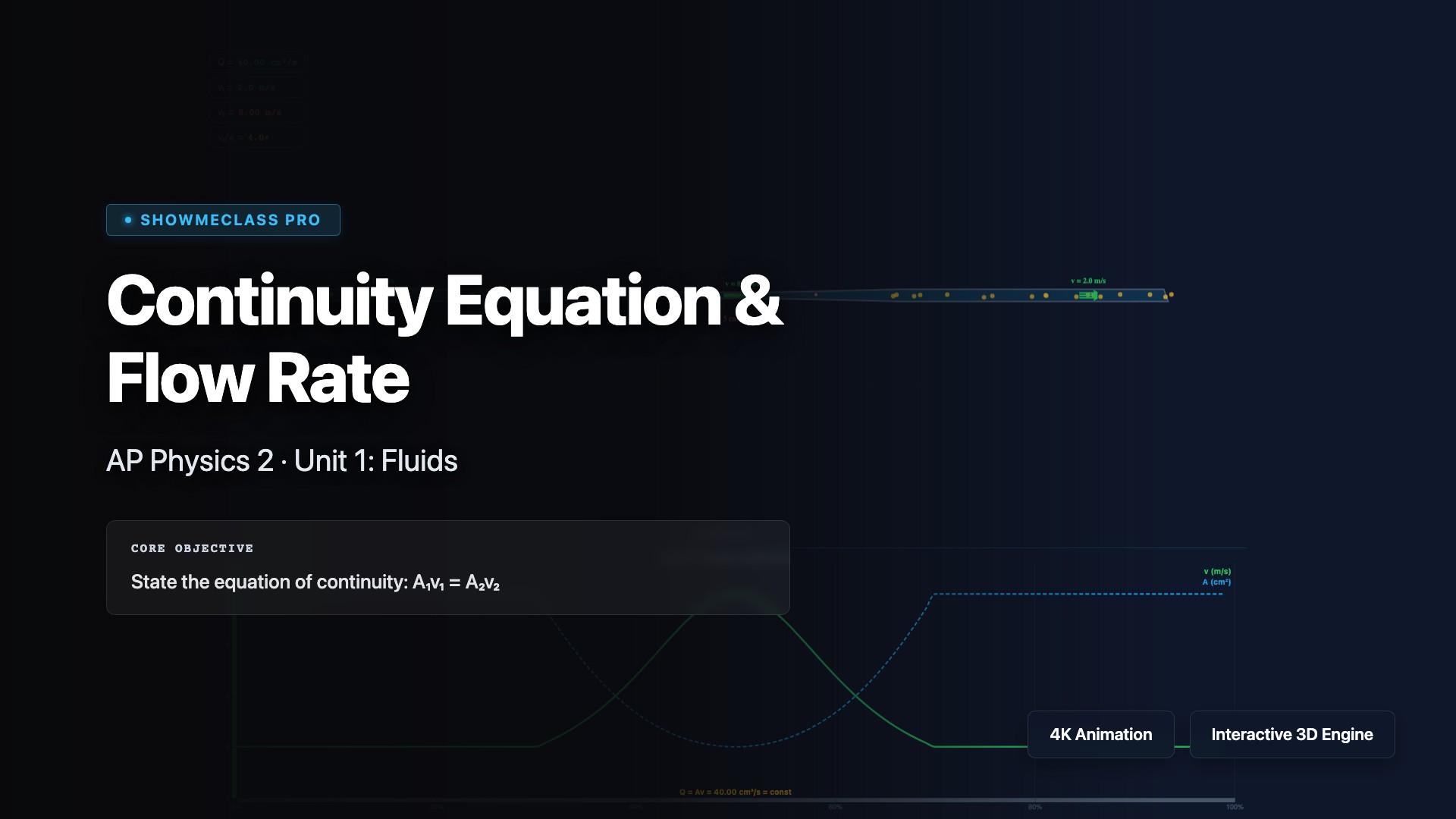
Continuity Equation & Flow Rate
Explore the continuity equation for incompressible fluids stating that mass flow rate is constant: A₁v₁ = A₂v₂, where A is cross-sectional area and v is fluid velocity. Understand that as pipe diameter decreases, fluid velocity increases to maintain constant volume flow rate. Visualize applications in blood flow through arteries, water through nozzles, and river flow through narrow channels. Connect continuity to Bernoulli's principle for complete fluid dynamics analysis.
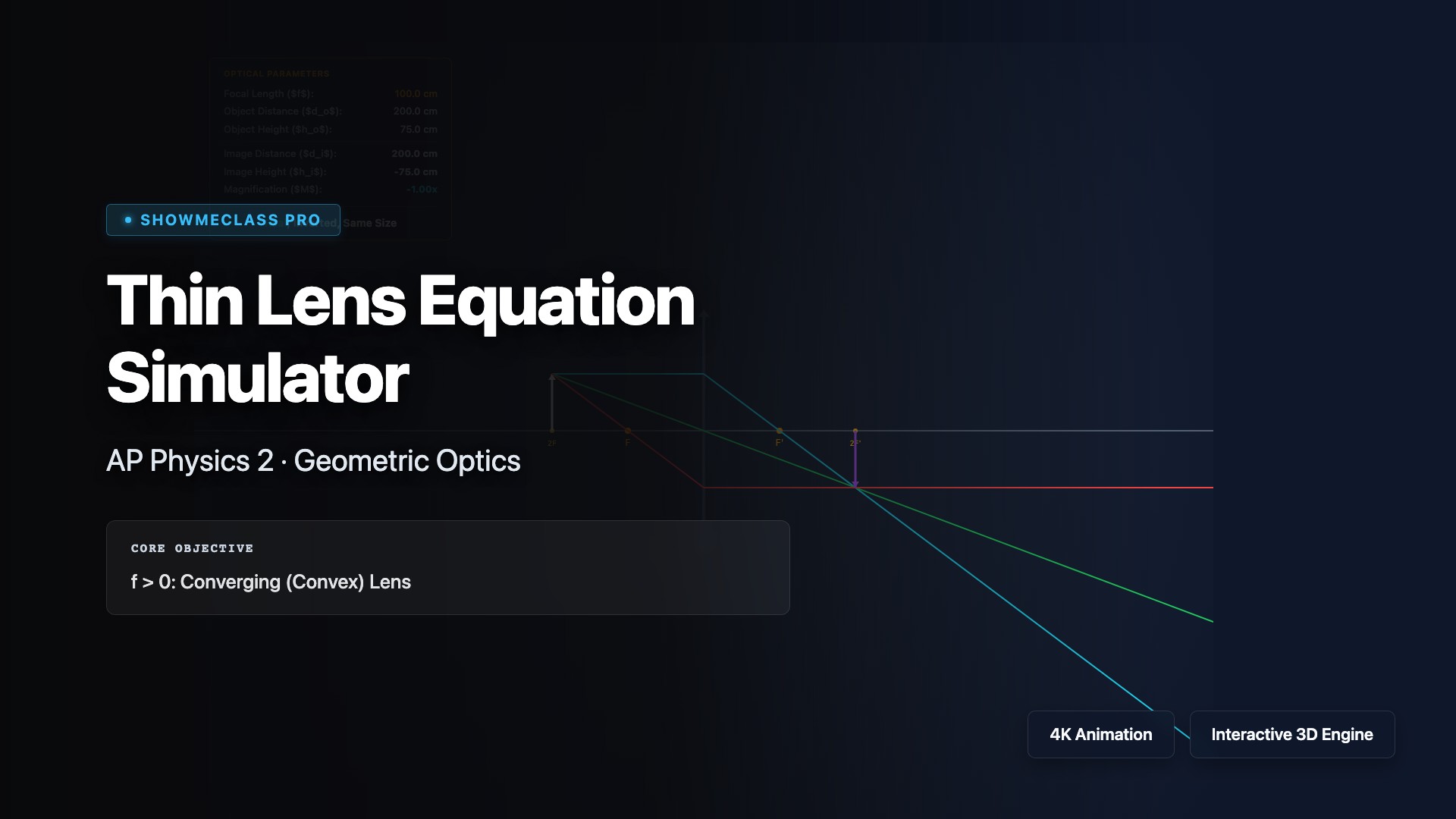
Thin Lens Equation Simulator
Construct dynamic ray diagrams for converging and diverging lenses. Analyze real/virtual image formation using the thin lens equation and magnification formulas.
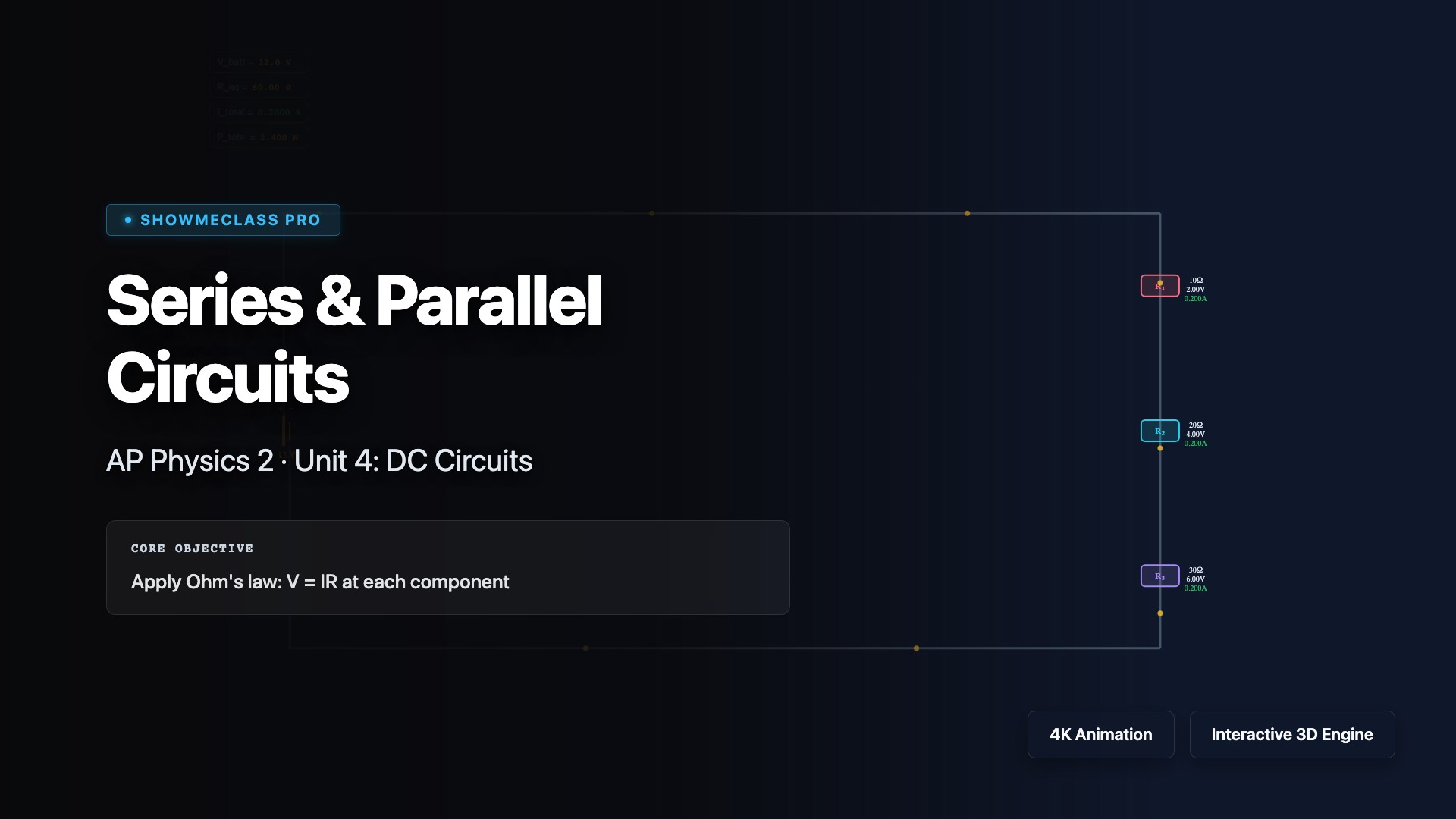
Series & Parallel Circuits
Compare series circuits (single current path, voltage divides, Req = R₁ + R₂ + ...) with parallel circuits (multiple current paths, voltage same across branches, 1/Req = 1/R₁ + 1/R₂ + ...). Apply Kirchhoff's voltage law (sum of voltage drops equals EMF) and current law (current in equals current out at junctions). Analyze complex circuits with mixed series-parallel combinations, calculate equivalent resistance, and determine current and voltage across each component.
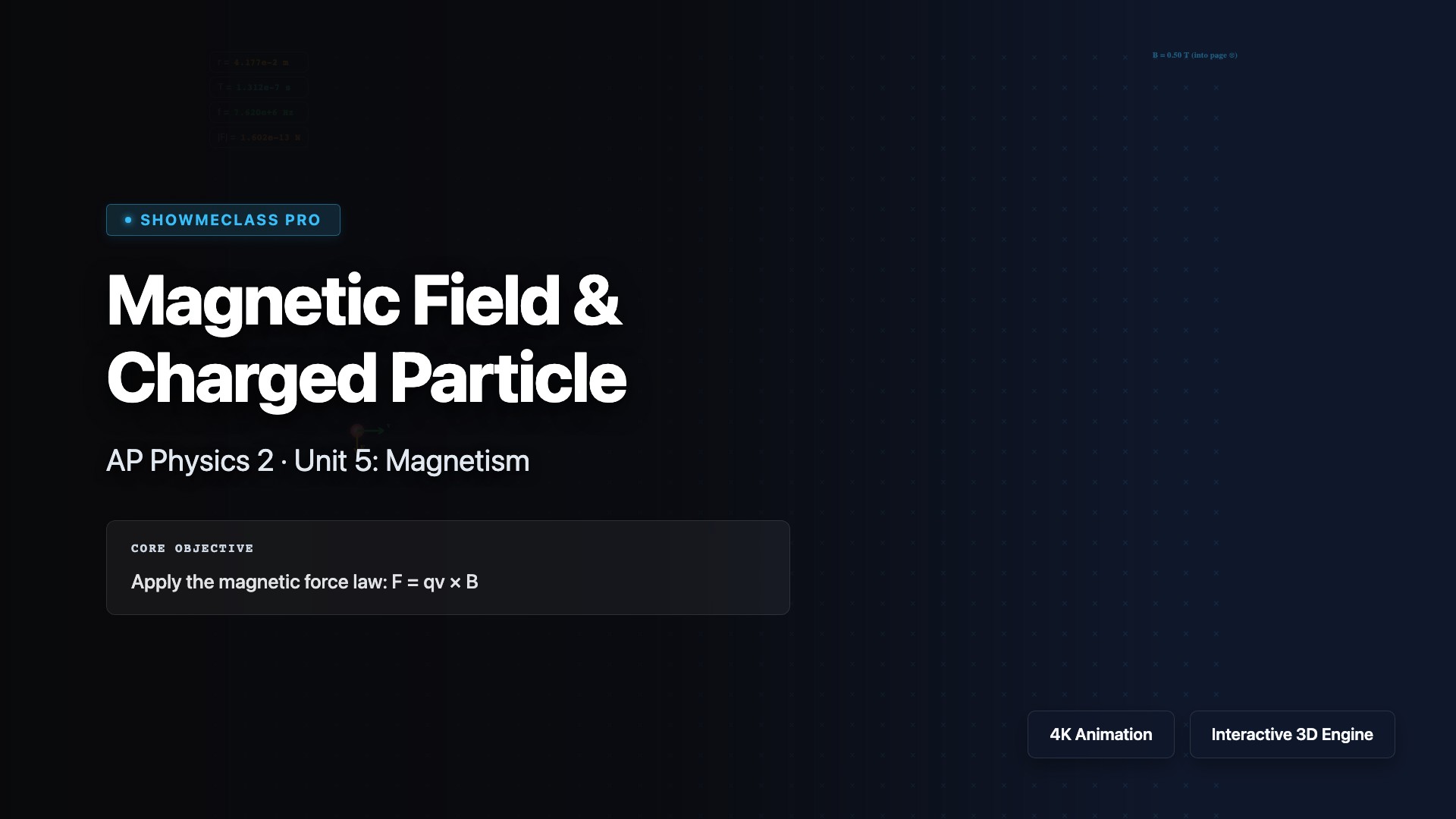
Magnetic Field & Charged Particle
Visualize the motion of charged particles in magnetic fields using the Lorentz force F = qvB sin θ. Understand that magnetic force is perpendicular to both velocity and field, causing circular or helical motion. Calculate the radius of circular paths r = mv/(qB) for particles in uniform fields. Explore applications in cyclotrons, mass spectrometers, and the Aurora Borealis where Earth's magnetic field deflects charged solar wind particles toward the poles.
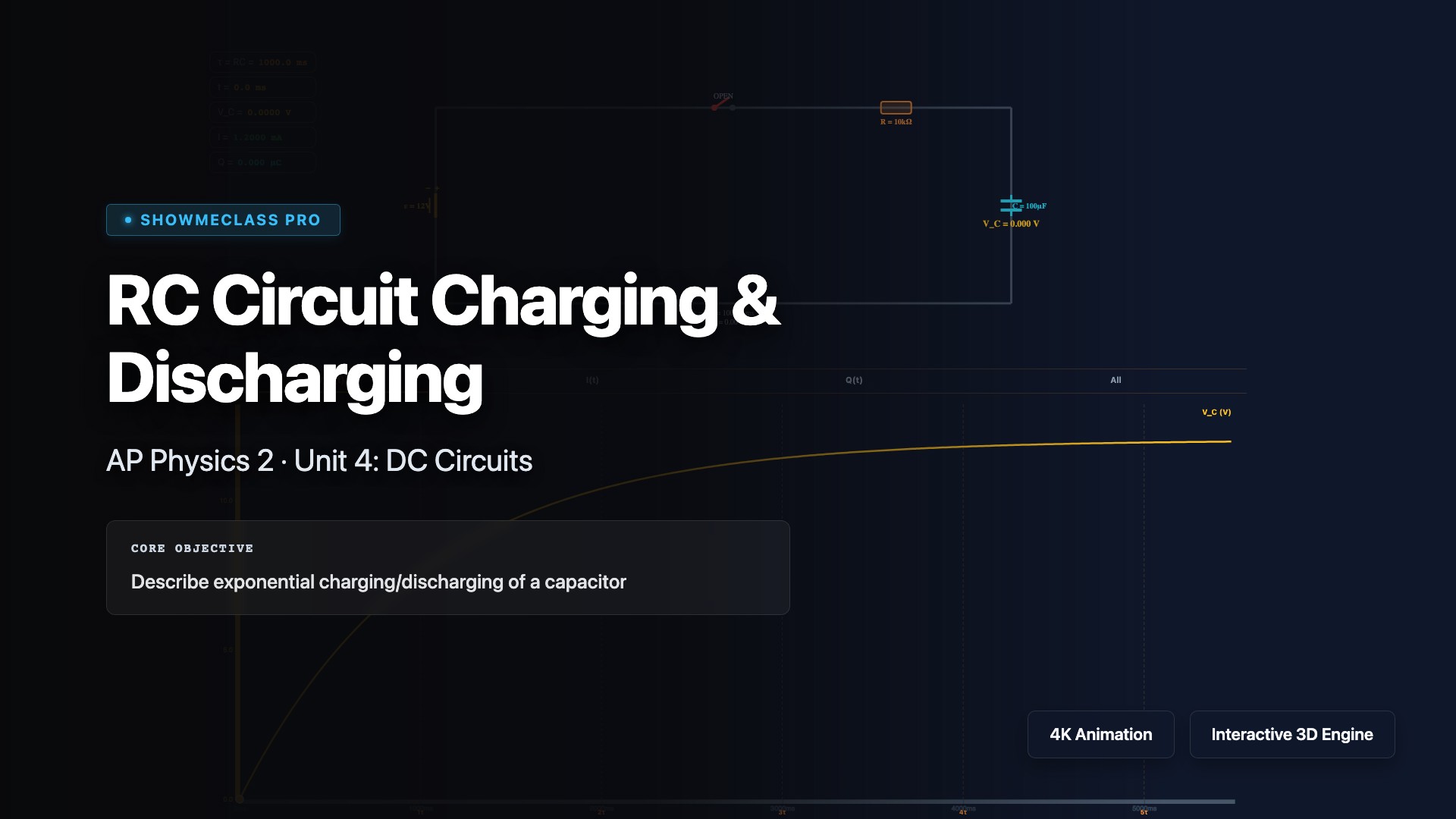
RC Circuit Charging & Discharging
Analyze RC circuits where capacitors charge and discharge through resistors with exponential time dependence. Understand the time constant τ = RC that characterizes how quickly the capacitor charges to 63% of maximum voltage or discharges to 37% of initial voltage. Visualize voltage and current curves using Q(t) = Q₀(1 - e^(-t/τ)) for charging and Q(t) = Q₀e^(-t/τ) for discharging. Apply RC circuits to timing applications, filters, and camera flashes.
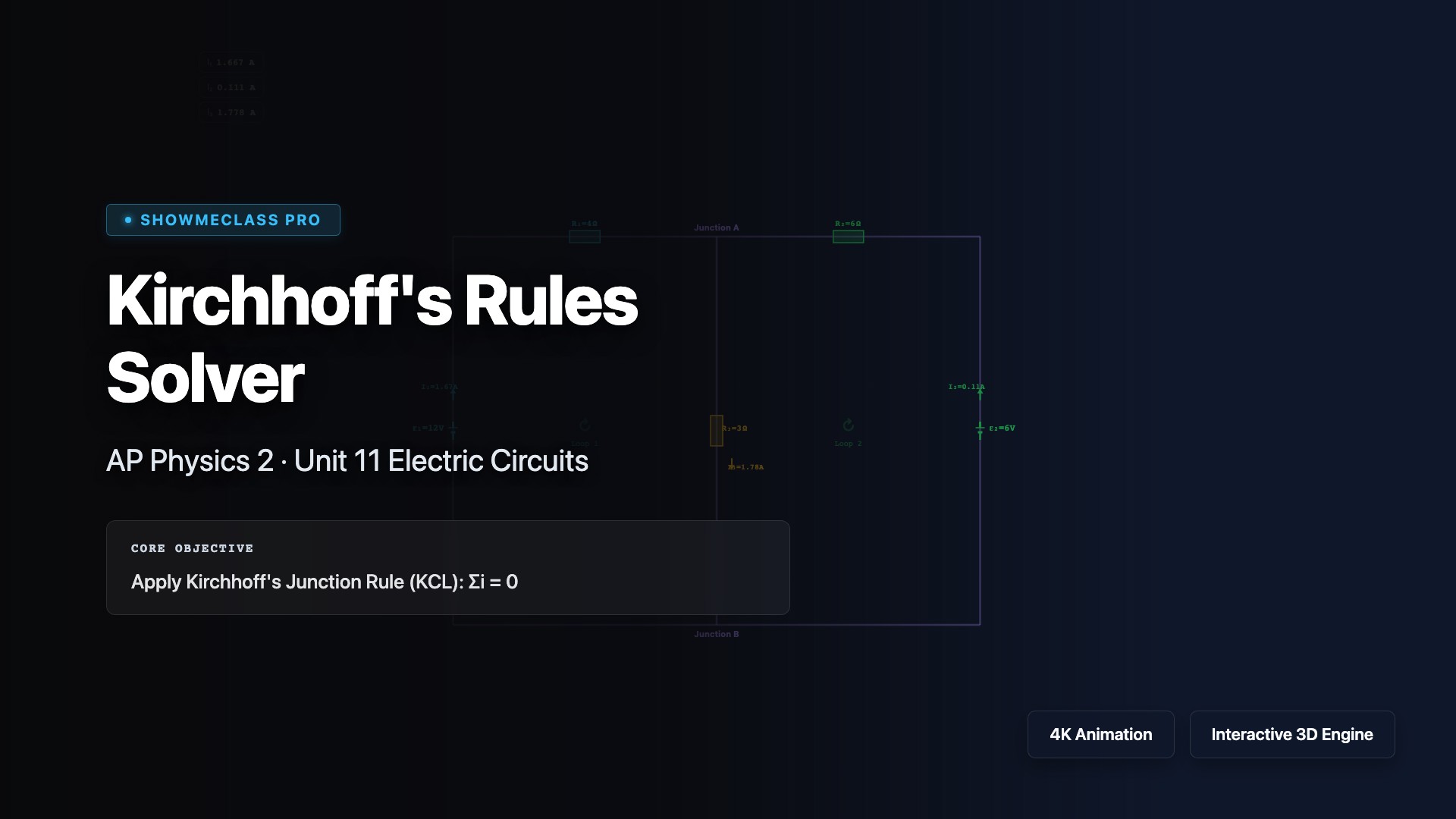
Kirchhoff's Rules Circuit Solver
Solve a two-loop circuit using Kirchhoff's voltage and current laws. Adjust EMFs and resistances to see real-time current calculations with KVL/KCL equation display.
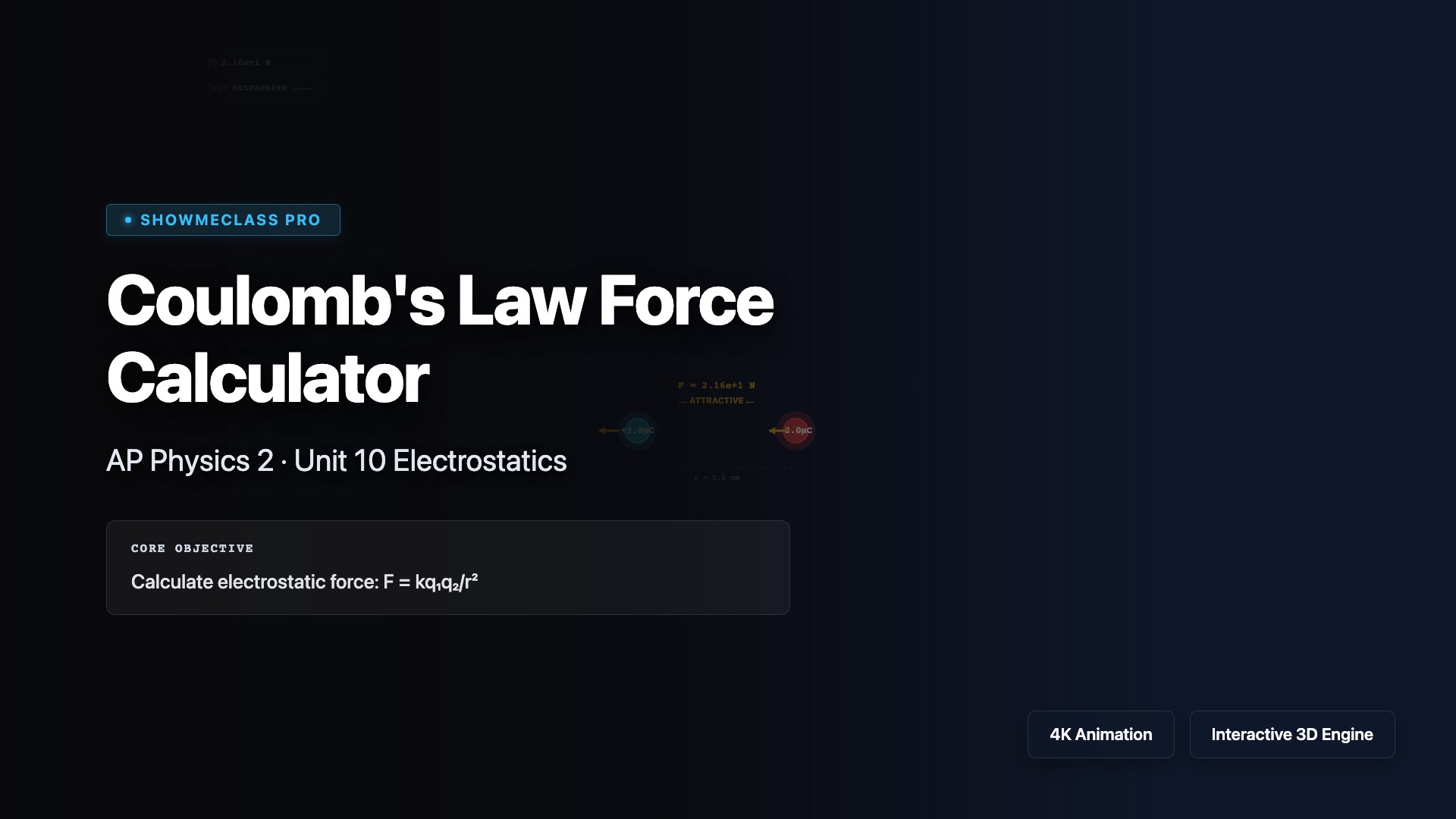
Coulomb's Law Force Calculator
Visualize the electrostatic force between two point charges. Adjust charge magnitude, sign, and distance to see attractive/repulsive forces and the inverse-square F vs r graph.
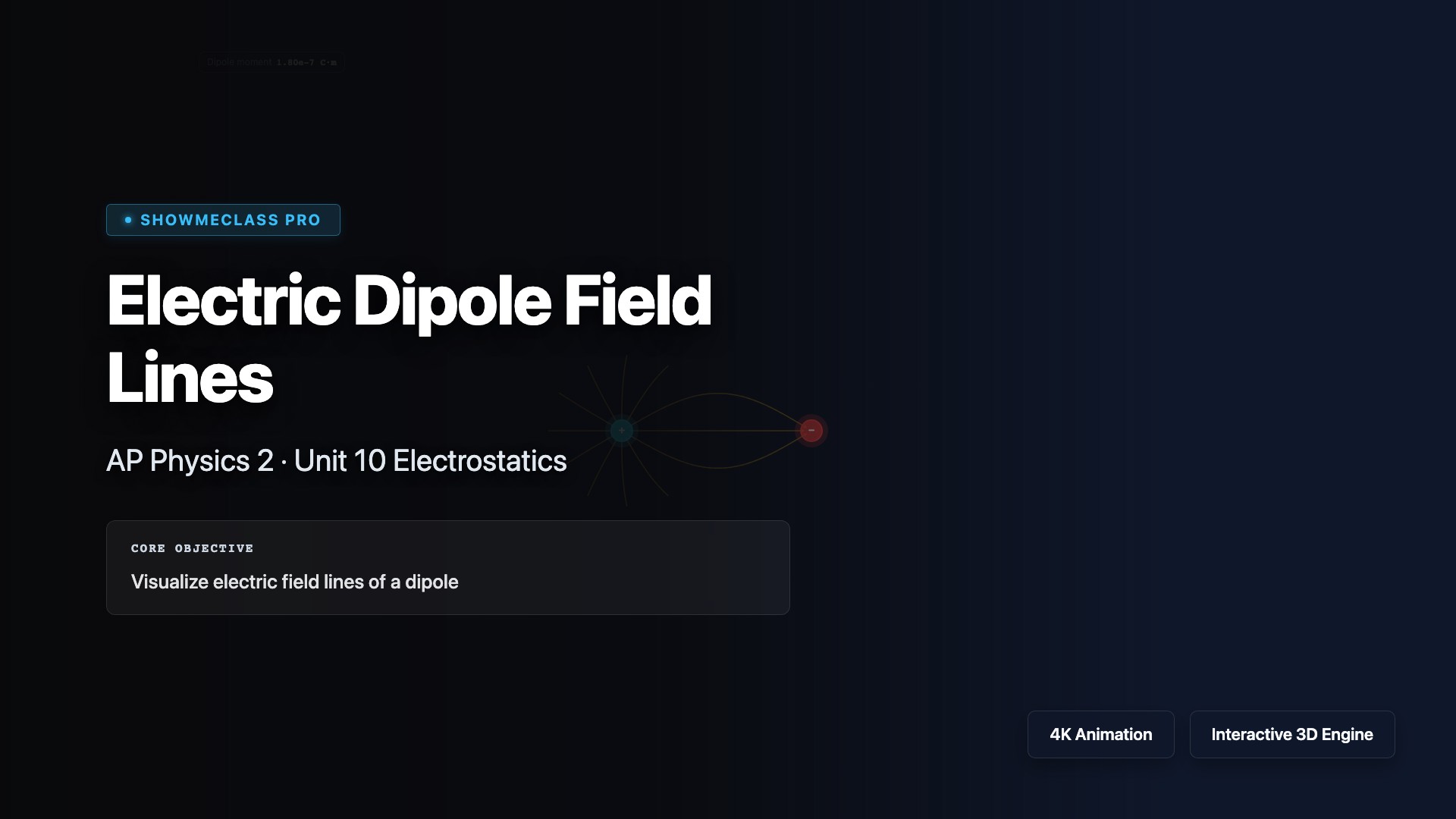
Electric Dipole Field Lines
Visualize the electric field lines and equipotential surfaces of an electric dipole. Trace field lines from positive to negative charge with adjustable charge and separation.
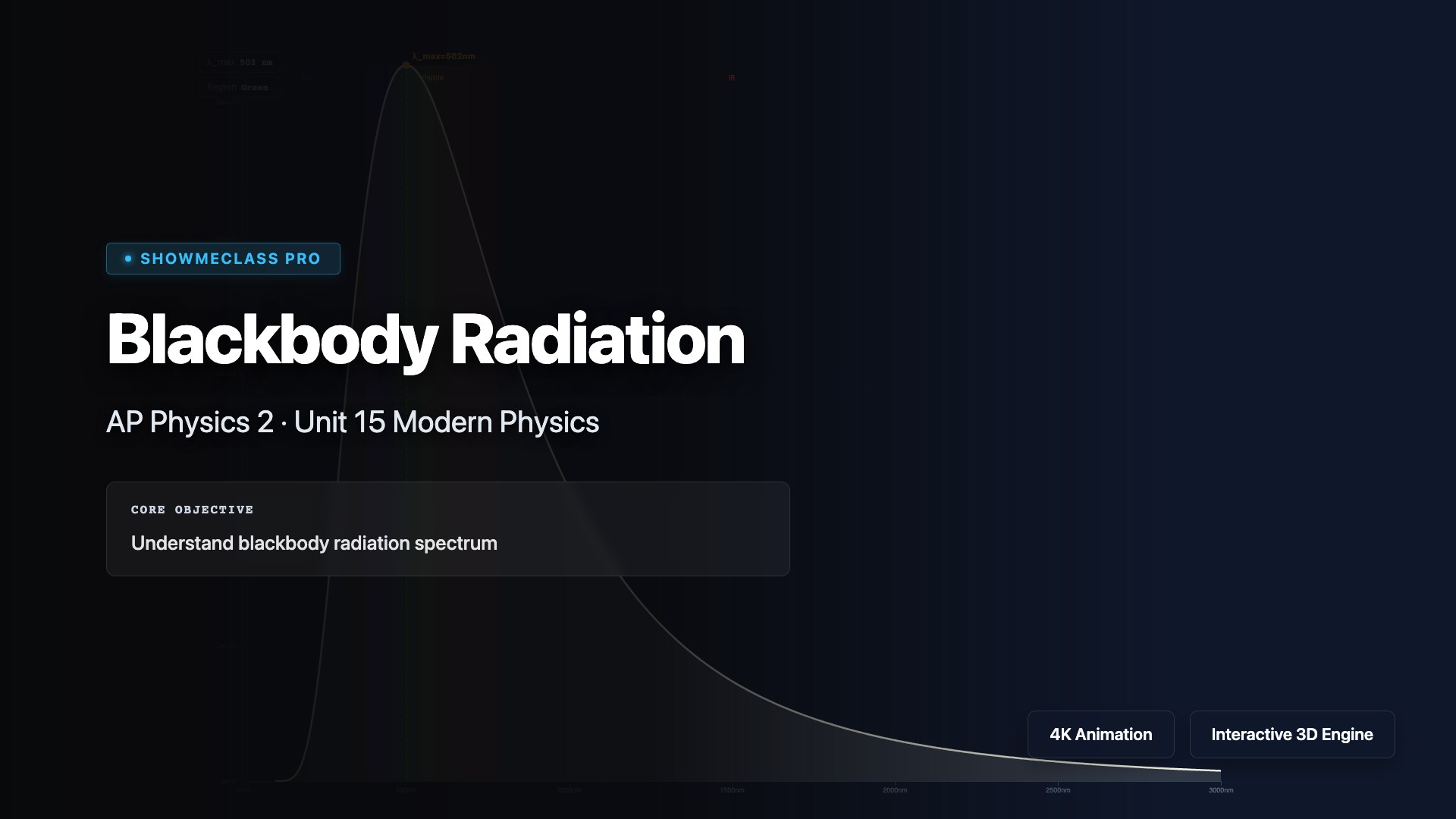
Blackbody Radiation & Wien's Law
Explore the Planck radiation spectrum with adjustable temperature. See Wien's displacement law locate the peak wavelength and compare star temperatures from red dwarf to blue giant.
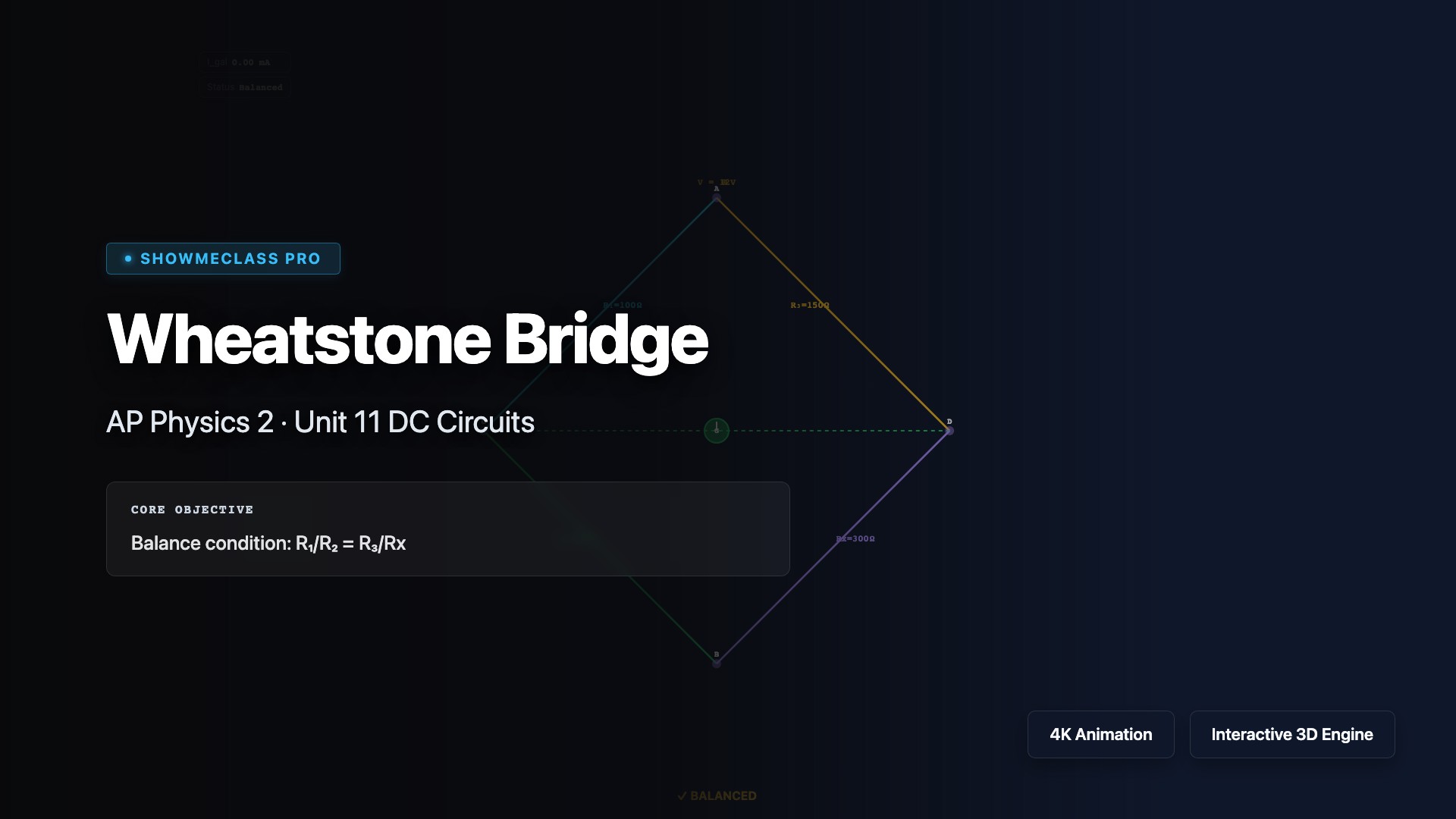
Wheatstone Bridge Balance
Adjust four resistors and voltage source to balance a Wheatstone bridge. Galvanometer needle shows current; R₁/R₂ = R₃/Rx condition for zero deflection.
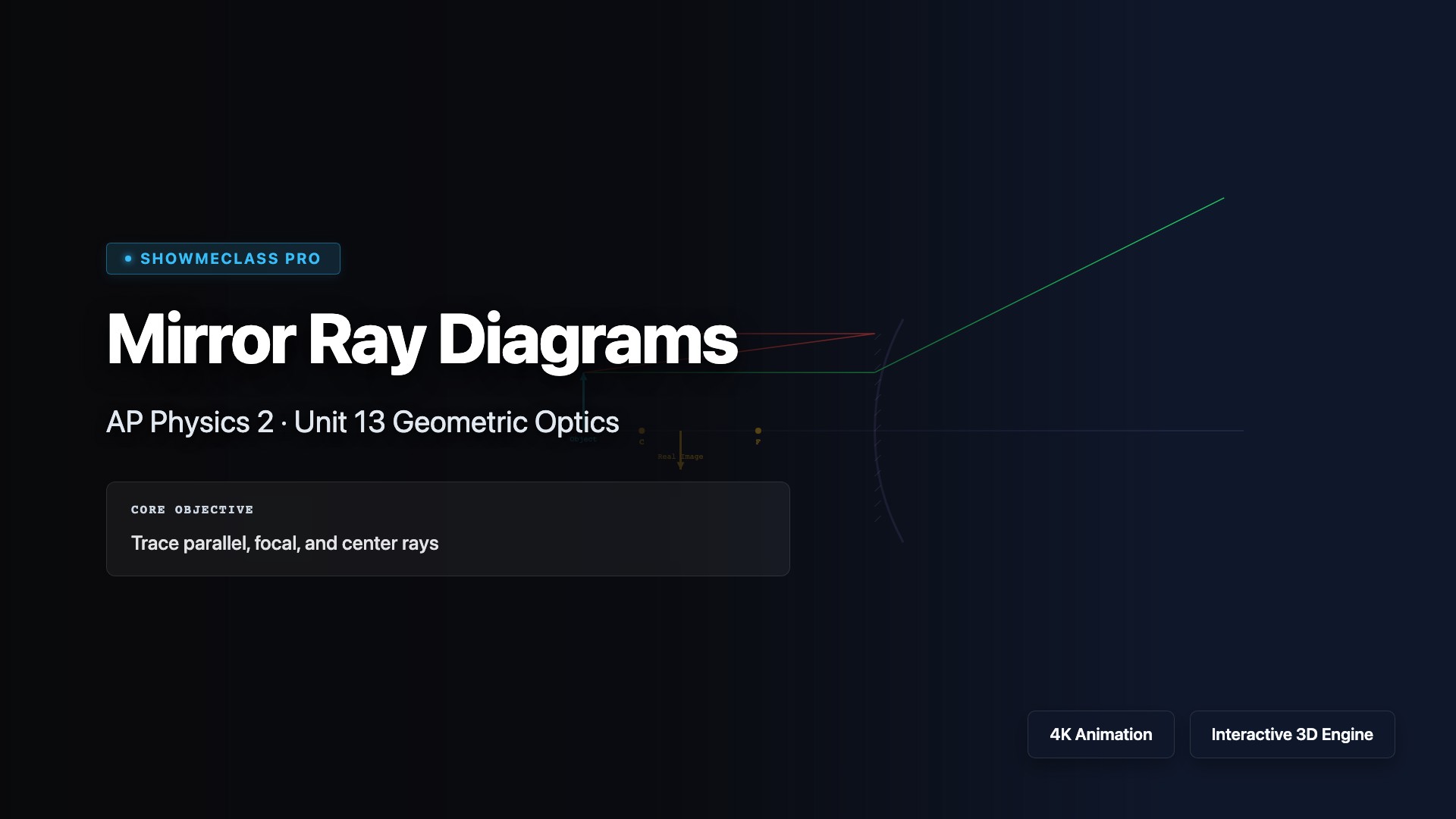
Concave & Convex Mirror Ray Diagrams
Trace parallel and focal rays for concave/convex mirrors. Calculate image distance, height, magnification, and identify real vs virtual images.
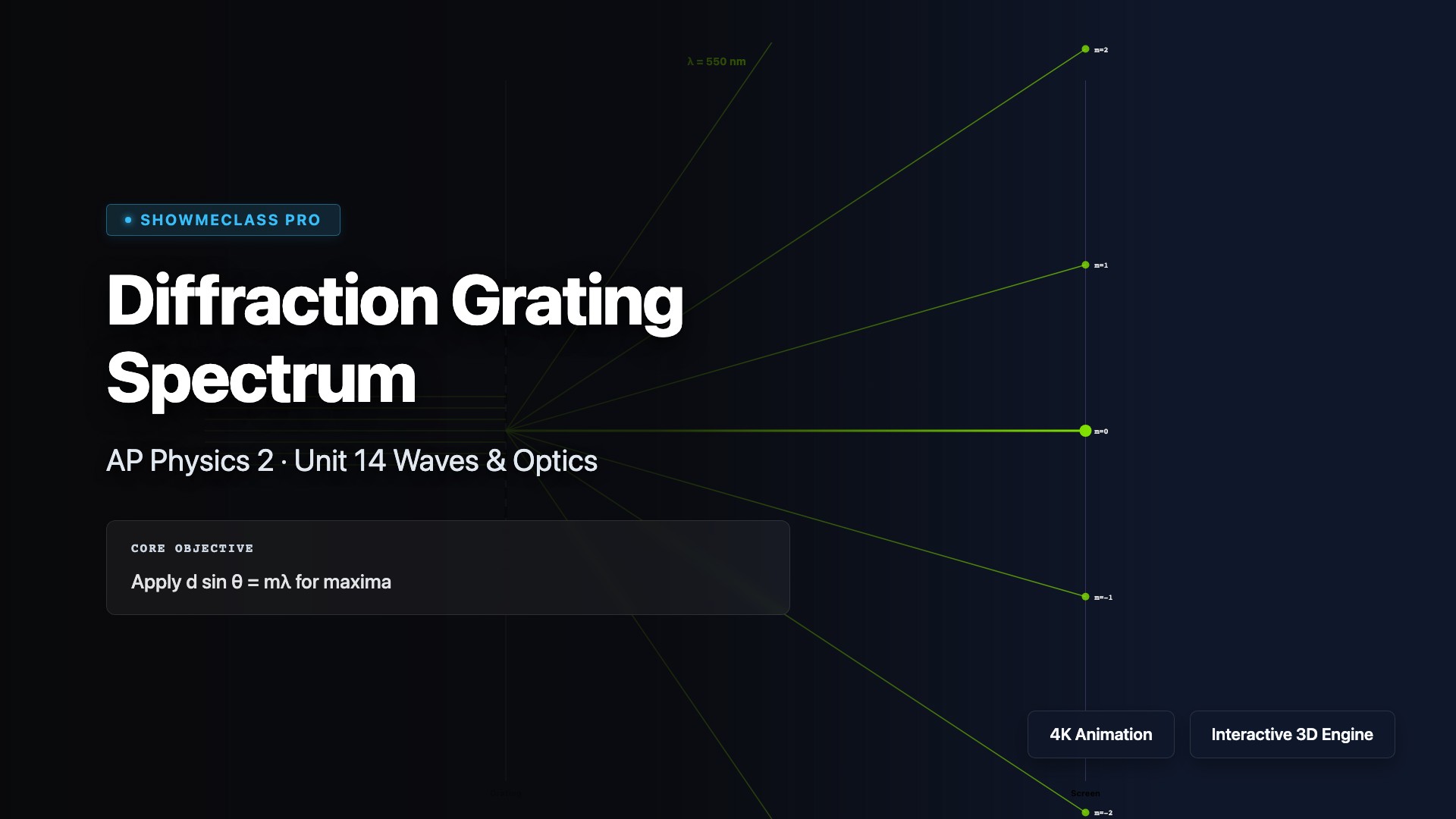
Diffraction Grating Spectrum
Visualize diffraction grating spectra with d sin θ = mλ. Adjust wavelength (color-coded), slit spacing, and max order to see angular positions of maxima.
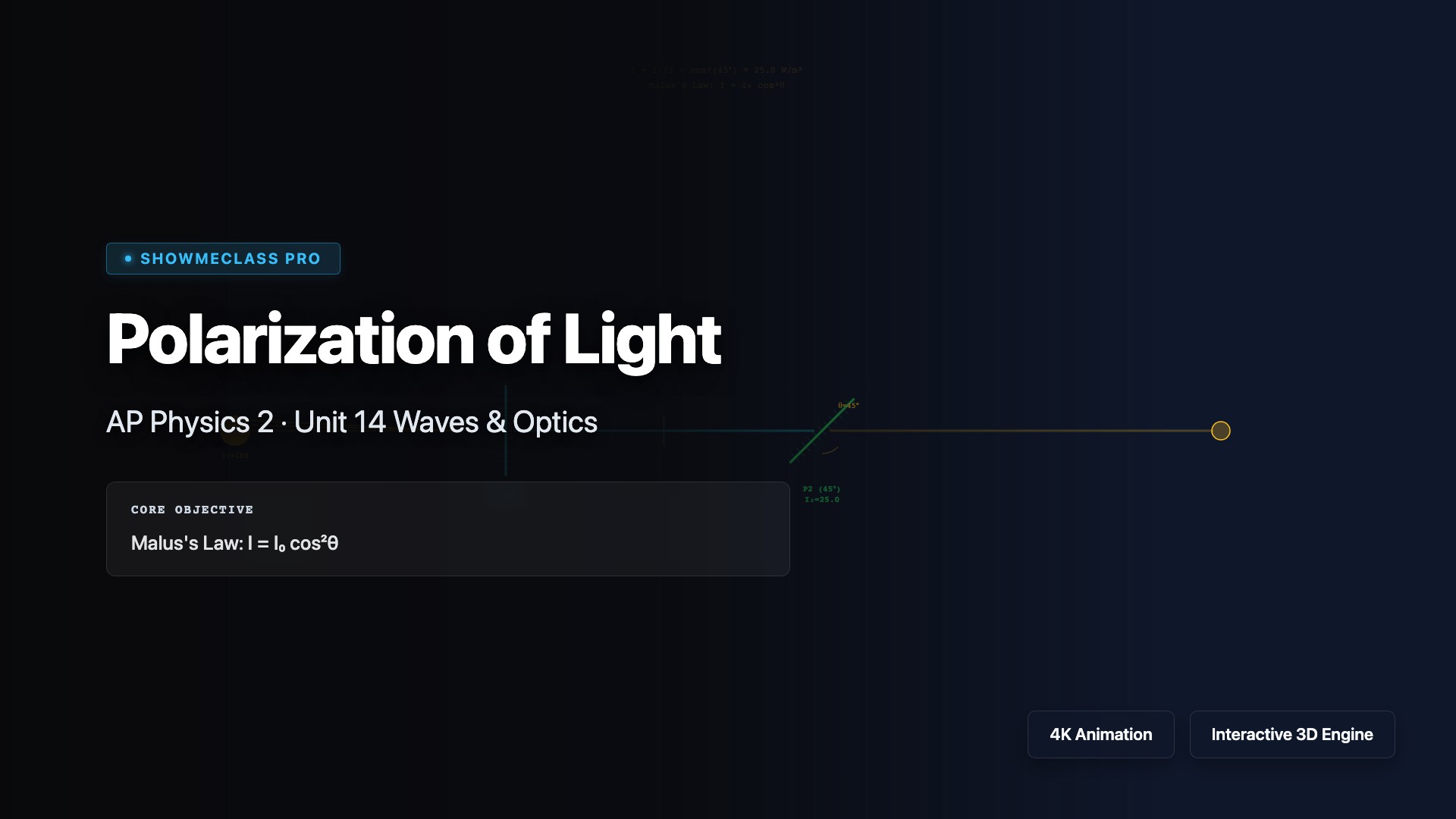
Polarization of Light (Malus's Law)
Malus's Law I = I₀cos²θ with two-polarizer system. Adjust polarizer angles and see transmitted intensity change. Crossed polarizers block all light.
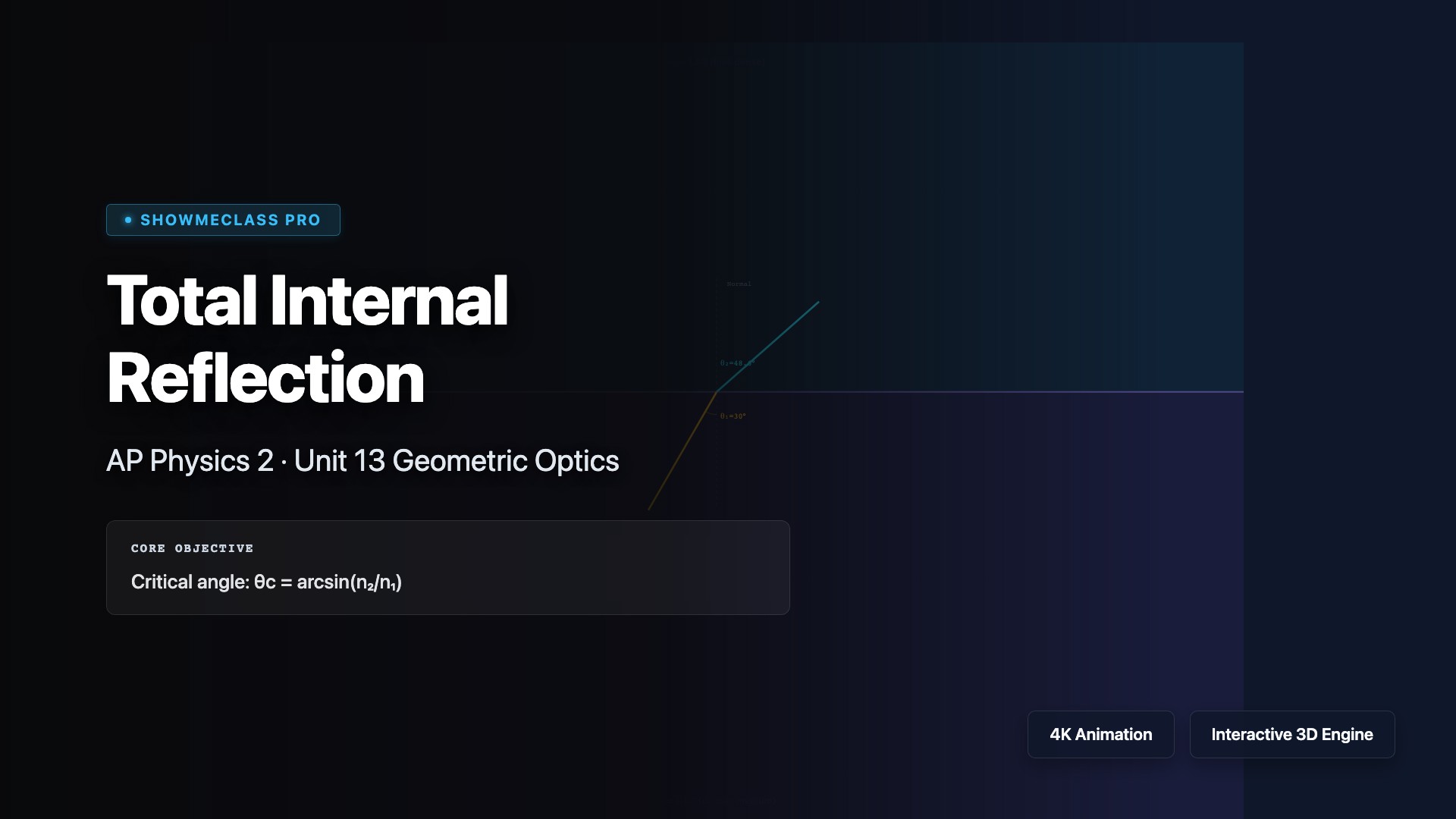
Total Internal Reflection & Fiber Optics
Adjust angle of incidence and refractive indices to observe total internal reflection. Critical angle θc = arcsin(n₂/n₁). Snell's Law visualization.
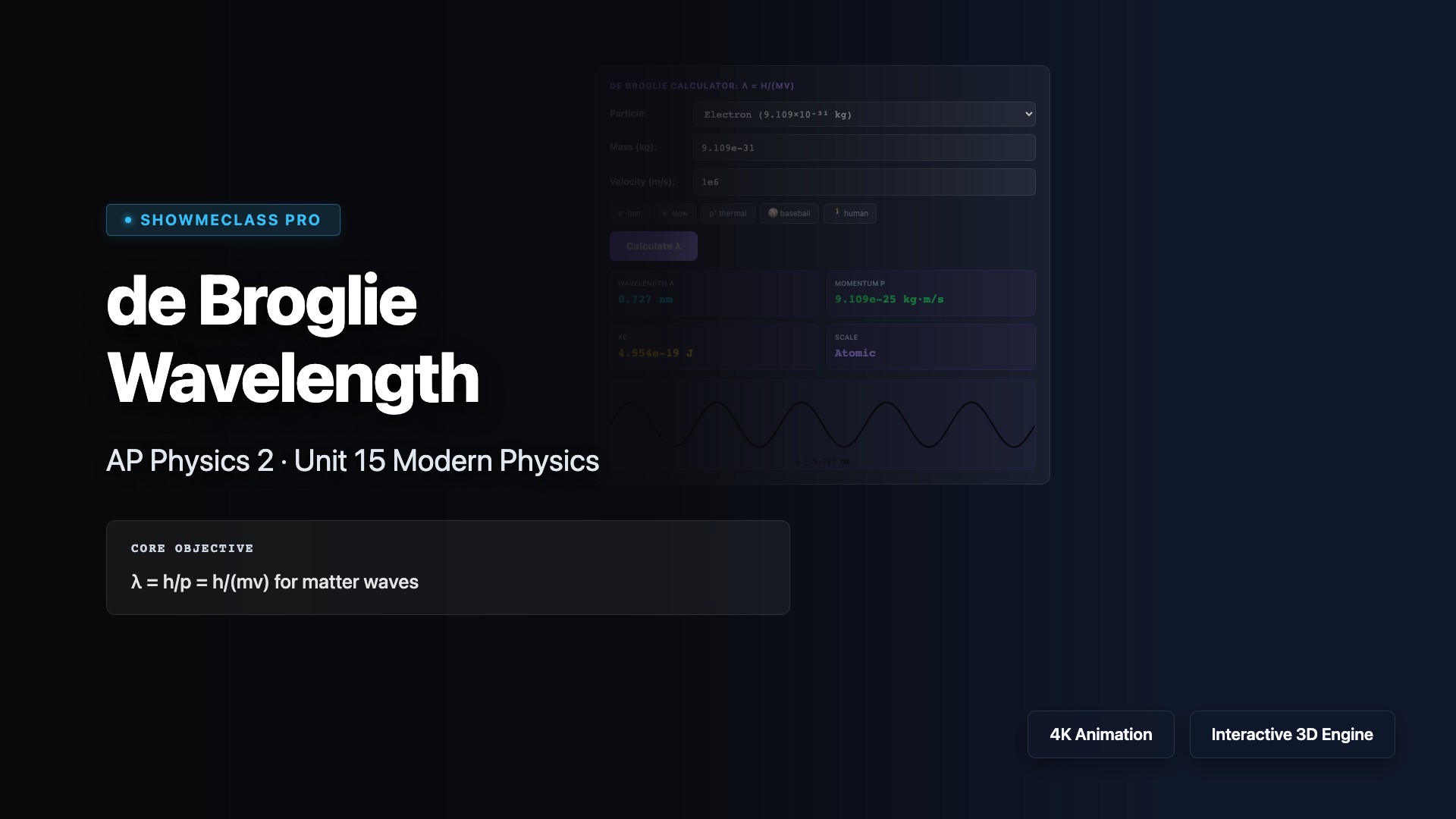
de Broglie Wavelength Calculator
Calculate matter wave wavelength λ = h/(mv). Presets for electron, proton, baseball, and human. Shows scale comparison and wave visualization.
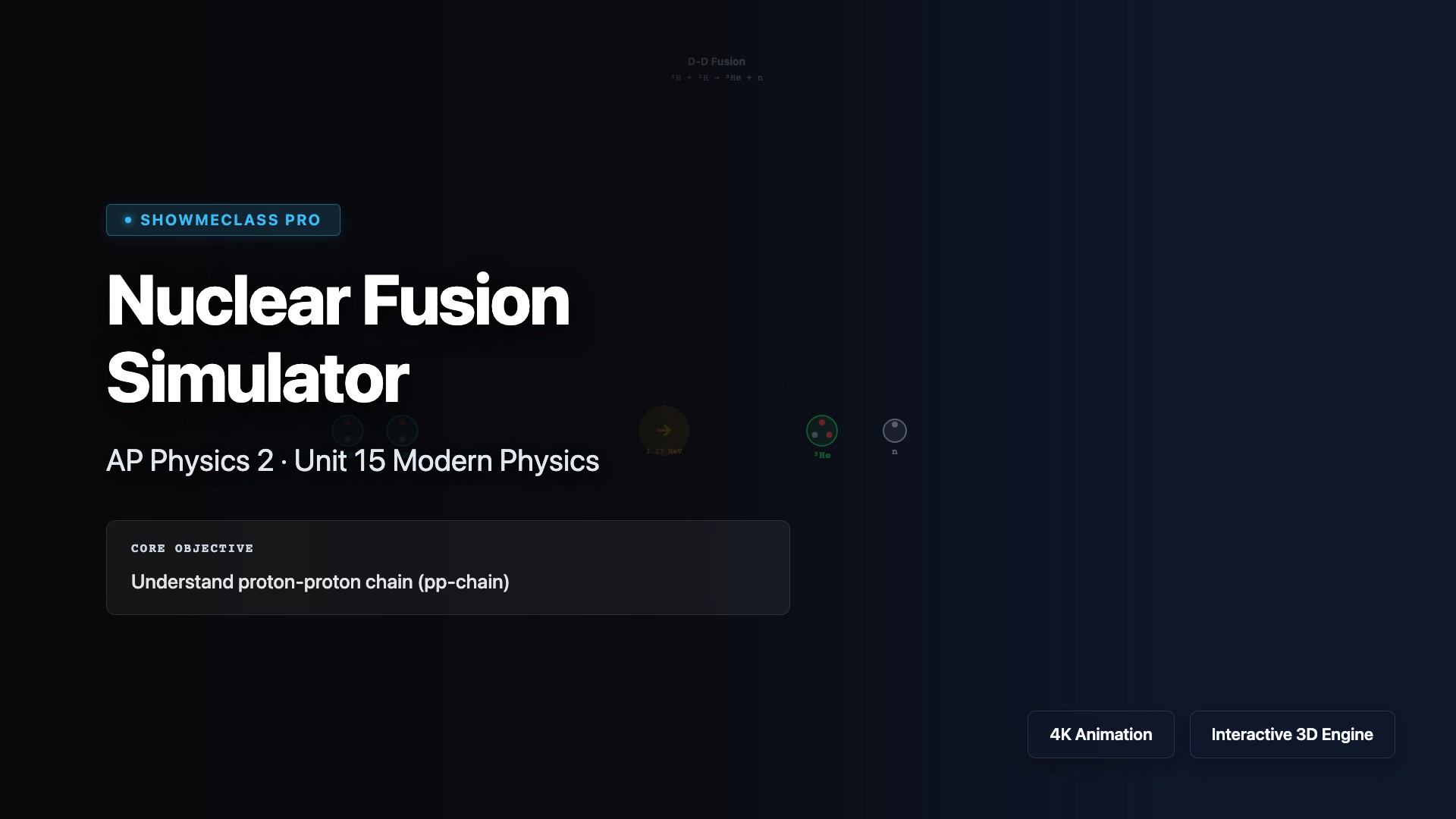
Nuclear Fusion Simulator
Animated D-D, D-T, and pp-chain fusion reactions. Shows nucleons, mass defect, energy release (MeV), and required temperature.
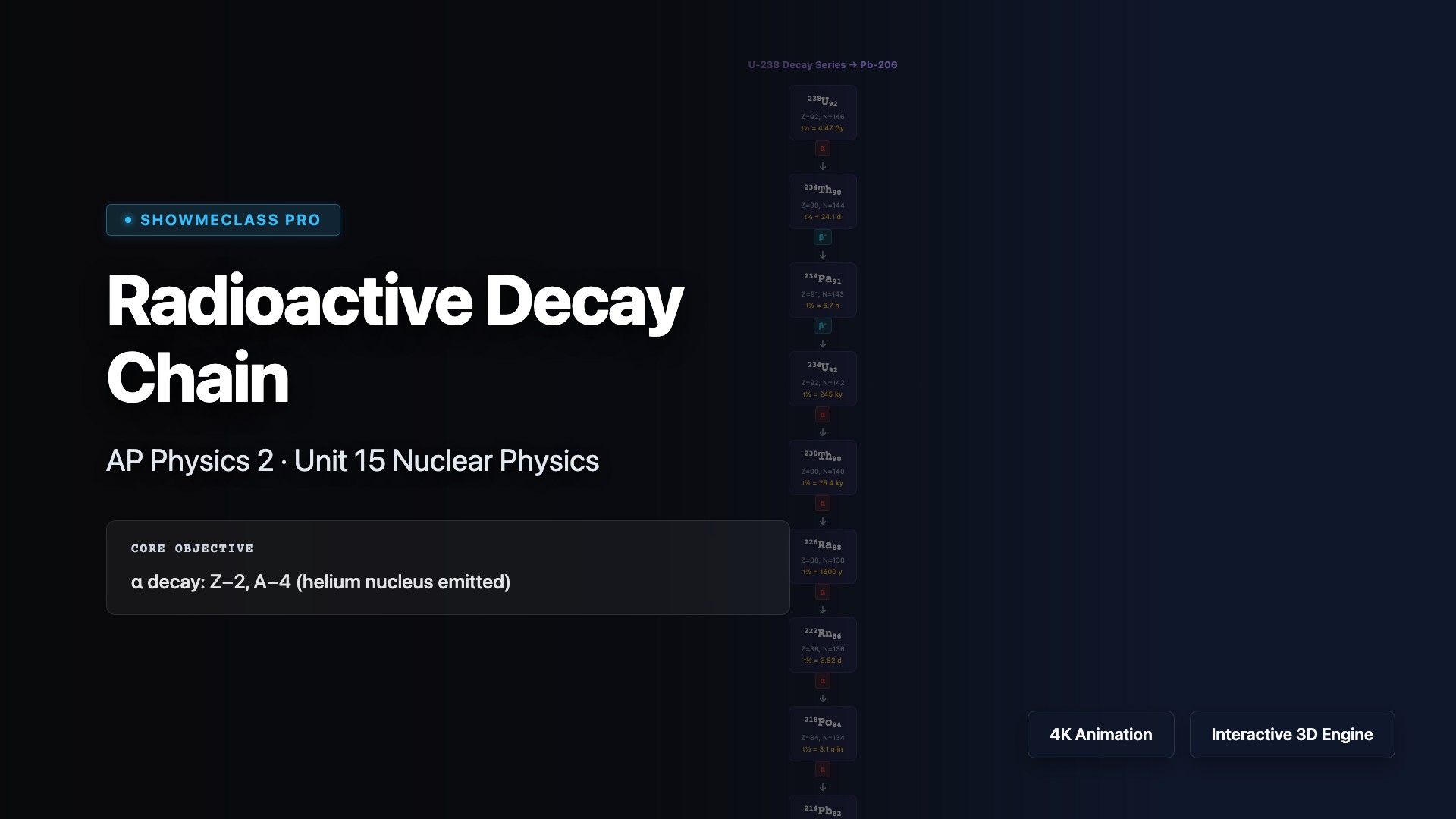
Radioactive Decay Chain (U-238 → Pb-206)
Complete U-238 decay series to stable Pb-206 with 14 steps. Shows α/β⁻ decay type, mass/atomic number changes, and half-lives.
Compton Scattering Visualizer
Photon-electron collision with Δλ = λc(1−cosθ). Adjust angle and wavelength to see scattered photon, recoil electron, and energy transfer.
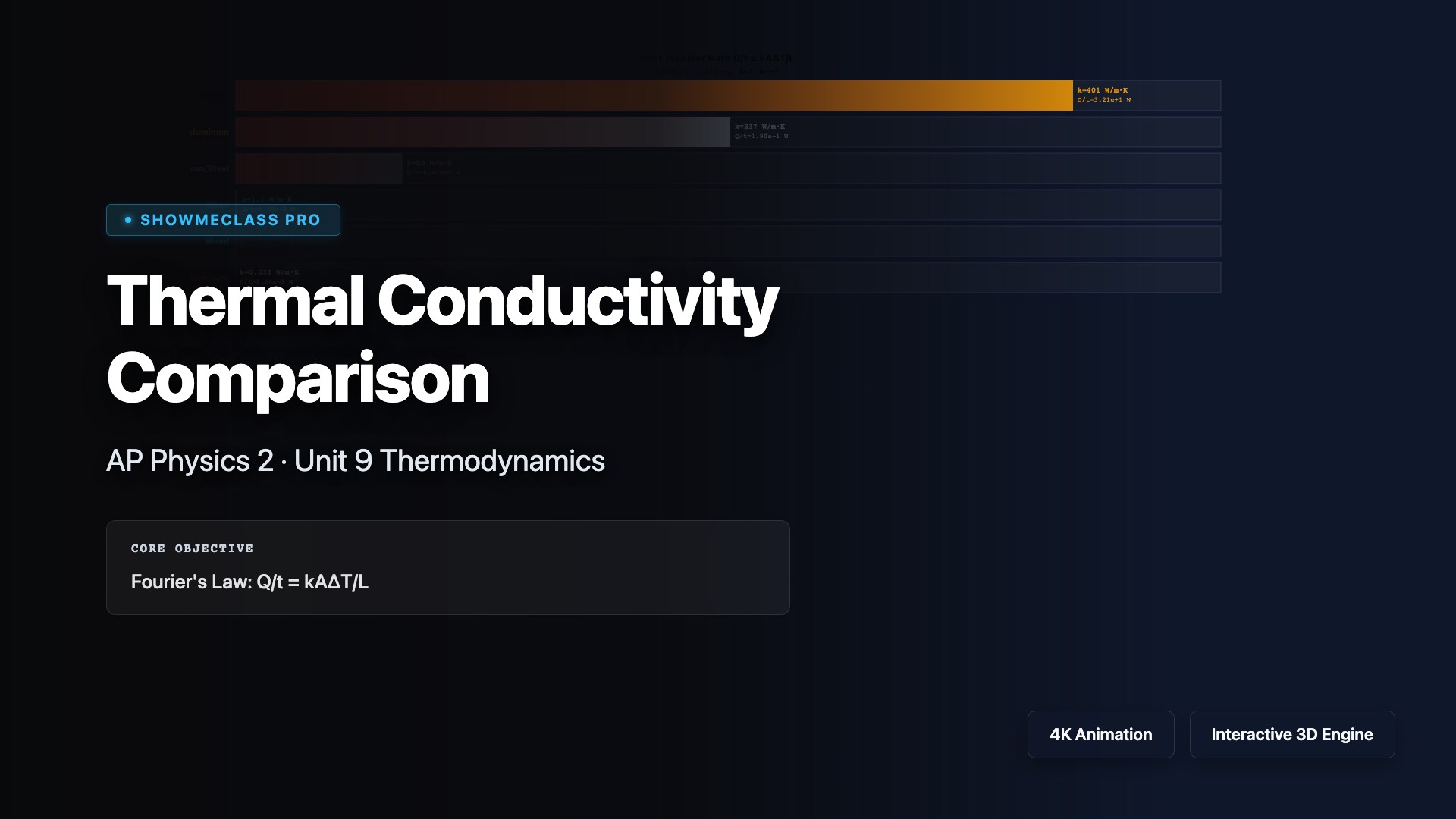
Thermal Conductivity Comparison
Compare heat transfer rates of 6 materials (copper to styrofoam) using Fourier's Law Q/t = kAΔT/L. Adjustable temperature, length, and area.
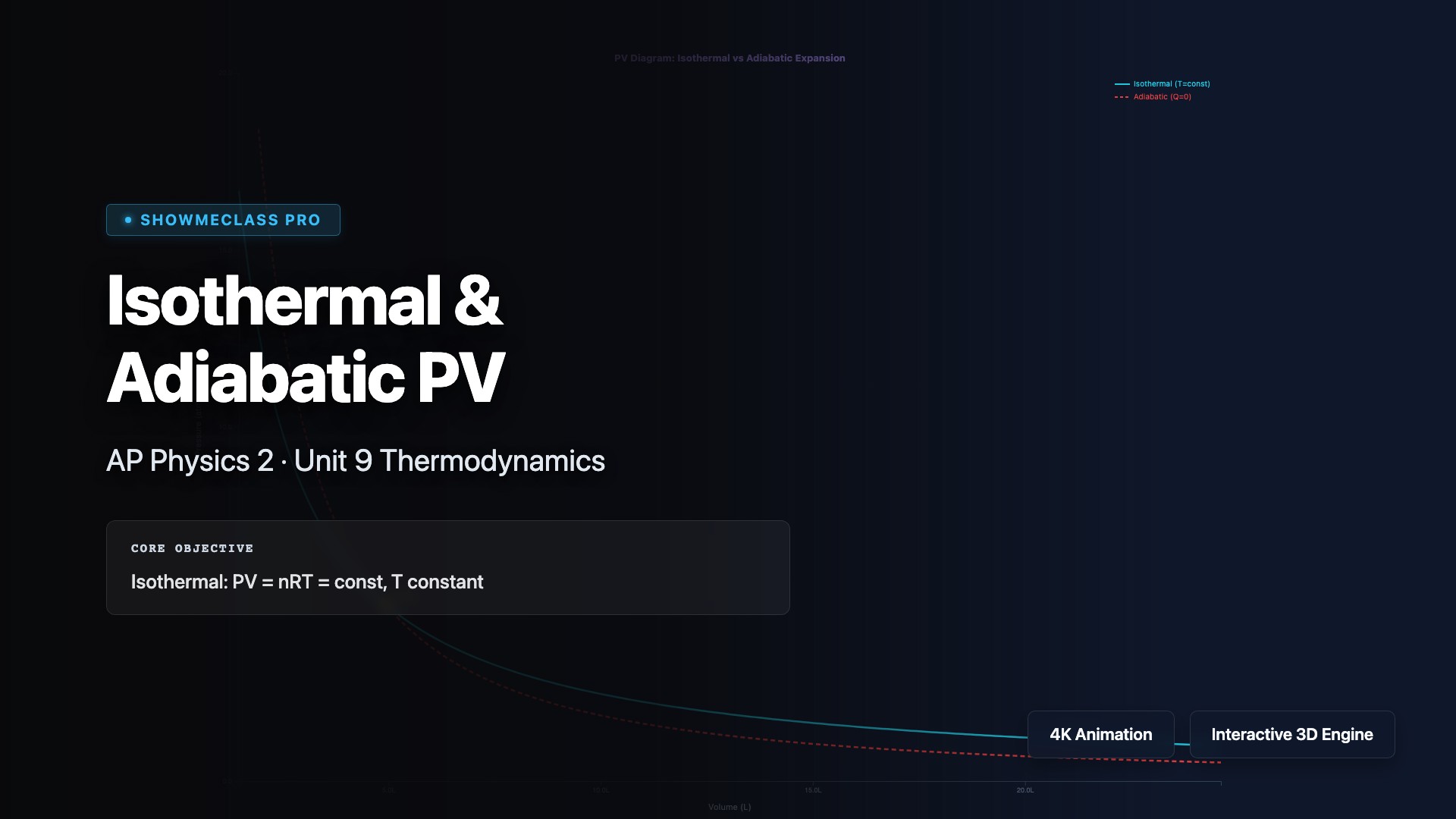
Isothermal & Adiabatic PV Processes
PV diagram overlay of isothermal (PV=nRT) and adiabatic (PVᵞ=const) processes. Compare curve steepness and work done for expansion.
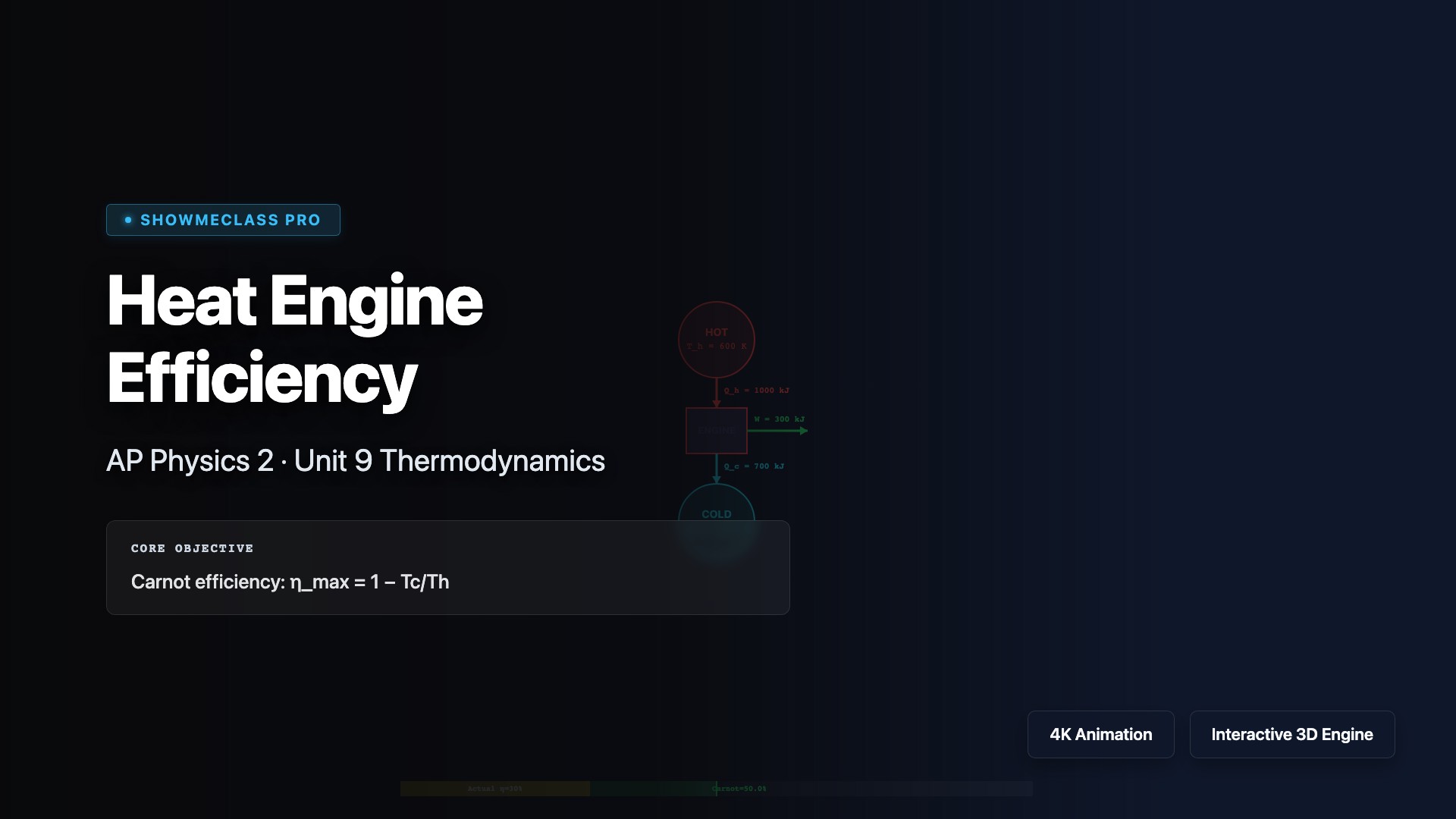
Heat Engine Efficiency Comparator
Carnot cycle efficiency diagram: η_max = 1−Tc/Th. Compare actual vs maximum efficiency with energy flow visualization. Impossibility warning when η > η_Carnot.
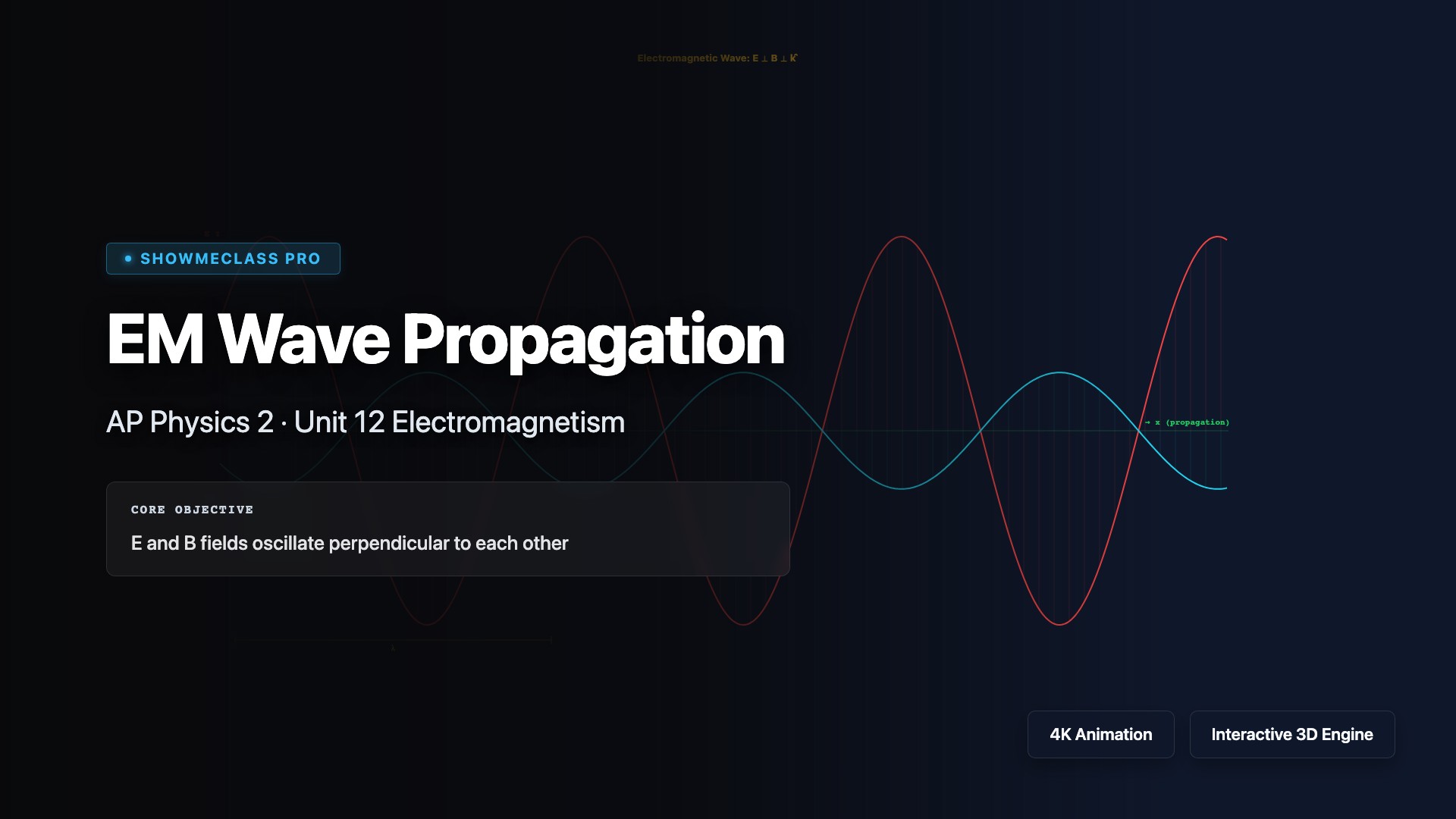
Electromagnetic Wave Propagation
Animated EM wave with perpendicular E and B field oscillation. Adjustable frequency, amplitude, and propagation speed with wavelength marker.
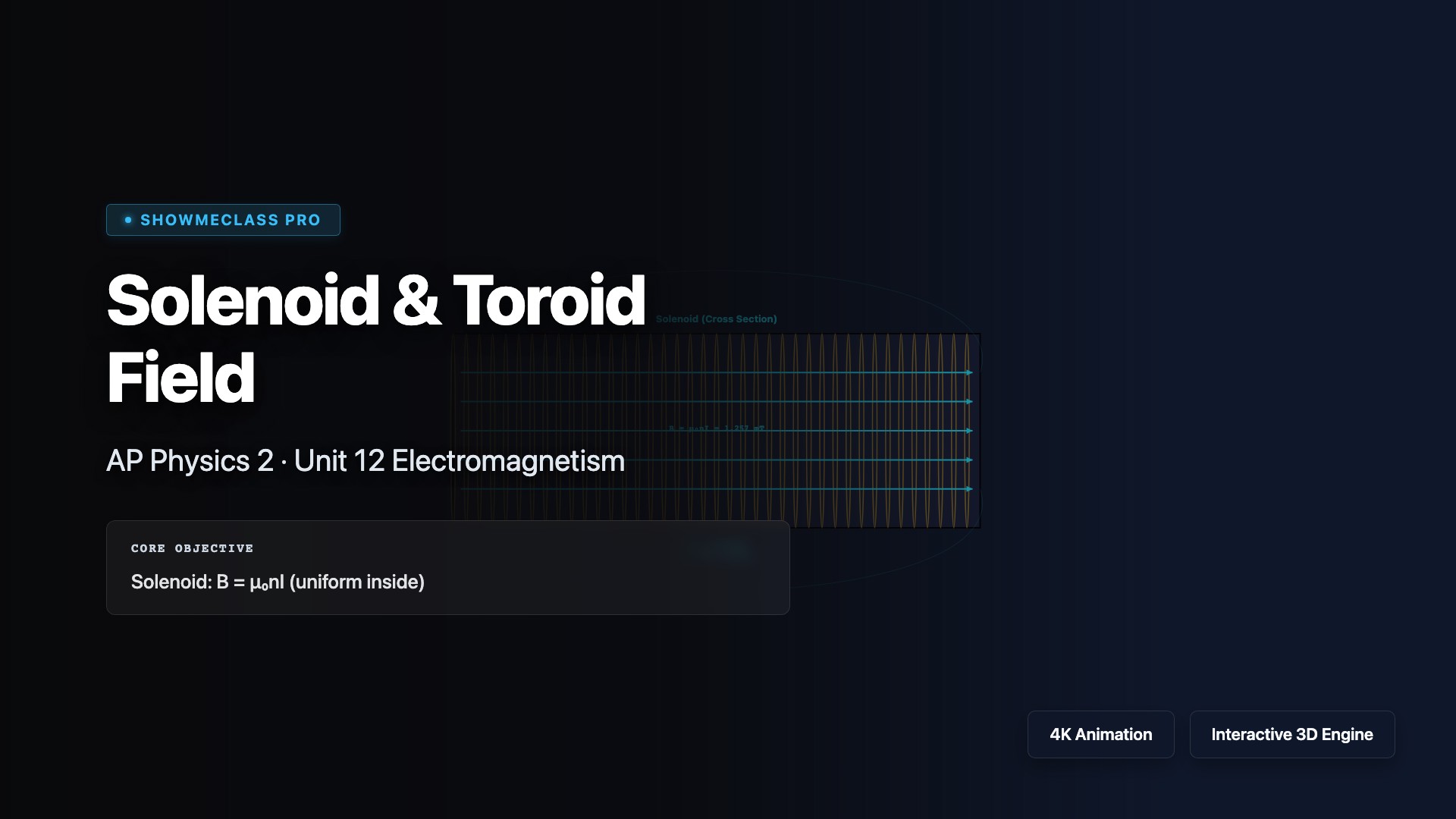
Solenoid & Toroid Magnetic Field
Visualize magnetic field inside solenoid (B=μ₀nI) and toroid (B=μ₀NI/2πr). Shows coil turns, field lines, and B=0 outside.
Millikan Oil Drop Experiment
Recreate the 1909 Nobel-winning experiment. Adjust the voltage across two capacitor plates to suspend falling oil drops in mid-air (qE = mg). Fire the X-Ray ionizer to randomly step the charge up or down in discrete quantized increments of 'e'.
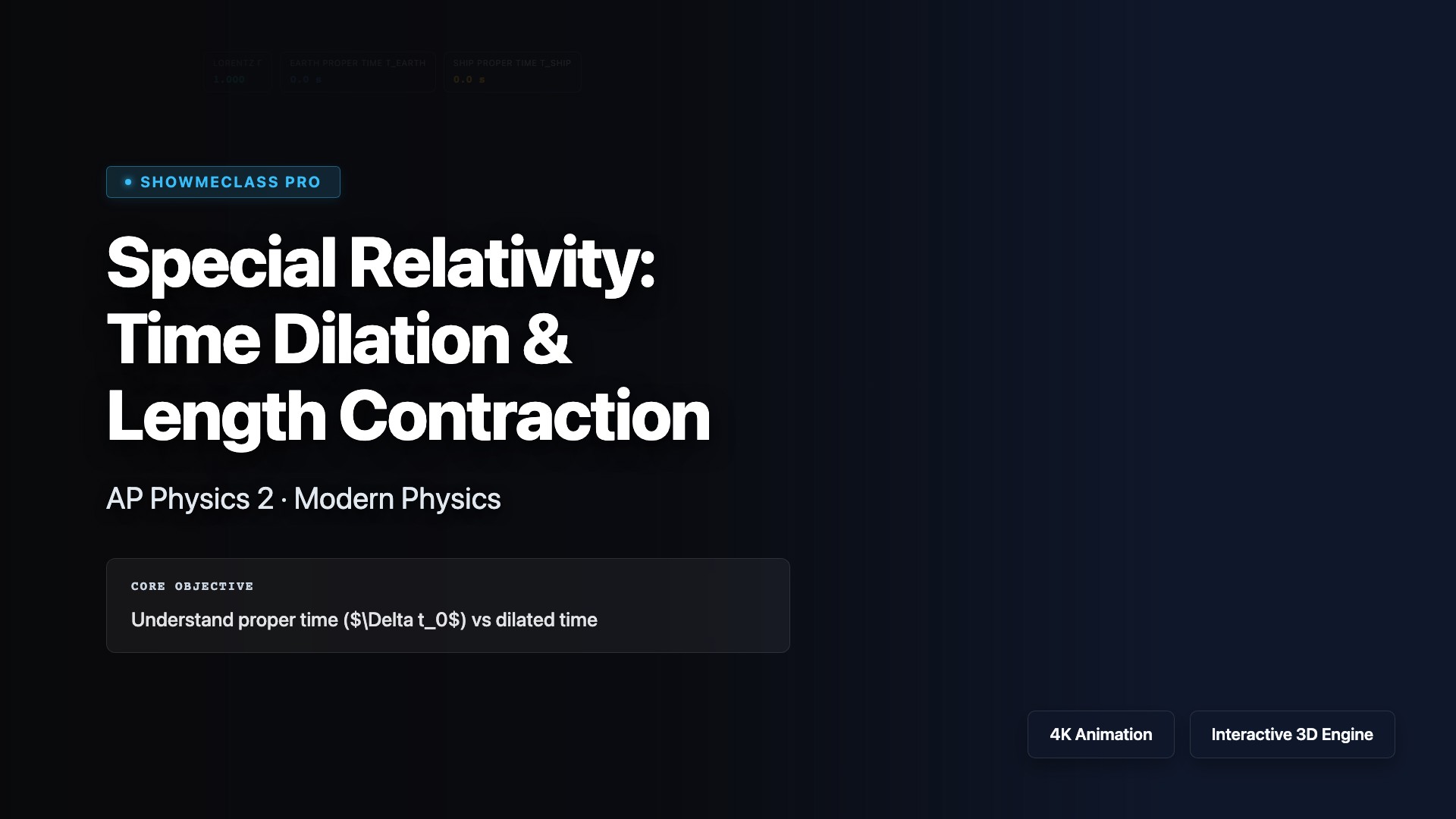
Special Relativity: Time Dilation & Length Contraction
Visualizes the counter-intuitive effects of velocity approaching the speed of light, exploring time dilation and length contraction through a moving observer frame.
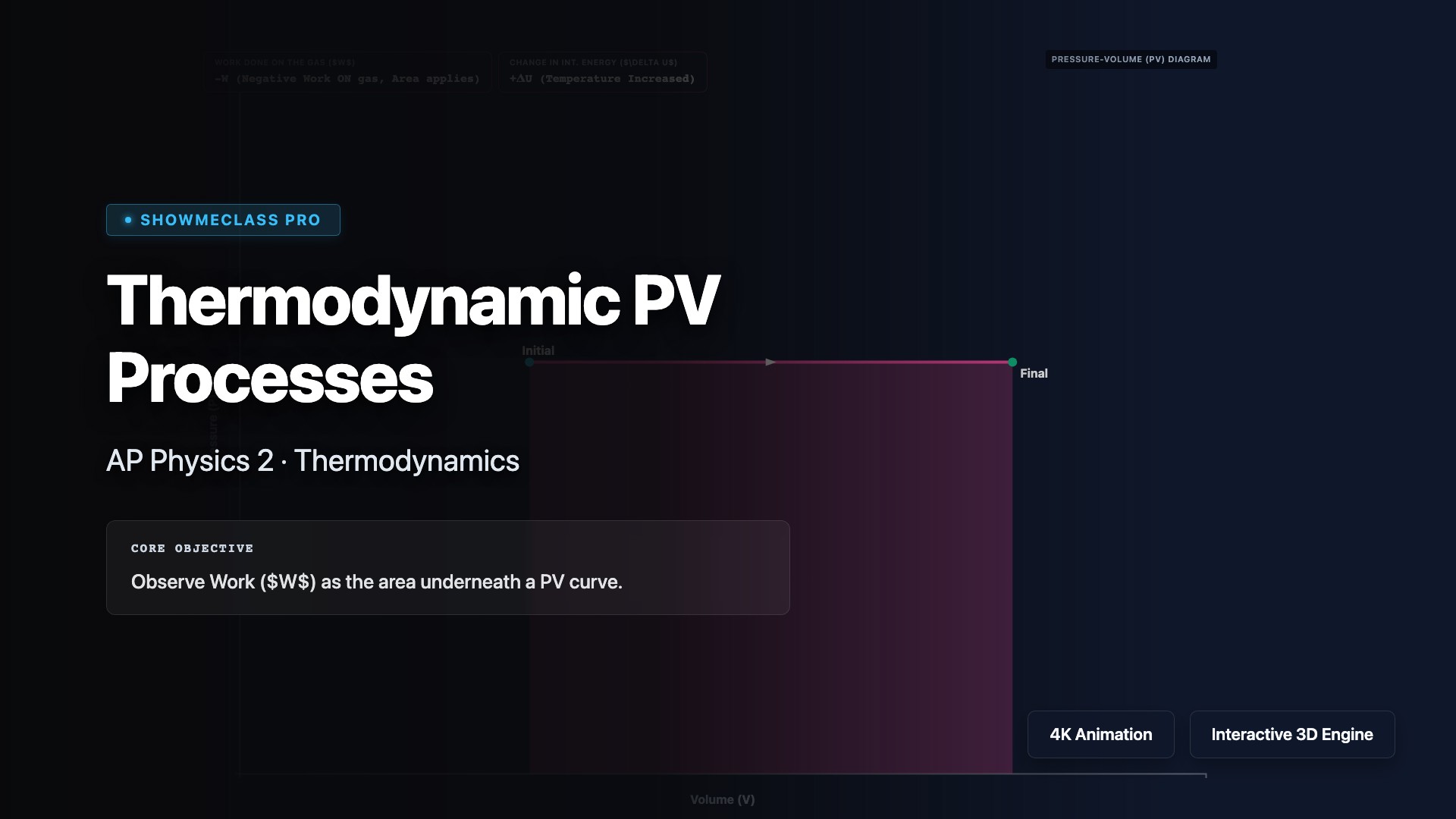
Isobaric & Isochoric PV Processes
Visualize work as the area underneath a PV curve. Discover why an Isochoric process performs zero work while an Isobaric process expands or compresses.