
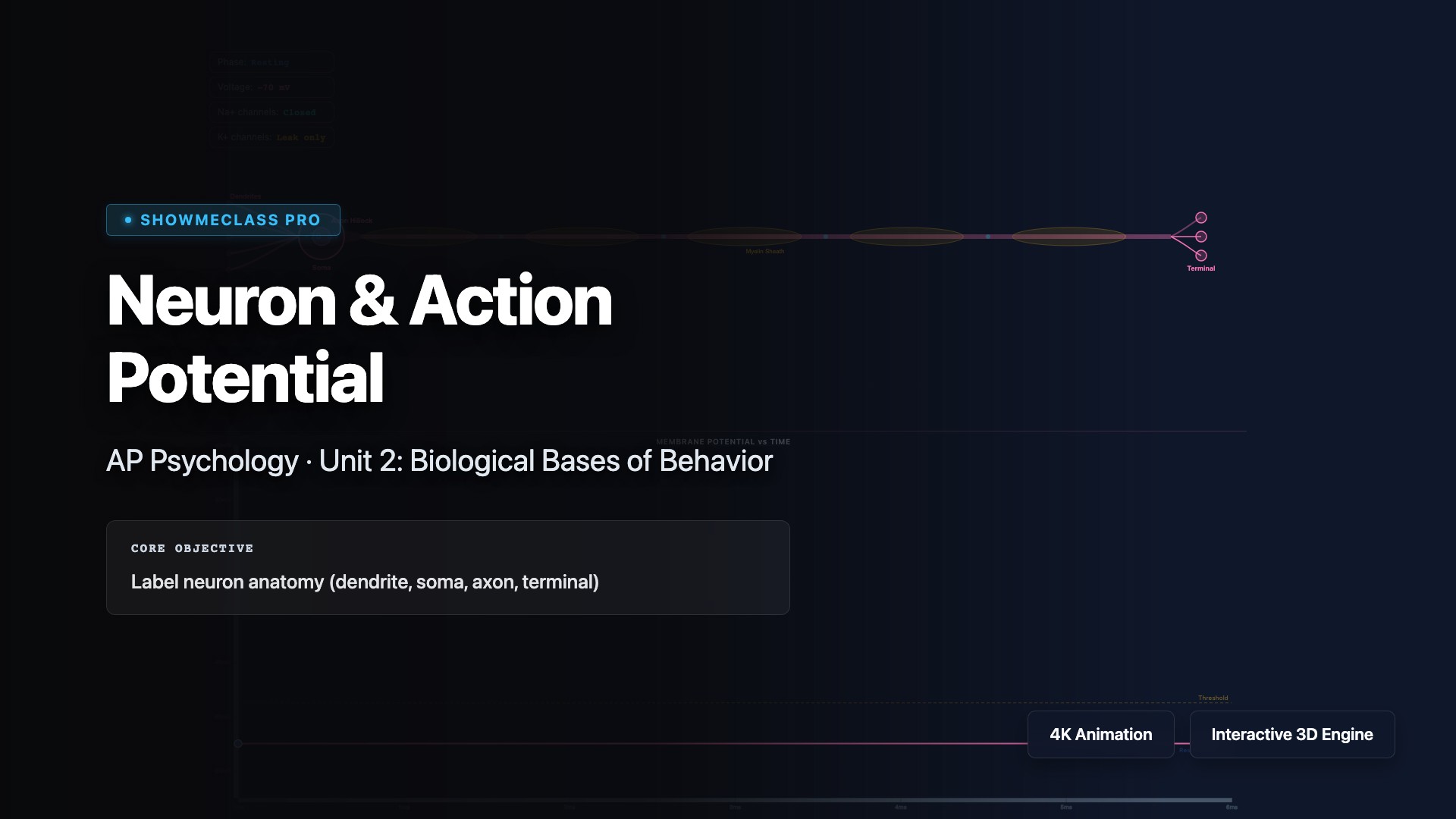
Neuron & Action Potential
Visualize how neurons transmit electrical signals through action potentials. Explore the resting potential, depolarization, repolarization cycle, and the all-or-none principle as sodium and potassium ions flow across the axon membrane.

Memory & Encoding
Explore the three stages of memory: encoding, storage, and retrieval. Visualize different encoding strategies including semantic, acoustic, and visual processing, and understand how depth of processing affects long-term memory retention.

Maslow's Hierarchy of Needs
Explore Maslow's five-tier pyramid of human needs from physiological basics to self-actualization. Visualize how lower-level needs must be satisfied before higher-level psychological and self-fulfillment needs can be pursued.
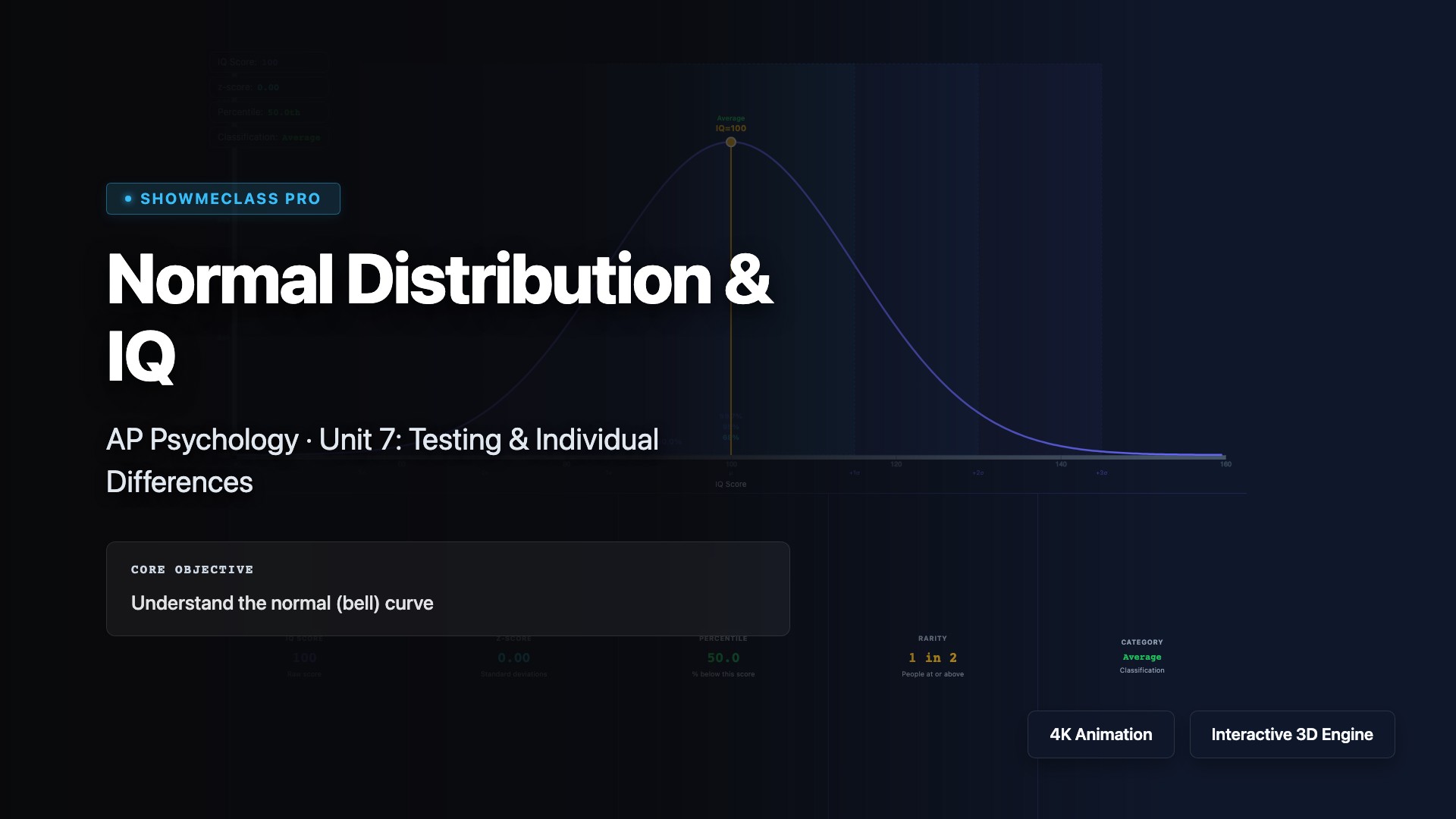
Normal Distribution & IQ
Visualize how IQ scores follow a normal distribution with mean 100 and standard deviation 15. Explore z-scores, percentiles, and the 68-95-99.7 rule to understand how intelligence test scores are distributed across populations.
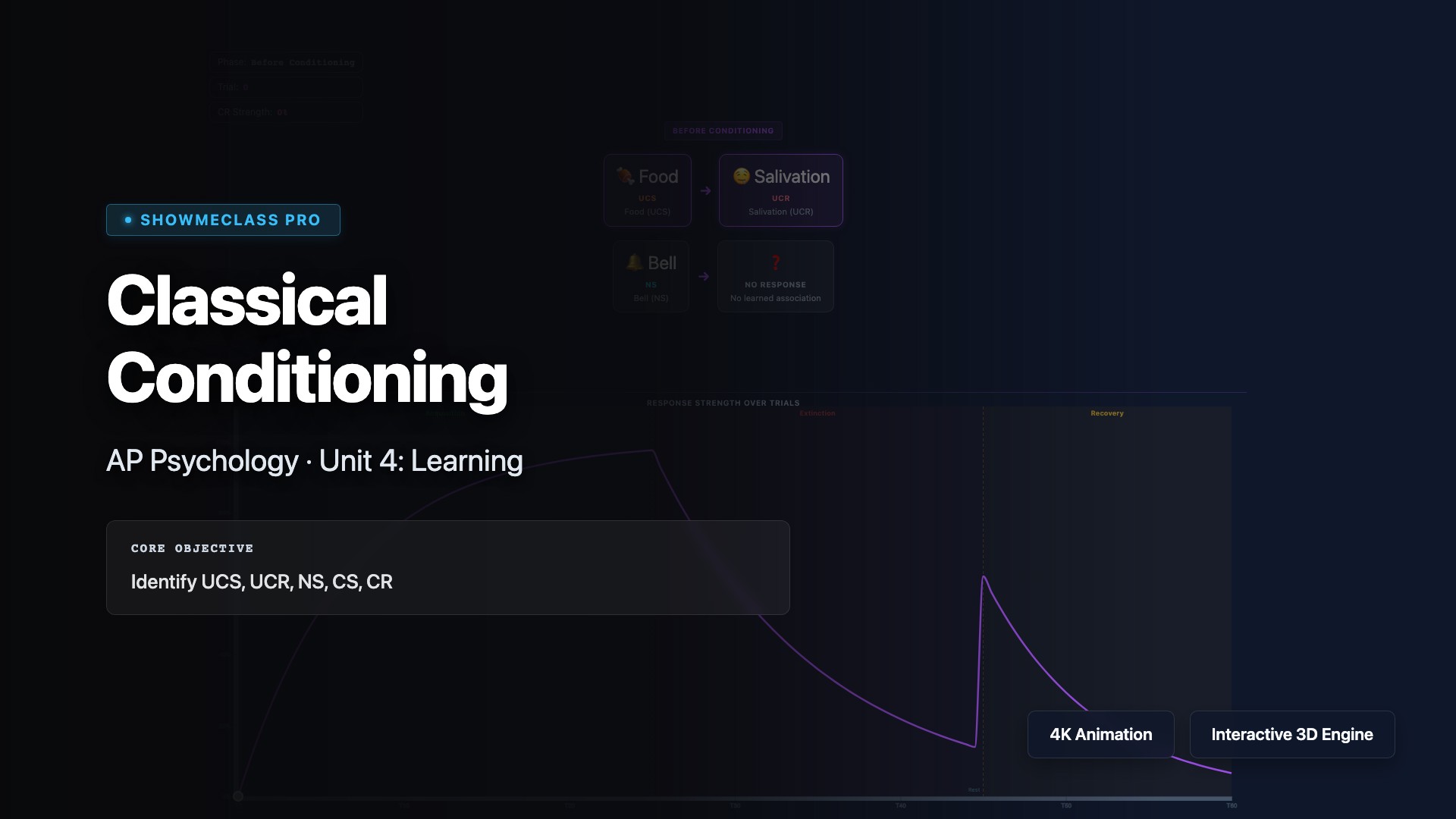
Classical Conditioning
Explore Pavlov's classical conditioning process where neutral stimuli become conditioned stimuli through repeated pairing with unconditioned stimuli. Visualize acquisition, extinction, spontaneous recovery, and stimulus generalization in learning paradigms.
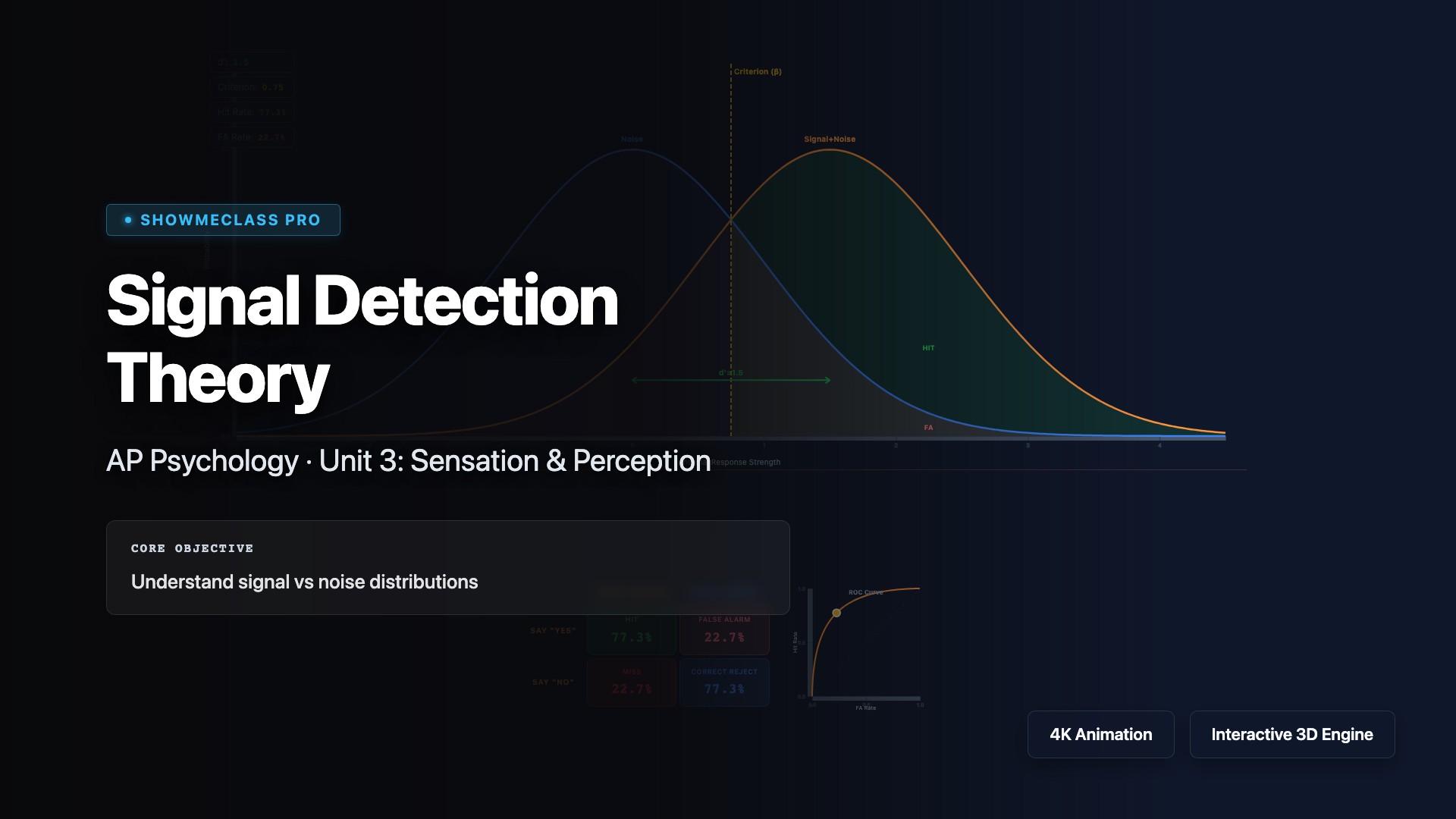
Signal Detection Theory
Explore signal detection theory's framework for measuring perceptual sensitivity (d') and response bias. Visualize the four outcomes—hits, misses, false alarms, and correct rejections—and understand how expectation and motivation affect detection thresholds.