
Impulse & Momentum
Explore the impulse-momentum theorem stating that impulse (J = FΔt) equals change in momentum (Δp = mΔv). Visualize how force applied over time changes an object's momentum, and understand why extending collision time (airbags, crumple zones, landing on soft surfaces) reduces peak force by spreading impulse over longer duration. Apply J = Δp to analyze collisions, rocket propulsion, and sports scenarios where controlling force duration matters.
Elastic & Inelastic Collisions
Compare elastic collisions (both momentum and kinetic energy conserved) with inelastic collisions (only momentum conserved, kinetic energy lost to deformation, heat, sound). Visualize perfectly inelastic collisions where objects stick together after impact. Apply conservation of momentum p₁ᵢ + p₂ᵢ = p₁f + p₂f to calculate final velocities. Understand the coefficient of restitution, and analyze real-world collisions including car crashes, billiard balls, and atomic particle interactions.
Momentum & Elastic Collisions
Interactive 1D collision physics simulator. Explore elastic and inelastic collisions, coefficient of restitution, and live momentum/energy conservation charts.
Center of Mass Finder
Place and drag masses on a 2D canvas to calculate the center of mass in real time. Visualize how mass distribution affects the balance point of a system of particles.
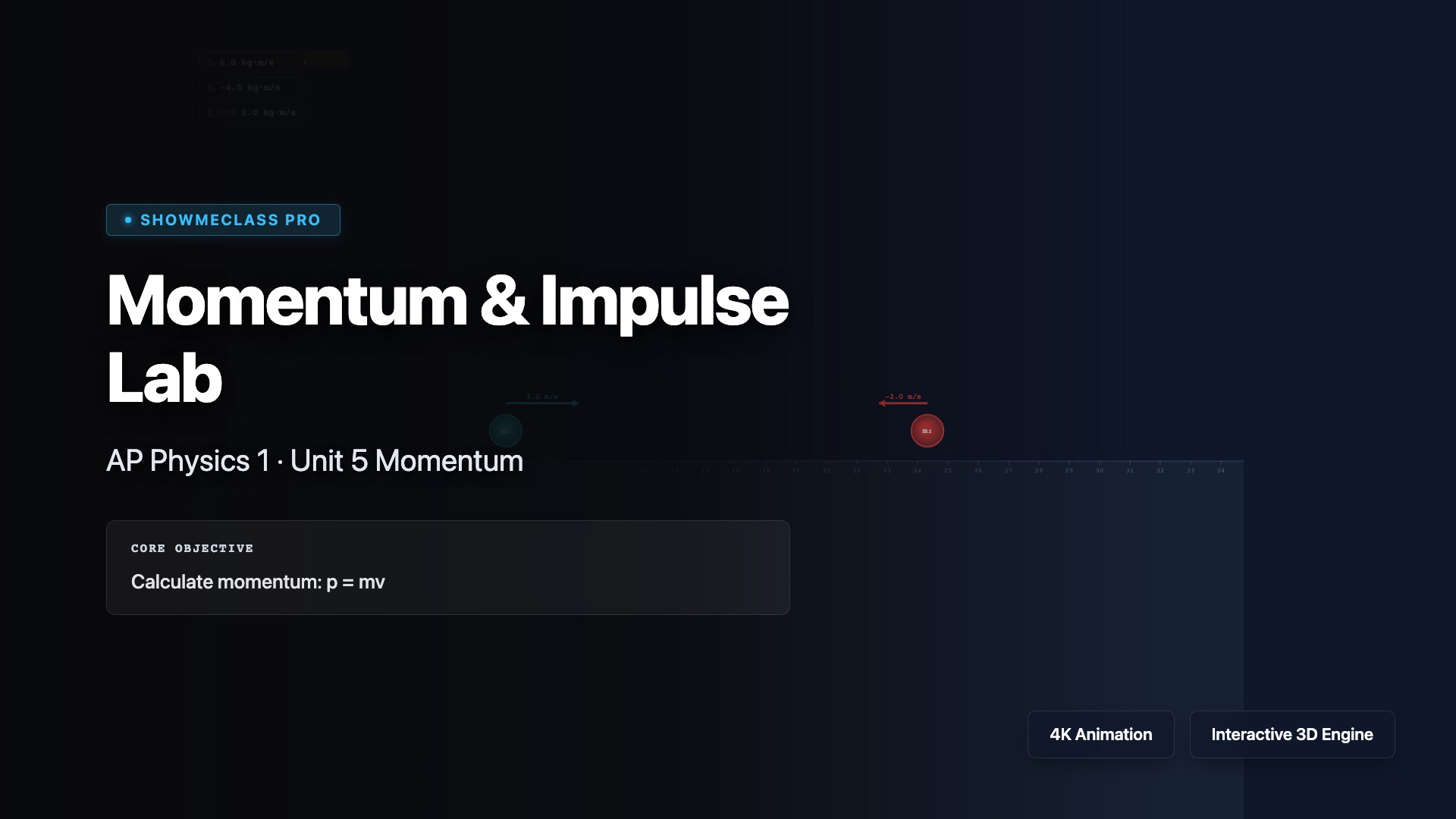
Momentum & Impulse Lab
Simulate elastic and perfectly inelastic collisions. Adjust masses and velocities to verify conservation of momentum and compare kinetic energy before and after impact.
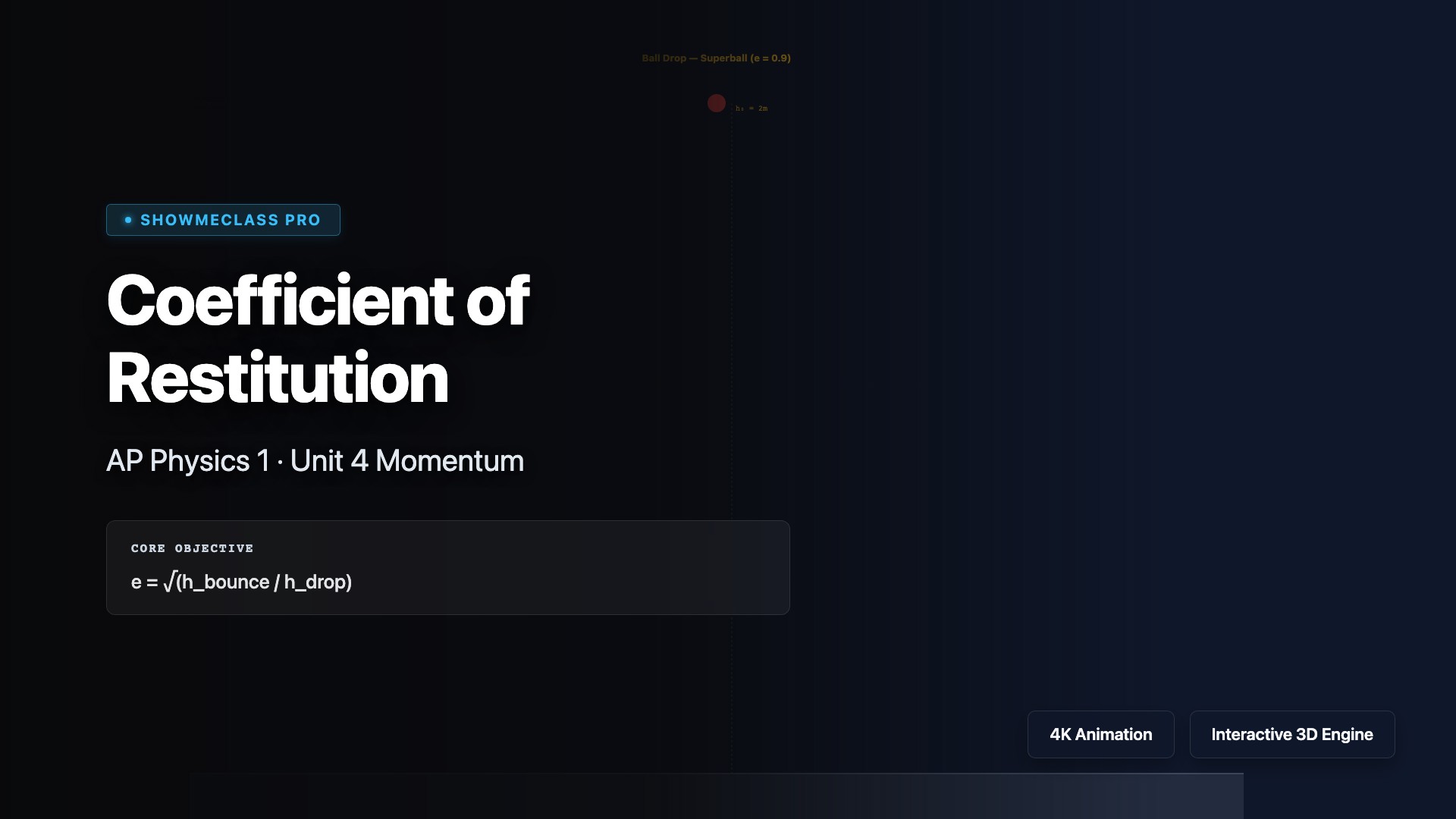
Coefficient of Restitution Lab
Drop balls of 6 materials (superball to clay) and measure bounce height to calculate e = √(h_bounce/h_drop). Compare energy lost per bounce.
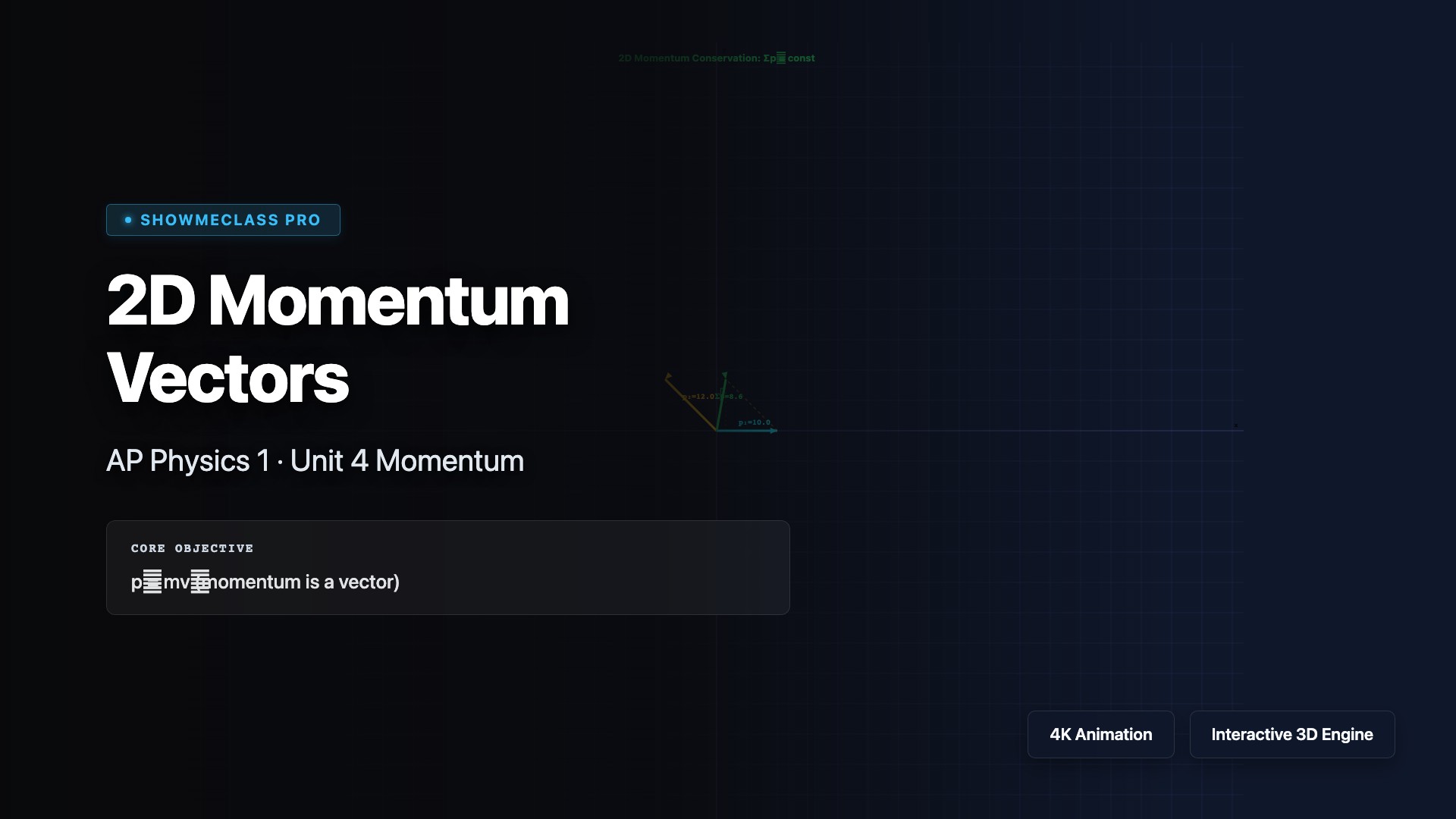
2D Momentum Vector Addition
Adjust mass, speed, and angle of two objects to see 2D momentum vector addition. Tail-to-tip method shows total momentum conservation with x/y components.