
Showing 12 results
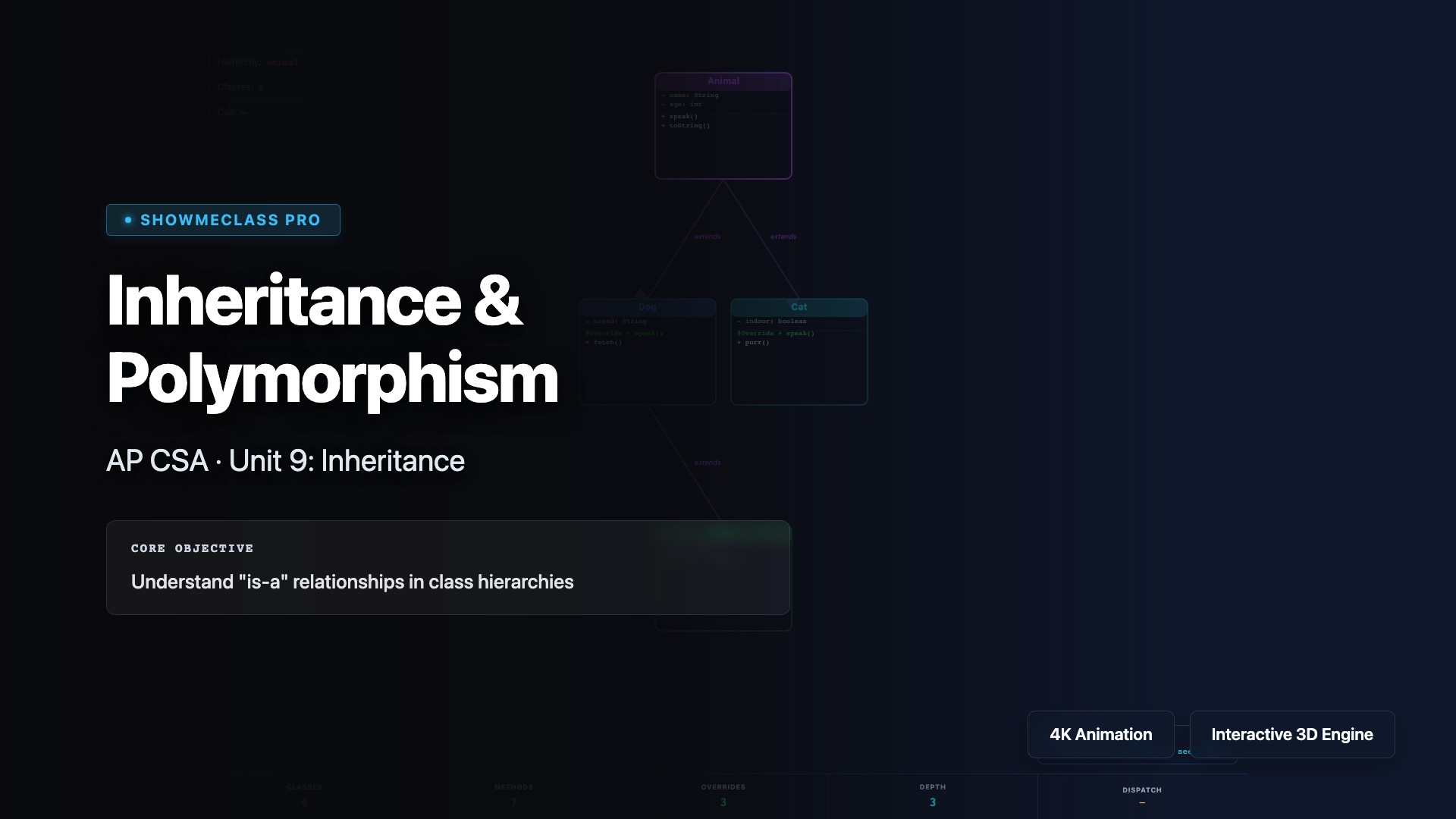
Inheritance & Polymorphism
Explore object-oriented programming concepts of inheritance (creating subclasses that extend superclasses) and polymorphism (objects taking multiple forms). Understand the 'is-a' relationship, method overriding with @Override annotation, the super keyword for accessing parent class methods, and how polymorphism enables writing flexible code where superclass references can point to subclass objects, allowing dynamic method dispatch at runtime.
Recursion Visualizer
Visualize recursive function calls and the call stack to understand how recursion works. Explore the essential components: base case (stopping condition) and recursive case (function calling itself with modified parameters). Trace classic examples like factorial, Fibonacci sequence, and binary search. Understand stack frames, how recursive calls build up then unwind, and compare recursion with iterative solutions for efficiency and readability.
Stack & Queue
Compare stack (LIFO - Last In First Out) and queue (FIFO - First In First Out) data structures. Visualize stack operations push() and pop() used in function call stacks, undo mechanisms, and expression evaluation. Explore queue operations enqueue() and dequeue() used in task scheduling, breadth-first search, and print job management. Both structures offer O(1) time complexity for their primary operations.
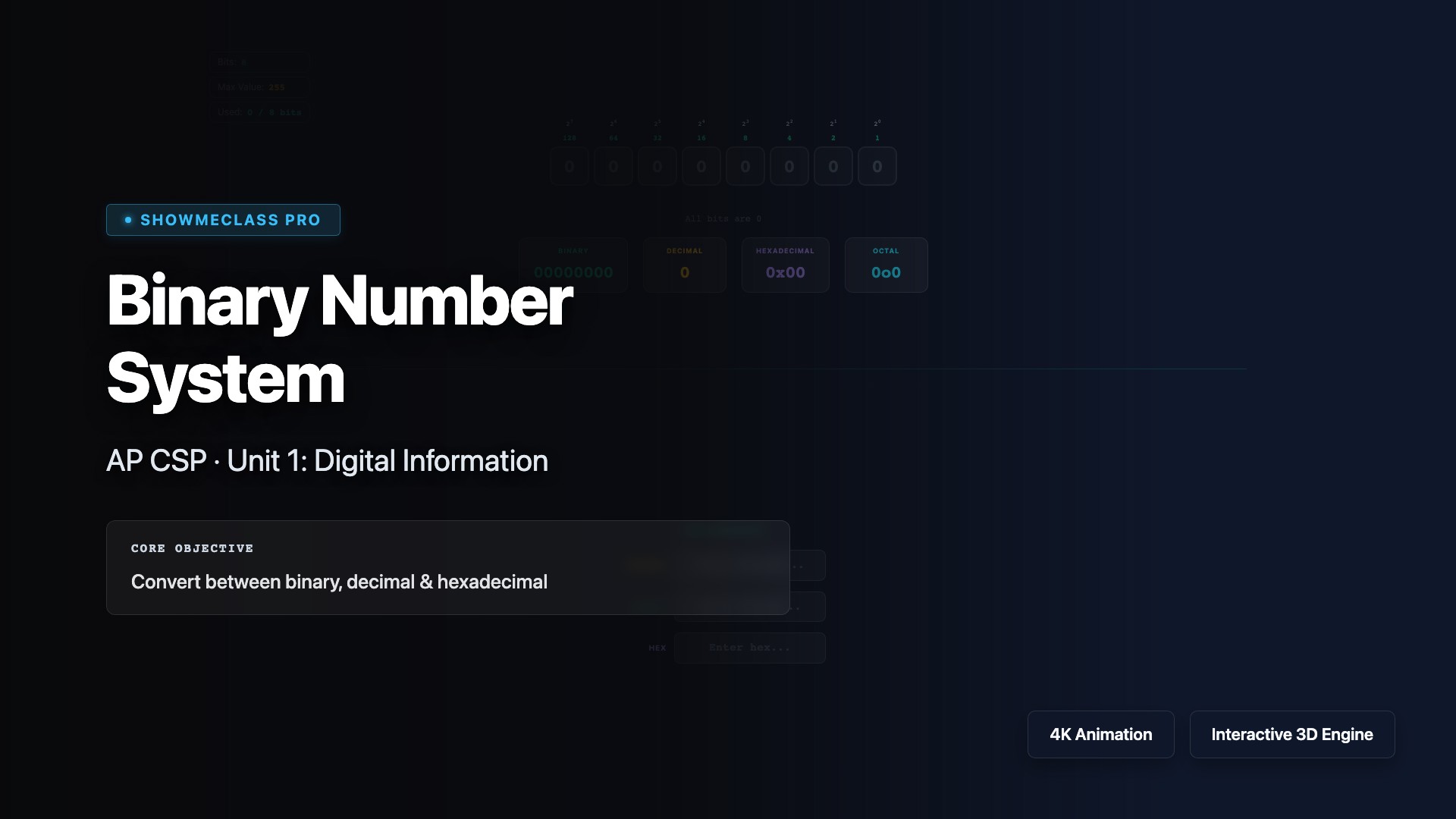
Binary Number System
Explore the binary (base-2) number system used by computers to represent all data. Convert between binary, decimal (base-10), and hexadecimal (base-16) representations. Understand place values as powers of 2, practice binary arithmetic, and learn why computers use binary (two states: 0 and 1 corresponding to off/on electrical signals). Discover how binary represents numbers, text (ASCII/Unicode), images, and all digital information.
Data Compression
Explore data compression techniques that reduce file size for efficient storage and transmission. Compare lossless compression (original data perfectly recoverable, used for text and executables) with lossy compression (some data discarded, used for images/audio/video). Visualize run-length encoding (RLE) that replaces repeated sequences with count-value pairs, and understand Huffman coding, LZW, and how compression ratios balance file size with quality.
Encryption & Ciphers
Explore encryption techniques that protect data confidentiality by transforming plaintext into ciphertext. Practice classic ciphers like Caesar cipher (shift each letter by a fixed amount) and substitution ciphers. Understand symmetric encryption (same key for encryption and decryption) versus asymmetric encryption (public/private key pairs). Learn about modern encryption standards like AES, RSA, and the importance of cryptography in securing digital communications and online transactions.
Internet Protocols & Routing
Explore how the Internet works through protocols and routing. Understand the TCP/IP protocol suite: IP addresses for device identification, TCP for reliable data transmission with error checking, and UDP for faster connectionless communication. Visualize packet routing through networks, DNS (Domain Name System) translating domain names to IP addresses, and how routers use routing tables to forward packets along optimal paths across the global Internet infrastructure.
Pixel & Image Representation
Understand how digital images are represented as grids of pixels, each storing color information. Explore the RGB color model where each pixel combines Red, Green, and Blue values (0-255) to create millions of colors. Learn how resolution (pixel dimensions) and bit depth affect image quality and file size, and understand the relationship between pixels, screen resolution, and how computers store and display visual information.
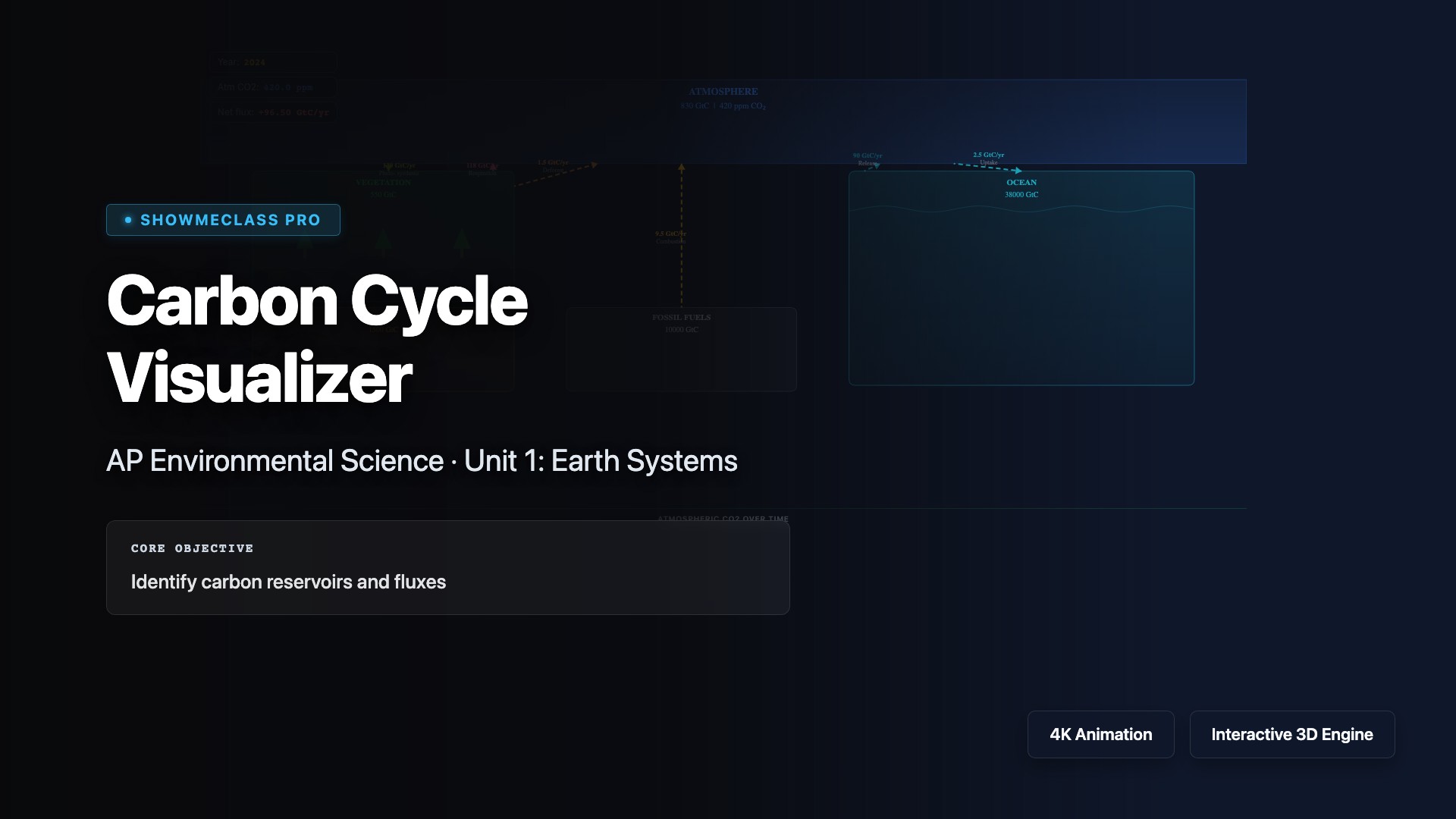
Carbon Cycle Visualizer
Visualize the carbon cycle showing how carbon moves between the atmosphere, biosphere, hydrosphere, and geosphere. Explore processes including photosynthesis (carbon fixation), cellular respiration (carbon release), decomposition, fossil fuel combustion, ocean absorption, and geological sequestration. Understand how human activities like deforestation and burning fossil fuels disrupt the natural carbon balance, contributing to increased atmospheric CO₂ and climate change.
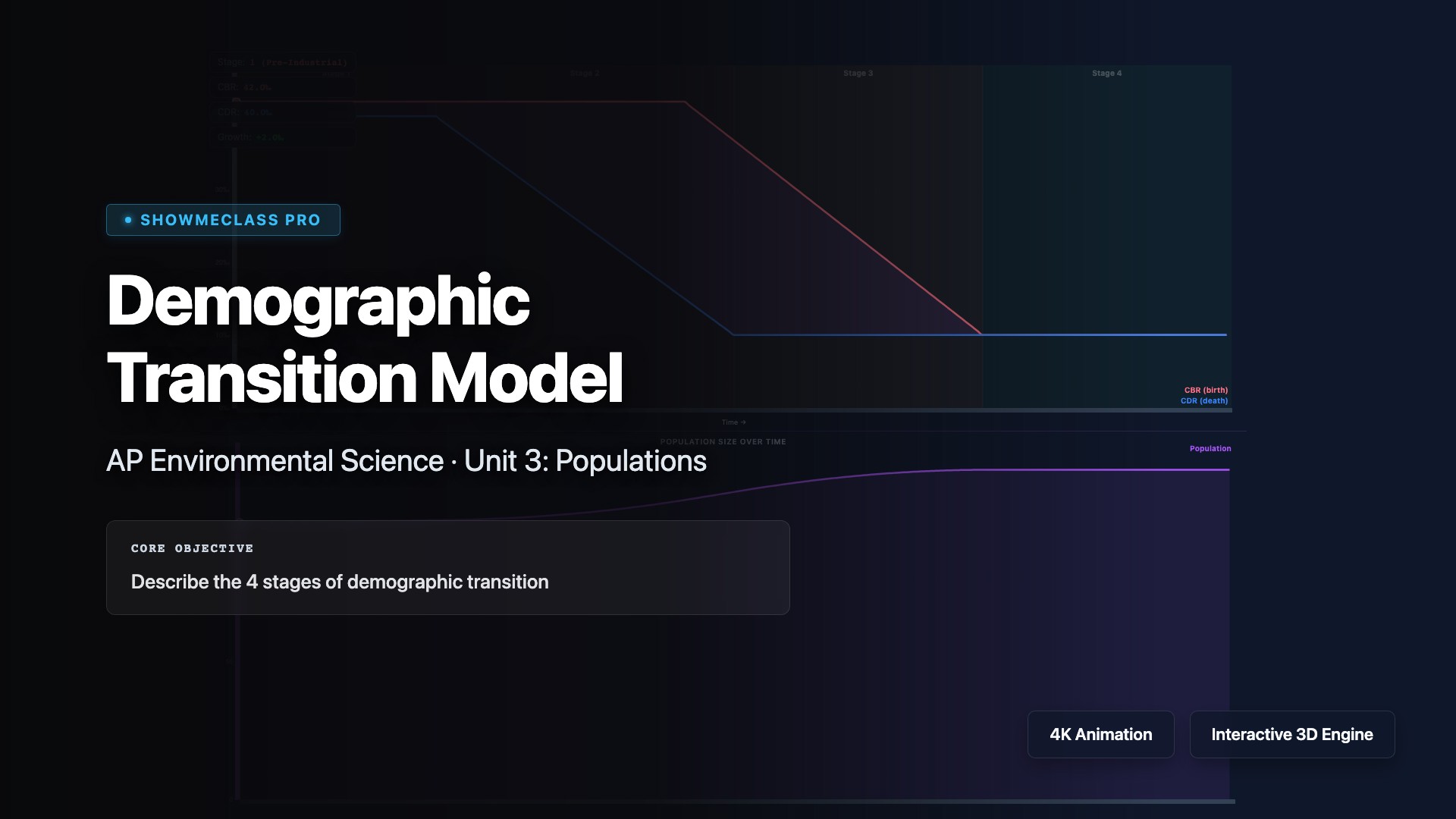
Demographic Transition Model
Explore the Demographic Transition Model (DTM) that describes population changes as countries develop economically. Visualize the five stages: Stage 1 (high birth and death rates, stable population), Stage 2 (declining death rates, population explosion), Stage 3 (declining birth rates, slowing growth), Stage 4 (low birth and death rates, stable population), and Stage 5 (declining population). Understand how industrialization, healthcare, education, and women's empowerment drive demographic shifts.
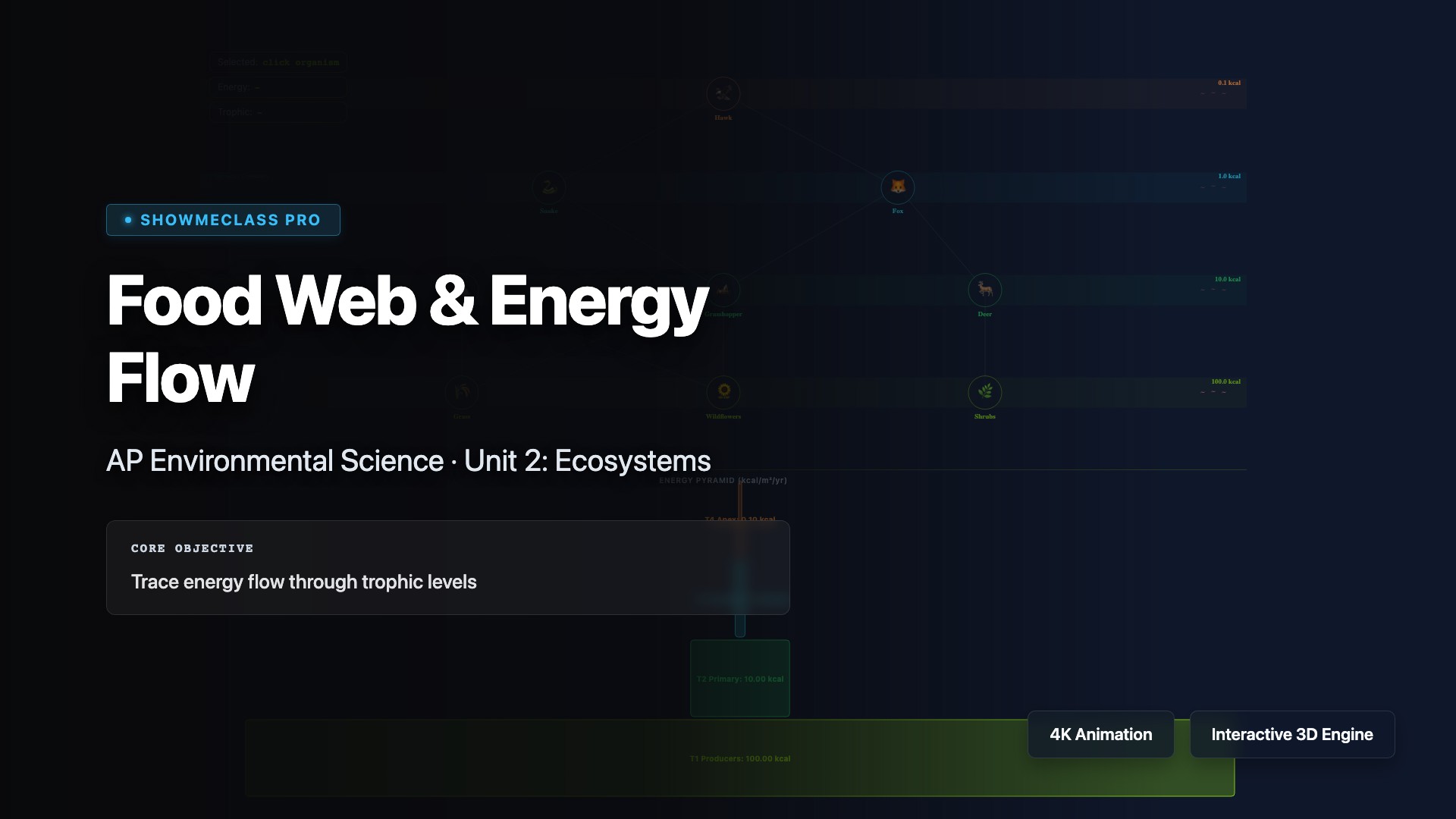
Food Web & Energy Flow
Visualize food webs showing feeding relationships and energy flow through ecosystems. Explore trophic levels from producers (autotrophs capturing solar energy) through primary consumers (herbivores), secondary consumers (carnivores), tertiary consumers, and decomposers. Understand the 10% rule where only about 10% of energy transfers between trophic levels, explaining why food chains rarely exceed 4-5 levels and why biomass pyramids taper toward top predators.
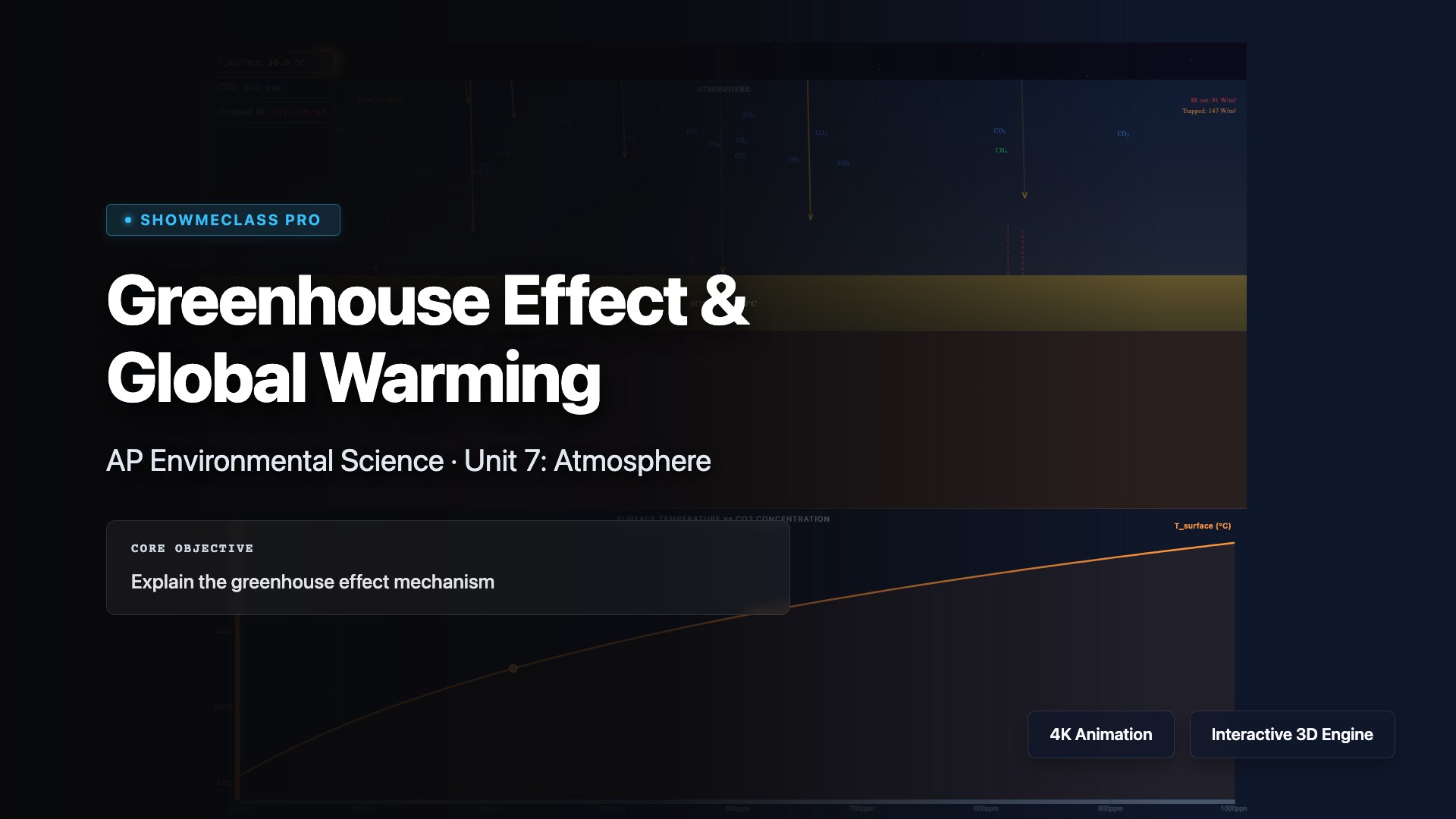
Greenhouse Effect & Global Warming
Understand the greenhouse effect where atmospheric gases trap infrared radiation, warming Earth's surface. Visualize how solar radiation passes through the atmosphere, Earth absorbs and re-emits it as infrared, and greenhouse gases (CO₂, CH₄, N₂O, water vapor) absorb this heat. Explore how increased greenhouse gas concentrations from human activities enhance this natural effect, causing global warming, climate change, sea level rise, and ecosystem disruption.